 Bug FAQ
South African Mantis
Miomantis caffra · Order: Mantodea · Family: Miomantidae
Also called: African Mantis, African praying mantis, South African praying mantis, Springbok Mantis
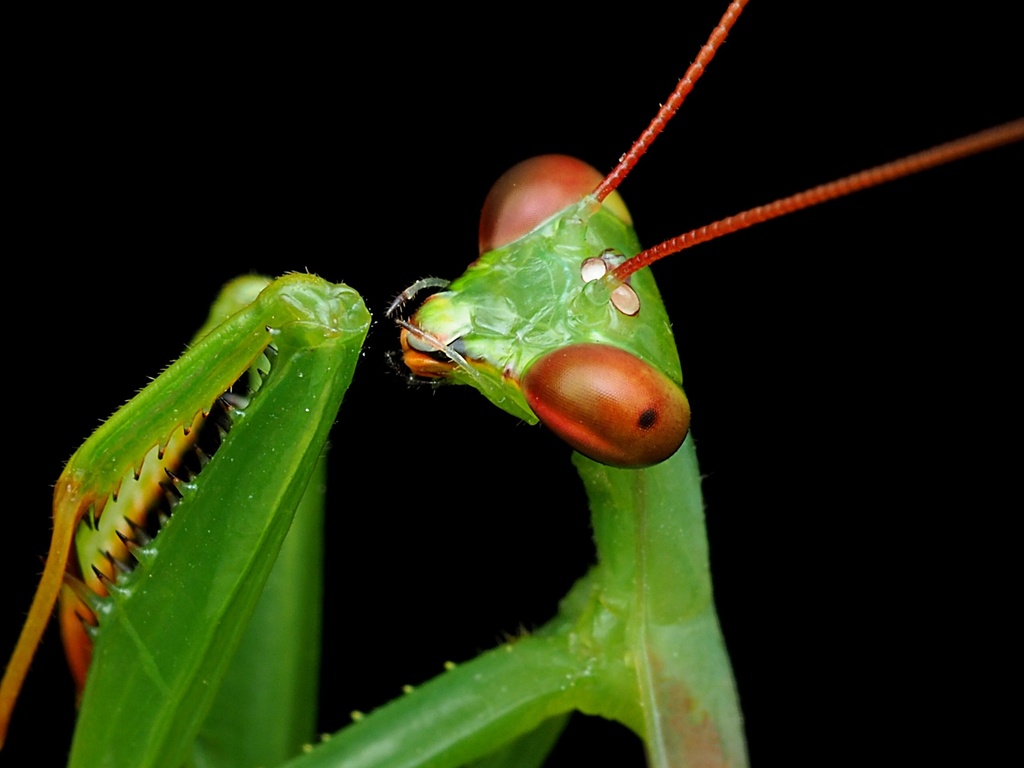
Adults grow to about 3 to 6 cm long and hide under leaves. Nymphs are green or brown, often striped, with mottled limbs and a curved abdomen tip, and they can be cannibalistic. Females can reproduce without mating and eggs hatch over weeks or even two seasons.
Source: Wikipedia
How to recognize it
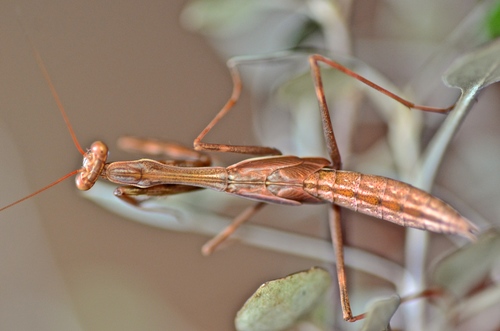
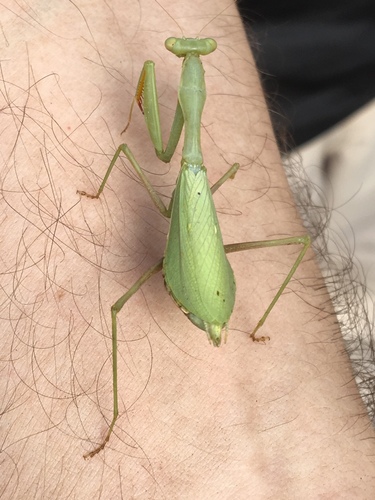
Nymphs are green or brown, usually with longitudinal stripes, mottled legs and a tip of the abdomen that curves upward.
Source: Wikipedia
Size
Adults measure roughly 32 to 60 mm in length.
Source: Wikipedia
Is it a pest in the house?
It is not a pest species, but it may be pushing out a native mantis in northern New Zealand cities.
Source: Wikipedia
How to get rid of it
It is one of three invertebrates prioritized for research and control, and chilling its egg case can delay hatching.
Source: Wikipedia
Where it lives
In the wild they tend to hide beneath leaves.
Source: Wikipedia
What it eats
Young mantises often eat each other, even when other prey is available.
Source: Wikipedia
Life cycle
Unmated females can lay viable eggs, and hatch times are spread out over weeks or even two seasons.
Source: Wikipedia
When you see it
The first New Zealand records were nymphs found in February 1978.
Source: Wikipedia
Lookalikes
When first discovered, the insects did not match any known Australian or Pacific species.
Source: Wikipedia
Where it is found in the US
Recorded in 1 of 51 states and DC. Most records: California.
Darker = more records. Counts are museum and citizen-science records, not population size.
Source: GBIF
Status: introduced in United States. Source: iNaturalist
Months it is reported in the US
Source: GBIF
More photos
Questions people ask
Are they a problem in homes?
They are not considered a household pest, though they may outcompete a native mantis in urban areas.
Source: Wikipedia
Same family (Miomantidae)

Sources
- Wikipedia: https://en.wikipedia.org/wiki/Miomantis_caffra
Look it up elsewhere: GBIF · iNaturalist · BugGuide · Wikipedia
Text written 2026-10-22 from the sources above and checked sentence by sentence against them. Data fetched 2026-10-22.