 Bug FAQ
Small Yellow Sally
Siphonoperla torrentium · Order: Plecoptera · Family: Chloroperlidae
Also called: Common Small Yellow Sally
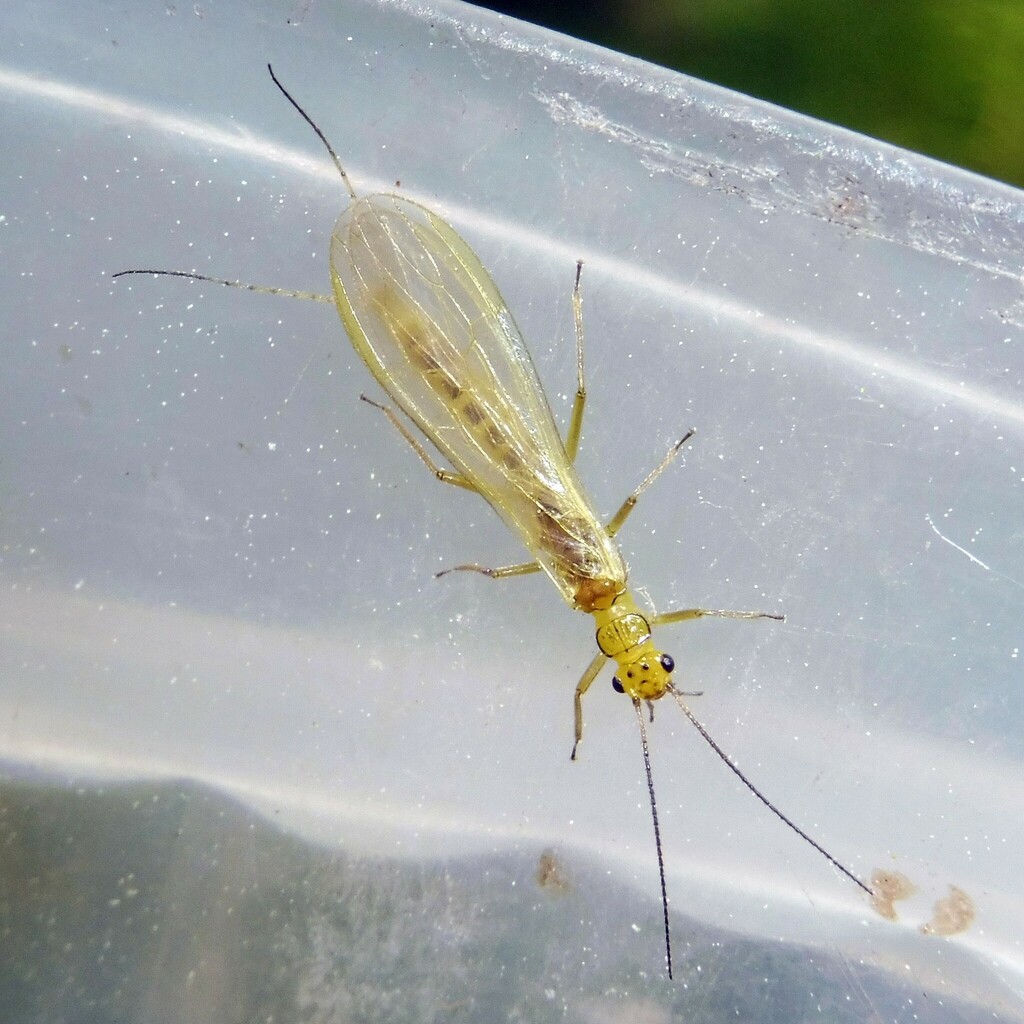
Small Yellow Sally are tiny stoneflies about 5 to 8 mm long, with a wingspan around 14 to 17 mm. They are yellowish-light brown, have clear bristles, and show dark spots on the head and pronotum. These insects live in streams and small rivers across most of Europe and also in North America.
Source: Wikipedia
How to recognize it
They are yellowish to light brown with clear bristles and have dark spots on the head and pronotum.
Source: Wikipedia
Size
Males are about 5 to 7 mm long and females 5 to 8 mm, with wingspans of roughly 13.6 to 15.4 mm for males and 15 to 17.5 mm for females. Larvae can grow to about 9 mm in length.
Source: Wikipedia
Where it lives
They are found in streams and small rivers.
Source: Wikipedia
What it eats
Adults are predatory but also feed on pollen.
Source: Wikipedia
Life cycle
The species has one generation per year (univoltine).
Source: Wikipedia
Where it comes from
They occur throughout most of Europe and are also present in North America.
Source: Wikipedia
More photos
Questions people ask
What do Small Yellow Sally look like?
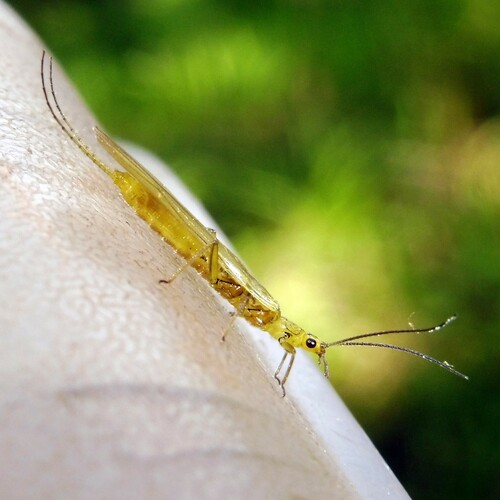
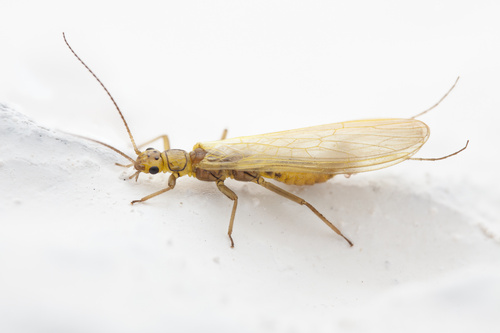
They are tiny stoneflies, 5 to 8 mm long, yellowish-light brown with clear bristles and dark spots on the head and pronotum.
Source: Wikipedia
Where are Small Yellow Sally found?
They live in streams and small rivers across most of Europe and also in North America.
Source: Wikipedia
Sources
- Wikipedia: https://en.wikipedia.org/wiki/Siphonoperla_torrentium
Look it up elsewhere: GBIF · iNaturalist · BugGuide · Wikipedia
Text written 2026-10-23 from the sources above and checked sentence by sentence against them. Data fetched 2026-10-23.