 Bug FAQ
Small Red-eyed Damselfly
Erythromma viridulum · Order: Odonata · Family: Coenagrionidae
Also called: Small Redeye
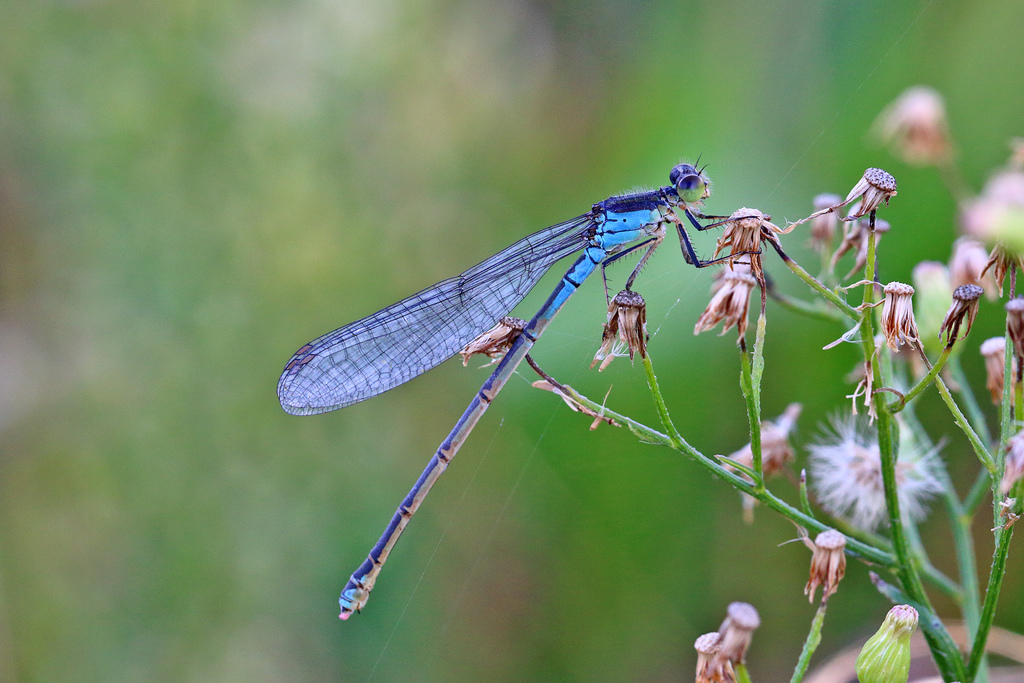
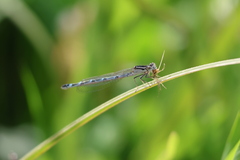
The small red-eyed damselfly is about 29 mm long and lives among floating water plants. Males are bronze-black on top with blue sides, females have yellow, green or blue sides, and both have deep red eyes and no pale spots behind them. It lays eggs in tandem on stems and leaves of floating vegetation; the larvae live among pondweed and emerge after about a year.
Source: Wikipedia
How to recognize it
Males have a bronze-black dorsal surface and blue side panels. Females show yellow, green or blue on the sides of the thorax. The eyes are large, spaced and deep red.
Source: Wikipedia
Size
It measures about 29 mm (1.1 in) in length.
Source: Wikipedia
Life cycle
Eggs are laid while in tandem into stems and leaves of floating plants. The larvae develop among pondweed and probably emerge after about a year.
Source: Wikipedia
When you see it
The first British record was from Essex on 17 July 1999.
Source: Wikipedia
Where it comes from
Its populations in north-west Europe grew during the late 20th century.
Source: Wikipedia
More photos


Same family (Coenagrionidae)


Sources
- Wikipedia: https://en.wikipedia.org/wiki/Small_red-eyed_damselfly
Look it up elsewhere: GBIF · iNaturalist · BugGuide · Wikipedia
Text written 2026-10-22 from the sources above and checked sentence by sentence against them. Data fetched 2026-10-22.