 Bug FAQ
Small Grass Fly
Lonchoptera bifurcata · Order: Diptera · Family: Lonchopteridae
Also called: Spear-winged fly
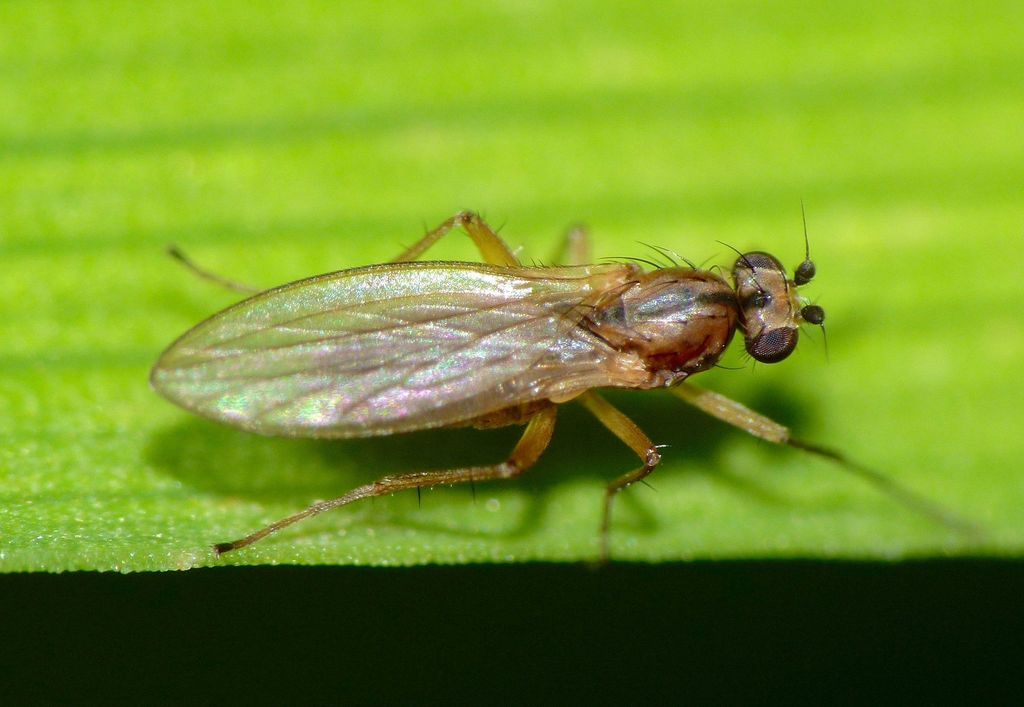
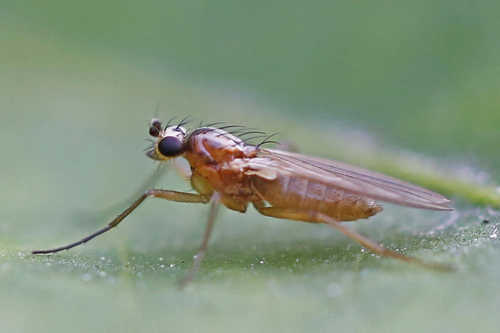
Adult Small Grass Flies are 2 to 5 mm long and come in light tan or black forms, sometimes with pale markings on a dark abdomen. They live around damp lawns and ditches, and the larvae grow in decaying organic matter.
Source: Wikipedia
Size
An adult is about 2 to 5 mm (0.08 to 0.2 in) long.
Source: Wikipedia
Life cycle
In North America males are rarely seen and females reproduce by parthenogenesis; the same appears true elsewhere in its range.
Source: Wikipedia
Where it comes from
It has a Holarctic distribution and occurs in Europe, Asia and North America.
Source: Wikipedia
Where it is found in the US
Recorded in 29 of 51 states and DC. Most records: Michigan, California, Hawaii, New Hampshire, New York, Massachusetts, Maryland, Virginia.
Darker = more records. Counts are museum and citizen-science records, not population size.
Source: GBIF
Months it is reported in the US
Source: GBIF
More photos
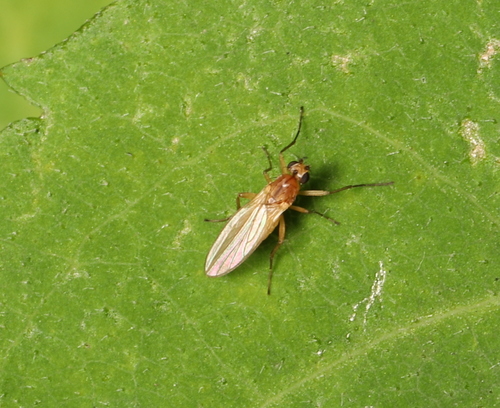
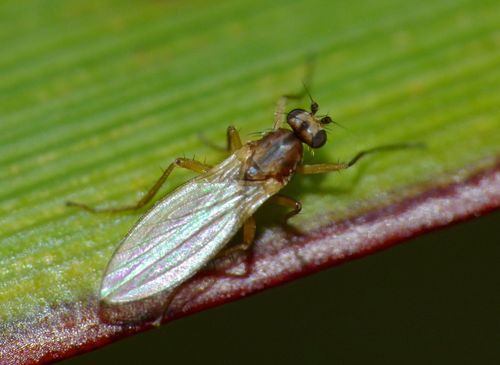
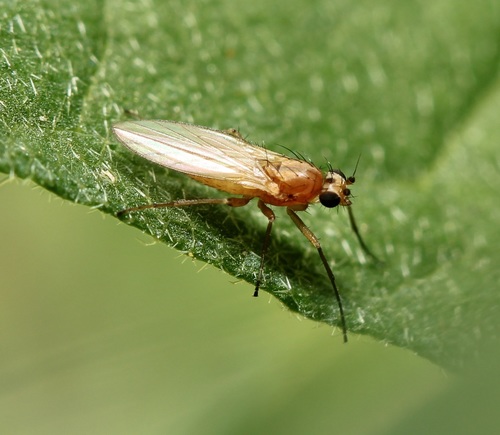
Questions people ask
How big are Small Grass Flies?
Adults measure about 2 to 5 mm (0.08 to 0.2 in) in length.
Source: Wikipedia
How do they reproduce?
Females produce offspring without males (parthenogenesis), and males are rarely observed.
Source: Wikipedia
Sources
- Wikipedia: https://en.wikipedia.org/wiki/Lonchoptera_bifurcata
Look it up elsewhere: GBIF · iNaturalist · BugGuide · Wikipedia
Text written 2026-10-23 from the sources above and checked sentence by sentence against them. Data fetched 2026-10-22.