 Bug FAQ
Slender Groundhopper
Tetrix subulata · Order: Orthoptera · Family: Tetrigidae
Also called: Slender Ground Hopper, Slender Grouse Locust

The slender groundhopper is a small grasshopper about 9 to 15 mm long and can be light grey, dark, or reddish-brown in colour. It usually has well-developed wings and will fly away quickly if disturbed.
Source: Wikipedia
How to recognize it
It normally has good wings and will take off readily when scared.
Source: Wikipedia
Size
Body length is roughly 9 to 15 mm.
Source: Wikipedia
Where it lives
Found mainly in wet places like moist grasslands near streams, riverbanks and mudflats, though it sometimes occurs in drier areas.
Source: Wikipedia
Life cycle
Males and females exchange visual signals before mating.
Source: Wikipedia
When you see it
Adults lay eggs starting in August and can be seen again from June to July of the next year.
Source: Wikipedia
Where it is found in the US
Recorded in 33 of 51 states and DC. Most records: Michigan, Alaska, Colorado, Utah, Washington, New Mexico, California, Oregon.
Darker = more records. Counts are museum and citizen-science records, not population size.
Source: GBIF
Status: native in North America; native in United States; native in Canada. Source: iNaturalist
Months it is reported in the US
Source: GBIF
More photos
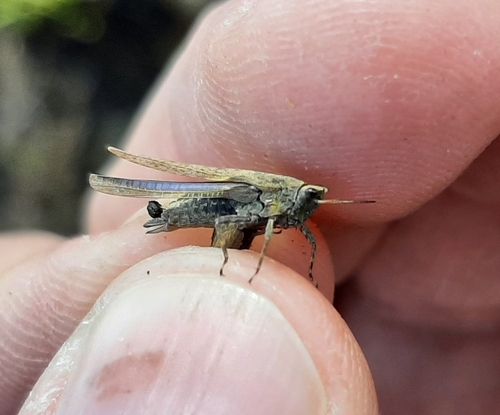
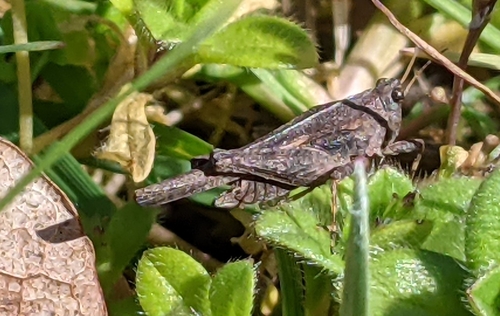
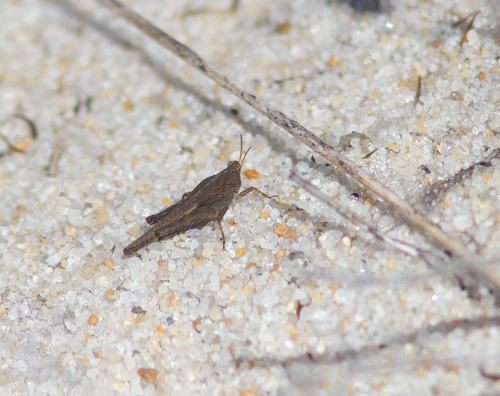
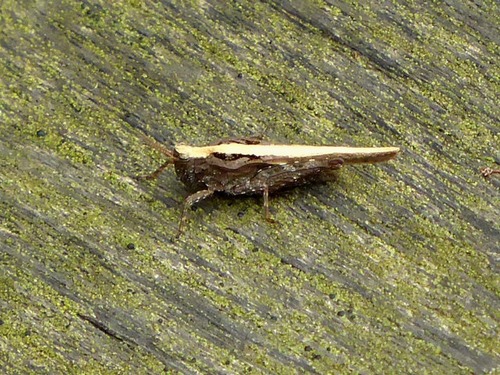
Same family (Tetrigidae)

Sources
- Wikipedia: https://en.wikipedia.org/wiki/Tetrix_subulata
Look it up elsewhere: GBIF · iNaturalist · BugGuide · ITIS · Wikipedia
Text written 2026-10-22 from the sources above and checked sentence by sentence against them. Data fetched 2026-10-22.