 Bug FAQ
Slender Bluet
Enallagma traviatum · Order: Odonata · Family: Coenagrionidae
Also called: North American Slender Bluet
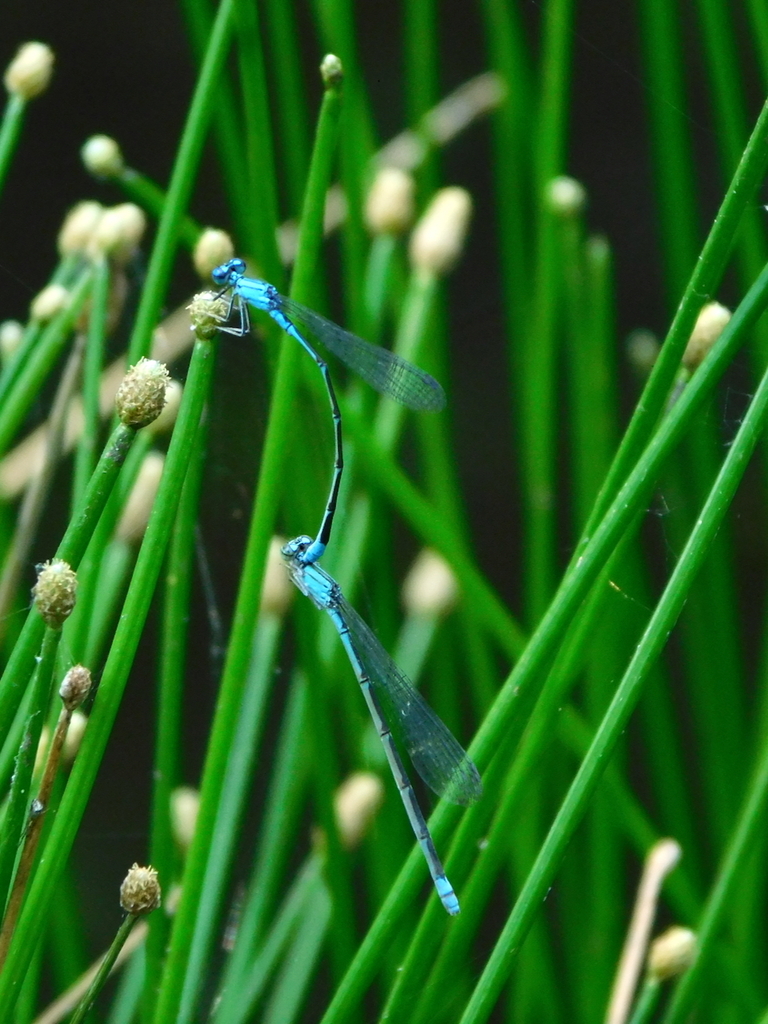
The slender bluet is a small damselfly about 29 to 32 mm long with a thin blue abdomen and large eyespots separated by a thin blue line. It lives near large ponds and lakes, especially where forest edges are present, and flies mainly from late May through early September, with peak activity in June and July in Oklahoma. Its range includes many U.S. states from the Northeast to the South and Midwest.
Source: Wikipedia
How to recognize it
The slender bluet is blue with a thin abdomen and has large eyespots linked by a thin blue line.
Source: Wikipedia
Size
It measures about 29 to 32 mm in length.
Source: Wikipedia
Where it lives
It is found along large ponds and lakes, especially where forest edges are nearby. In Oklahoma it is most active in June and July.
Source: Wikipedia
When you see it
Adults typically fly from late May to early September, though the exact timing varies by location.
Source: Wikipedia
Lookalikes
Several other damselfly species look similar, such as the skimming bluet which shares its habitat.
Source: Wikipedia
Where it is found in the US
Recorded in 34 of 51 states and DC. Most records: Ohio, New Jersey, Michigan, Virginia, Maryland, Pennsylvania, New York, North Carolina.
Darker = more records. Counts are museum and citizen-science records, not population size.
Source: GBIF
Status: native in North America; native in Canada. Source: iNaturalist
Months it is reported in the US
Source: GBIF
More photos
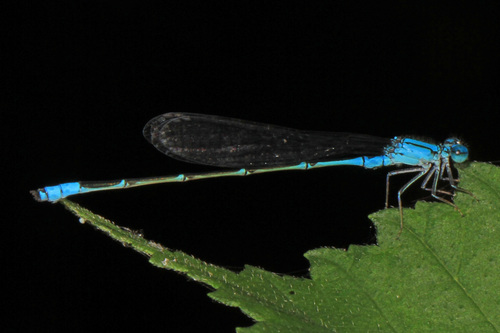
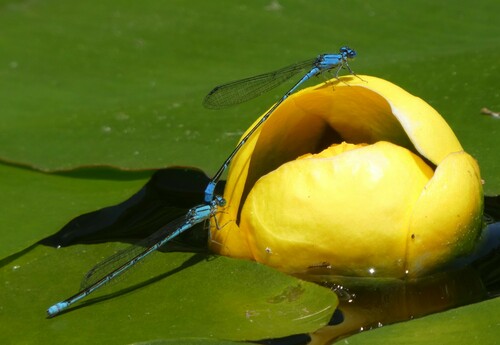

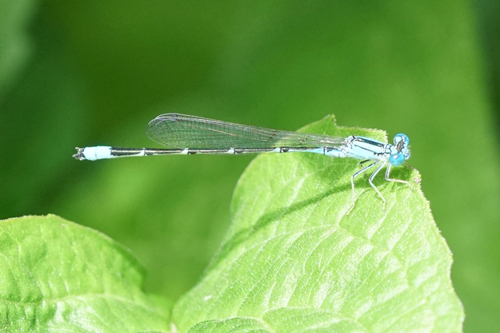
Same family (Coenagrionidae)


Sources
- Wikipedia: https://en.wikipedia.org/wiki/Slender_bluet
Look it up elsewhere: GBIF · iNaturalist · BugGuide · ITIS · Wikipedia
Text written 2026-10-22 from the sources above and checked sentence by sentence against them. Data fetched 2026-10-22.