 Bug FAQ
Sinuated Spoonwing
Nemoptera sinuata · Order: Neuroptera · Family: Nemopteridae
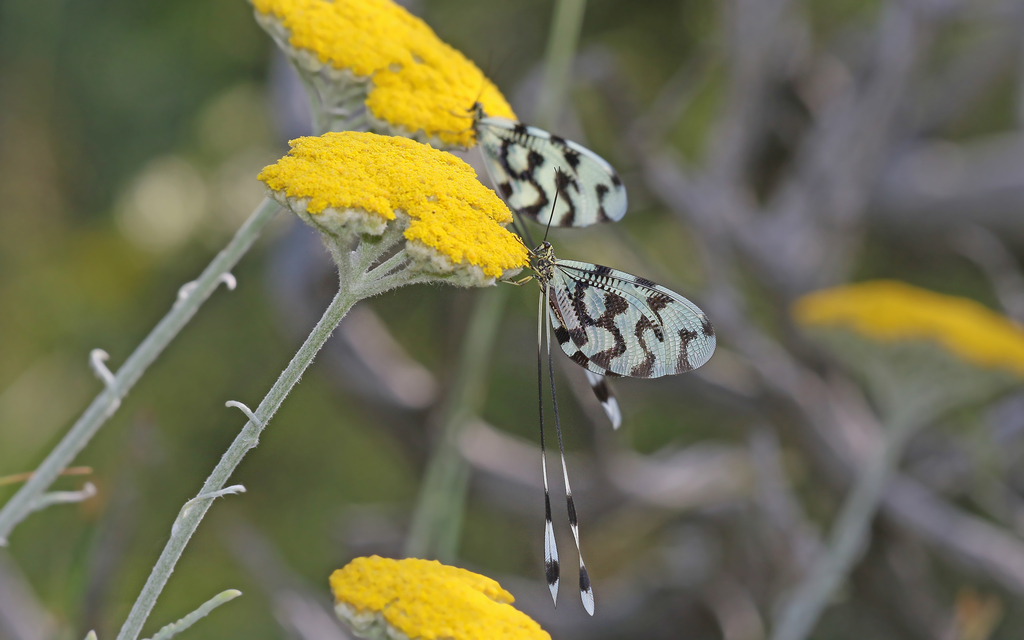
The sinuated spoonwing is a day-active lacewing about 16 mm long with a 55 mm wingspan. It lives in Balkan and Anatolian forests, grasslands and near river gorges, feeding on pollen as an adult and plant sap as a larva. Females lay up to 70 eggs on the ground in early morning; the eggs hatch after about three weeks.
Source: Wikipedia
How to recognize it
It is a diurnal spoonwing lacewing belonging to the family Nemopteridae.
Source: Wikipedia
Size
Adults measure roughly 16 mm in body length and have a wingspan of about 55 mm.
Source: Wikipedia
Where it lives
They inhabit forests, open grasslands and are often seen flying near river gorges.
Source: Wikipedia
What it eats
Adult spoonwings mainly consume pollen, especially from Alyssum murale, Cota austriaca and Achillea coarctata. Larvae are unusual for lacewings in that they drink water and suck plant sap rather than hunting other insects.
Source: Wikipedia
Life cycle
Females lay up to 70 eggs on the ground in the early morning; the eggs remain dormant for 23 to 25 days before hatching. The newly hatched larvae continue the herbivorous habit, feeding on water and plant sap.
Source: Wikipedia
When you see it
Adults are active during the day from mid-May through late June.
Source: Wikipedia
Where it comes from
Their range covers the Balkan Peninsula and parts of Anatolia, including Bulgaria, East Thrace, Greece, North Macedonia and Turkey.
Source: Wikipedia
Questions people ask
When are sinuated spoonwings active?
They fly during the day from mid-May to late June.
Source: Wikipedia
What do adult sinuated spoonwings eat?
Adults feed mainly on pollen from plants such as Alyssum murale, Cota austriaca and Achillea coarctata.
Source: Wikipedia
What do the larvae eat?
Larvae drink water and suck plant sap, avoiding other insects.
Source: Wikipedia
Where can I find these insects?
They live in forests, open grasslands and near river gorges in the Balkans and Anatolia.
Source: Wikipedia
Sources
- Wikipedia: https://en.wikipedia.org/wiki/Nemoptera_sinuata
Look it up elsewhere: GBIF · iNaturalist · BugGuide · Wikipedia
Text written 2026-10-23 from the sources above and checked sentence by sentence against them. Data fetched 2026-10-23.