 Bug FAQ
Shore Earwig
Labidura riparia · Order: Dermaptera · Family: Labiduridae
Also called: Giant Earwig, Sand Earwig, Striped Earwig, Tawny Earwig
Source: lsuagcenter.com
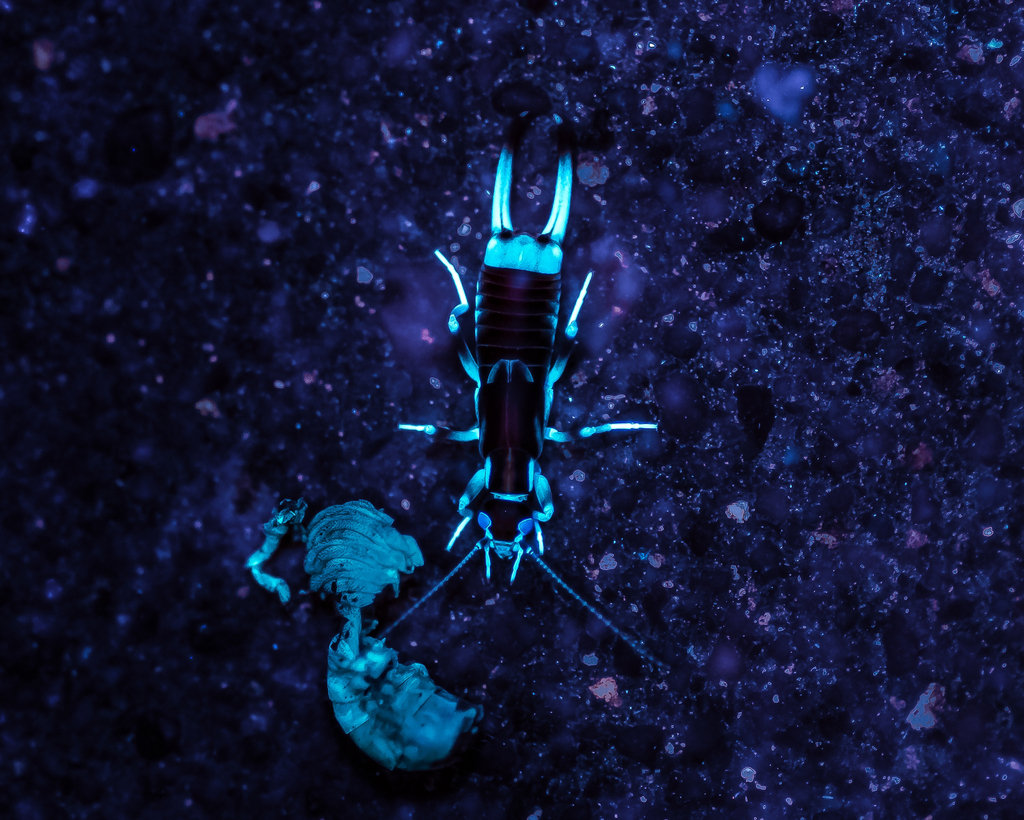
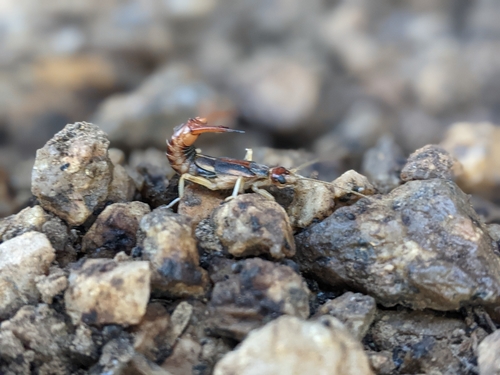
Shore earwigs are tan to light brown insects with two dark stripes on the thorax and forewings and have force-like pincers at the rear. They live in dark, moist places near water, farms, woodlands and pond edges, are active at night, and eat other insects and scavenged meat.
Source: Wikipedia, lsuagcenter.com, extension.msstate.edu
How to recognize it
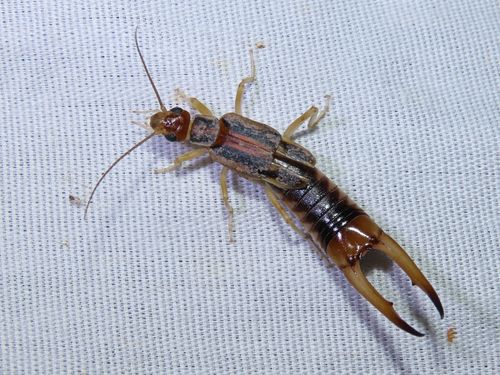
They have modified cerci that look like forceps and give them the name “earwig.” Their body is tan to light brown with two dark longitudinal stripes on the pronotum and forewings.
Source: Wikipedia, extension.msstate.edu, lsuagcenter.com
Size
Adults range from about 16 mm to 30 mm long and have ten abdominal segments.
Source: Wikipedia
Is it a pest in the house?
Earwigs may wander into homes accidentally but cannot survive indoors and cause only minor cosmetic plant damage.
Source: lsuagcenter.com, extension.msstate.edu
Does it bite or sting?
They are useful predators that help control pest insects.
Source: Wikipedia
How to get rid of it
They do not need control in agriculture or gardens, and any that enter homes can be removed by hand or vacuuming.
Source: lsuagcenter.com
What it eats
They are generalist predators that eat insects, especially caterpillars and eggs, and will also scavenge meat.
Source: Wikipedia
Life cycle
A female can lay eggs up to three times, sometimes more than one batch at a time. Two to three generations occur each year, and the final generation hibernates underground during winter.
Source: Wikipedia
When you see it
They are nocturnal and begin hunting just after sunset.
Source: Wikipedia
Where it comes from
They are a cosmopolitan species mainly in tropical to subtropical regions. They are sometimes called Labidura japonica, but that name actually refers to the subspecies Labidura riparia japonica found from Japan to Papua New Guinea.
Source: Wikipedia
Where it is found in the US
Recorded in 23 of 51 states and DC. Most records: Florida, Texas, Arizona, California, Louisiana, Georgia, Alabama, South Carolina.
Darker = more records. Counts are museum and citizen-science records, not population size.
Source: GBIF
Status: introduced in United States. Source: iNaturalist
Months it is reported in the US
Source: GBIF
More photos
Questions people ask
Do they bite or pinch people?
They can deliver a minor defensive pinch if you handle them, but it is not harmful.
Source: lsuagcenter.com
How can I get rid of earwigs that enter my house?
You can pick them up and dispose of them or vacuum them; no chemical control is needed.
Source: lsuagcenter.com
Are they beneficial in the garden?
Yes, they prey on many garden pests such as caterpillars and insect eggs.
Source: Wikipedia
Sources
- lsuagcenter.com: https://www.lsuagcenter.com/profiles/madeleinestout/articles/page1708097777108
- Wikipedia: https://en.wikipedia.org/wiki/Labidura_riparia
- extension.msstate.edu: https://extension.msstate.edu/newsletters/bugs-eye-view/2023/striped-earwig-vol-9-no-13
Look it up elsewhere: GBIF · iNaturalist · BugGuide · ITIS · Wikipedia
Text written 2026-10-23 from the sources above and checked sentence by sentence against them. Data fetched 2026-10-23.