 Bug FAQ
Scarce Blue-tailed Damselfly
Ischnura pumilio · Order: Odonata · Family: Coenagrionidae
Also called: Scarce Ischnura, Small Bluetail

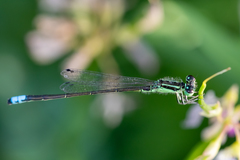
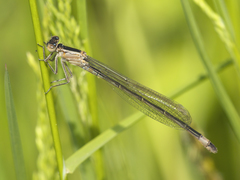
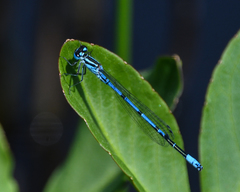
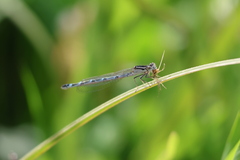
They live across most of Europe, extend eastward to Siberia, and are found as far south as Morocco, the Azores and Madeira. They look a lot like the blue-tailed damselfly, but that species has the blue spot mainly on segment 8.
Source: Wikipedia
How to recognize it
Young females are orange (aurantiaca phase) and later become greenish-brown.
Source: Wikipedia
Where it lives
The species occurs throughout Europe except the far north. Its eastern range reaches from Asia Minor to Siberia, and it is also present in Morocco, the Azores and Madeira.
Source: Wikipedia
Where it comes from
It is native to most of Europe, excluding the northern parts. Its native range also includes areas from Asia Minor to Siberia and the islands of Morocco, the Azores and Madeira.
Source: Wikipedia
More photos


Same family (Coenagrionidae)




Sources
- Wikipedia: https://en.wikipedia.org/wiki/Scarce_blue-tailed_damselfly
Look it up elsewhere: GBIF · iNaturalist · BugGuide · Wikipedia
Text written 2026-10-23 from the sources above and checked sentence by sentence against them. Data fetched 2026-10-22.