 Bug FAQ
Rusty Millipede
Trigoniulus corallinus · Order: Spirobolida · Family: Pachybolidae
Also called: Brown Millipede, Millipede
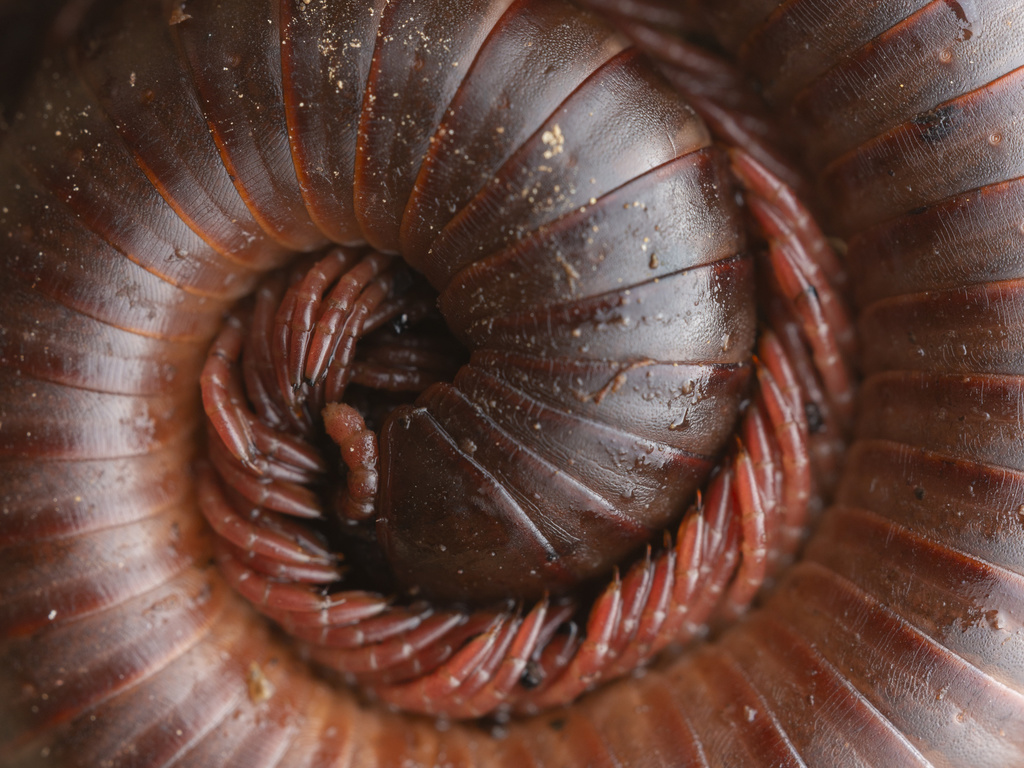
The rusty millipede grows to about 5 to 7.5 cm long and is reddish-brown in color. It lives in moist places such as rotting wood and compost, especially during the monsoon. Its native range covers much of the Indo-Malayan region, including India, Southeast Asia and many islands.
Source: Wikipedia
How to recognize it
Adults are reddish brown.
Source: Wikipedia
Size
Adults measure about 2 to 3 inches (50 to 75 mm) long.
Source: Wikipedia
Where it lives
They prefer moist habitats like rotten wood and compost, especially in the monsoon season.
Source: Wikipedia
Life cycle
Their genome was sequenced in 2015, the first millipede genome to be done.
Source: Wikipedia
When you see it
They are most active in moist monsoon conditions.
Source: Wikipedia
Where it comes from
They are widely distributed across the Indo-Malayan region, from India to Indonesia.
Source: Wikipedia
Where it is found in the US
Recorded in 8 of 51 states and DC. Most records: Florida, Hawaii, Texas, Louisiana, Minnesota, Nevada, Arizona, California.
Darker = more records. Counts are museum and citizen-science records, not population size.
Source: GBIF
Status: introduced in North America; introduced in United States. Source: iNaturalist
Months it is reported in the US
Source: GBIF
More photos
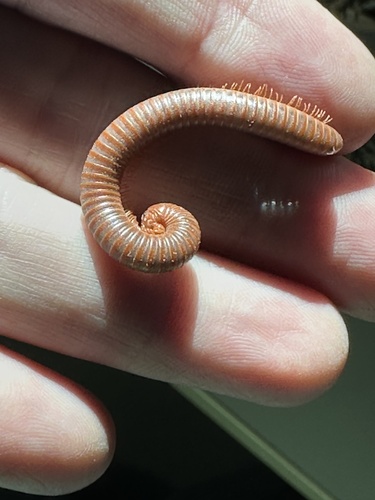
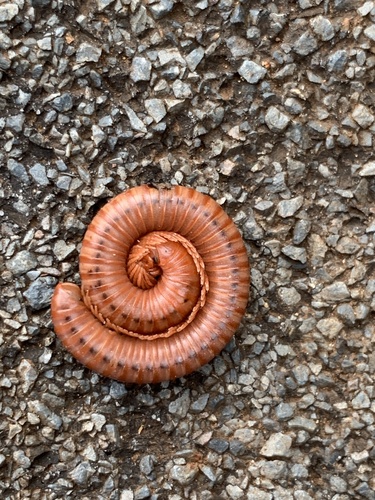
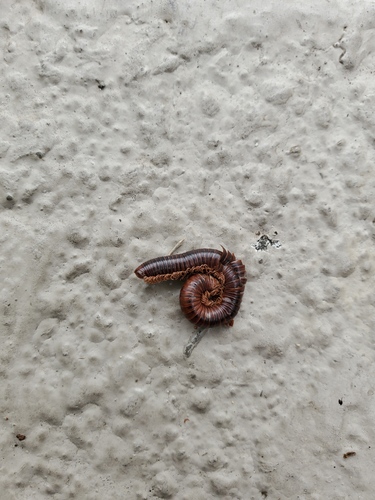
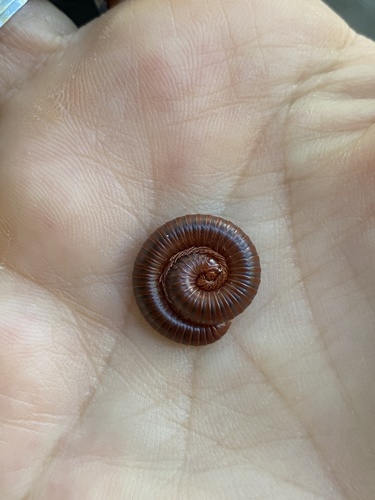
Same family (Pachybolidae)
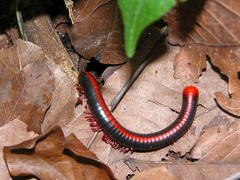
Sources
- Wikipedia: https://en.wikipedia.org/wiki/Trigoniulus_corallinus
Look it up elsewhere: GBIF · iNaturalist · BugGuide · ITIS · Wikipedia
Text written 2026-10-22 from the sources above and checked sentence by sentence against them. Data fetched 2026-10-22.