 Bug FAQ
Ripiphorus fasciatus
Ripiphorus fasciatus · Order: Coleoptera · Family: Ripiphoridae
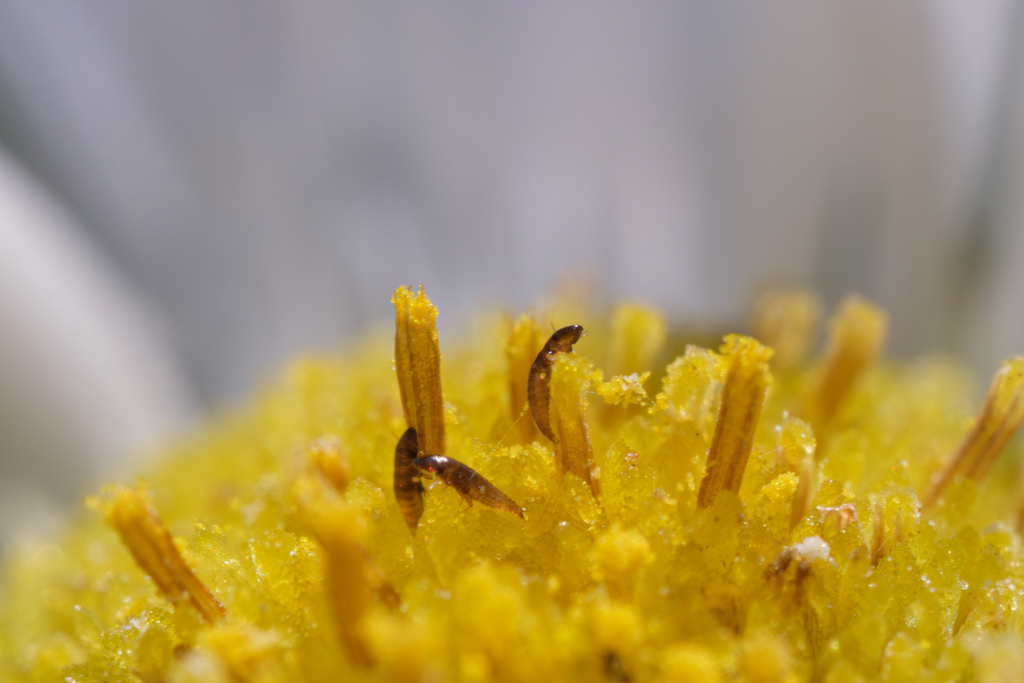
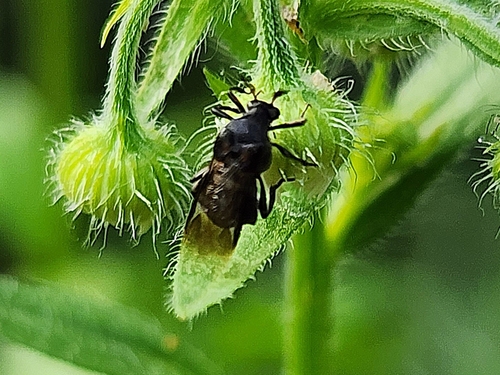
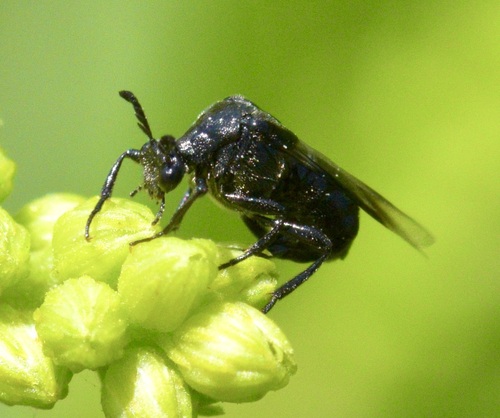
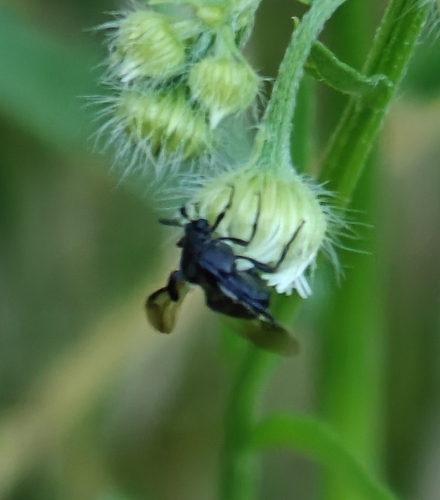
Ripiphorus fasciatus is a wedge-shaped beetle whose adults have clear hindwings and feathery (plumose) antennae, making them look a bit like a bee or a fly.
Source: Wikipedia
How to recognize it
Adults have clear hindwings and plumose antennae, giving them a superficial resemblance to bees or flies.
Source: Wikipedia
Size
The beetle is wedge-shaped and relatively small, with the characteristic clear hindwings and feathery antennae.
Source: Wikipedia
What it eats
The larvae parasitize halictid (sweat) bees, which are ground-nesting.
Source: Wikipedia
Life cycle
Ripiphorus fasciatus is a parasitoid beetle; its larvae develop inside host bees before emerging as adults.
Source: Wikipedia
Lookalikes
Because of its clear wings and feathery antennae, it can be mistaken for a bee or a fly, but those features help tell it apart.
Source: Wikipedia
Where it is found in the US
Recorded in 24 of 51 states and DC. Most records: Michigan, Pennsylvania, Massachusetts, New York, Iowa, Virginia, Connecticut, Maine.
Darker = more records. Counts are museum and citizen-science records, not population size.
Source: GBIF
Months it is reported in the US
Source: GBIF
More photos
Questions people ask
What does Ripiphorus fasciatus look like?
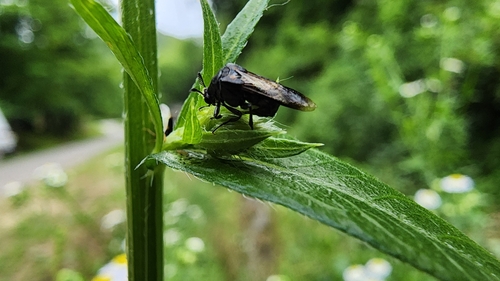
The adult has clear hindwings, feathery antennae, and a wedge-shaped body that can resemble a bee or a fly.
Source: Wikipedia
What does Ripiphorus fasciatus feed on?
Its larvae parasitize ground-nesting halictid bees.
Source: Wikipedia
How does the life cycle of Ripiphorus fasciatus work?
The beetle’s larvae develop as parasitoids inside host bees before emerging as winged adults.
Source: Wikipedia
Same family (Ripiphoridae)
Sources
- Wikipedia: https://en.wikipedia.org/wiki/Ripiphorus_fasciatus
Look it up elsewhere: GBIF · iNaturalist · BugGuide · ITIS · Wikipedia
Text written 2026-10-27 from the sources above and checked sentence by sentence against them. Data fetched 2026-10-27.