 Bug FAQ
Red-backed Darkling Beetle
Eleodes suturalis · Order: Coleoptera · Family: Tenebrionidae
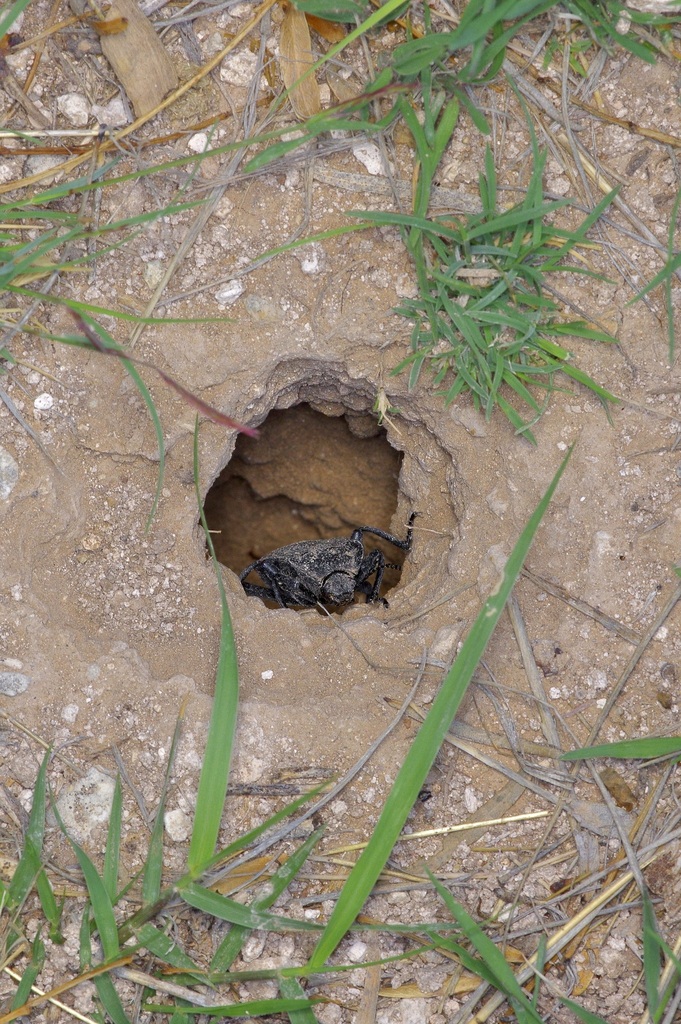
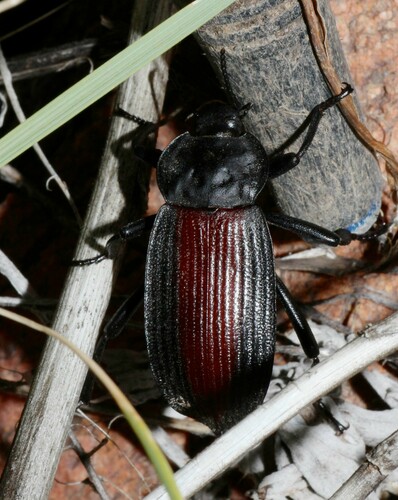
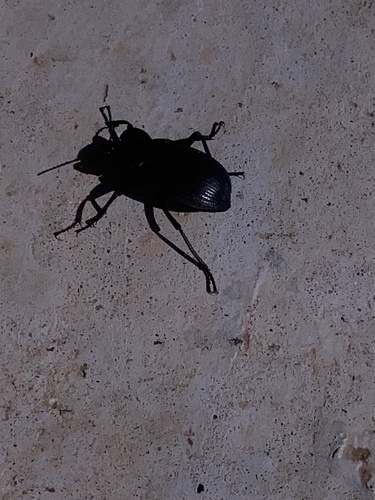
Males are about 25 to 36 mm long and females 21.5 to 33.5 mm (roughly 0.8 to 1.4 in) in length. They are easy to spot because a bright red stripe runs down the middle of their flat wing covers. When threatened they lift their abdomen and release a foul-smelling liquid, and they are native to the United States.
Source: Wikipedia
How to recognize it
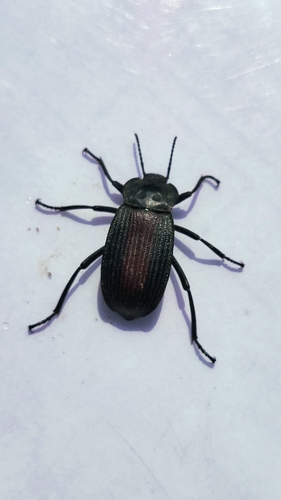
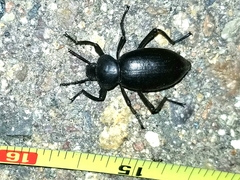
A distinctive red stripe runs down the center of the beetle’s flat elytra.
Source: Wikipedia
Size
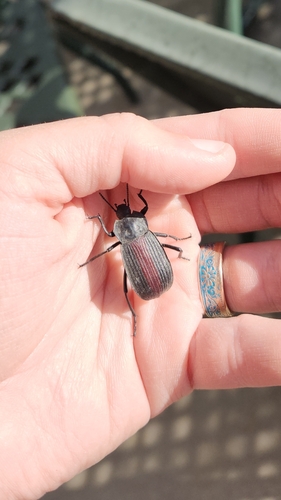
Males measure 25 to 36 mm and females 21.5 to 33.5 mm in length.
Source: Wikipedia
Where it lives
When disturbed they raise their abdomen and emit a foul-smelling liquid as a defense.
Source: Wikipedia
What it eats
Both larvae and adults feed on plant seeds.
Source: Wikipedia
Where it comes from
The species is endemic to the United States.
Source: Wikipedia
Where it is found in the US
Recorded in 15 of 51 states and DC. Most records: Colorado, Texas, Kansas, New Mexico, South Dakota, Nebraska, Oklahoma, Wyoming.
Darker = more records. Counts are museum and citizen-science records, not population size.
Source: GBIF
Status: native in North America; native in United States. Source: iNaturalist
Months it is reported in the US
Source: GBIF
More photos
Questions people ask
How can I identify a Red-backed Darkling Beetle?
Look for a flat beetle with a bright red stripe down the middle of its wing covers.
Source: Wikipedia
How big does this beetle get?
Males are 25 to 36 mm long and females 21.5 to 33.5 mm.
Source: Wikipedia
Same family (Tenebrionidae)


Sources
- Wikipedia: https://en.wikipedia.org/wiki/Eleodes_suturalis
Look it up elsewhere: GBIF · iNaturalist · BugGuide · Wikipedia
Text written 2026-10-23 from the sources above and checked sentence by sentence against them. Data fetched 2026-10-23.