 Bug FAQ
Rathke's Woodlouse
Trachelipus rathkii · Order: Isopoda · Family: Trachelipodidae
Also called: Rathkes Woodlouse, Rainbow Isopod
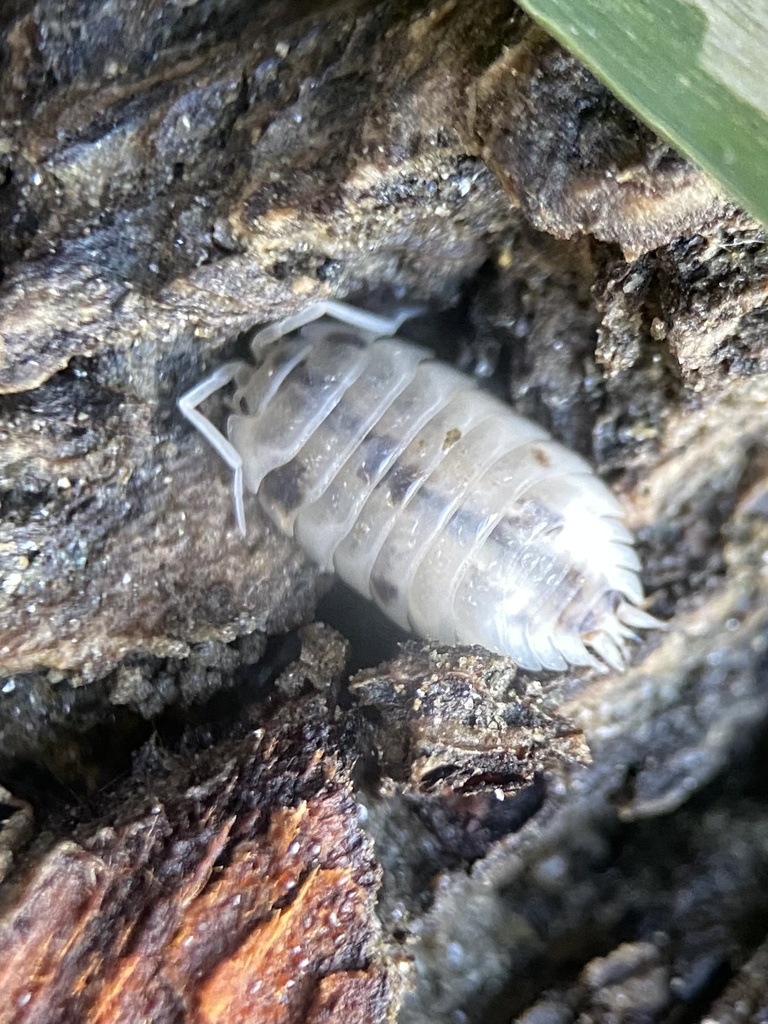
Rathke's woodlice grow to about 15 mm long and are usually slate-grey with pale longitudinal stripes; females can show orange mottling. They prefer damp, poorly drained places like riverside meadows, floodplains, scrub, cliffs, gravel pits and churchyards, hiding under stones, wood, bark, grass litter and flood debris. The species is found across Europe, but not in the Mediterranean Basin.
Source: Wikipedia
How to recognize it
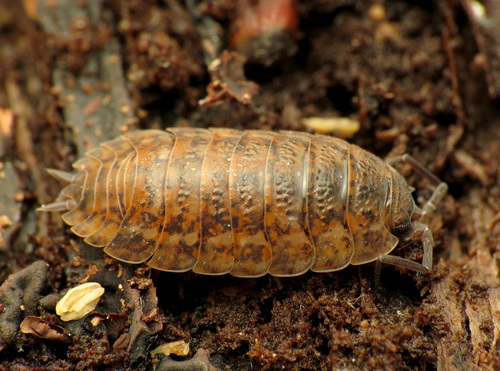
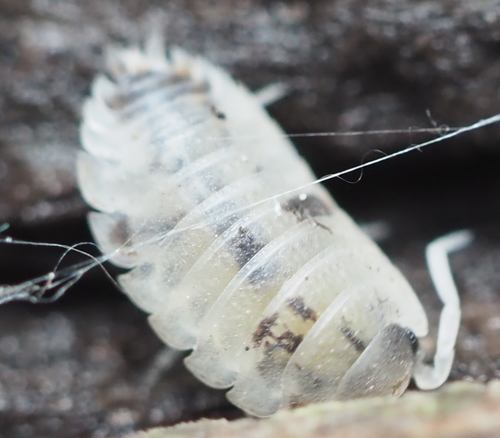
The body is typically slate grey with three thin pale stripes; females may have orange mottling.
Source: Wikipedia
Size
Adults reach about 15 mm in length.
Source: Wikipedia
Where it lives
They live in damp, poorly drained habitats and can tolerate flooding, often dominating riverside meadows and floodplains. They also occur in scrub, eroding cliffs, gravel pits, churchyards, under stones, dead wood, bark, grass litter, tussocks and flood debris.
Source: Wikipedia
Where it comes from
Their range covers most of Europe except the Mediterranean Basin.
Source: Wikipedia
Where it is found in the US
Recorded in 42 of 51 states and DC. Most records: Wisconsin, Minnesota, Pennsylvania, Virginia, Michigan, Ohio, Illinois, Maryland.
Darker = more records. Counts are museum and citizen-science records, not population size.
Source: GBIF
Status: introduced in North America; introduced in Canada; introduced in United States. Source: iNaturalist
Months it is reported in the US
Source: GBIF
More photos
Sources
- Wikipedia: https://en.wikipedia.org/wiki/Trachelipus_rathkii
Look it up elsewhere: GBIF · iNaturalist · BugGuide · ITIS · Wikipedia
Text written 2026-10-22 from the sources above and checked sentence by sentence against them. Data fetched 2026-10-22.