 Bug FAQ
Raspberry Fruitworm Beetle
Byturus unicolor · Order: Coleoptera · Family: Byturidae
Also called: Raspberry Fruitworm
Source: Wikipedia

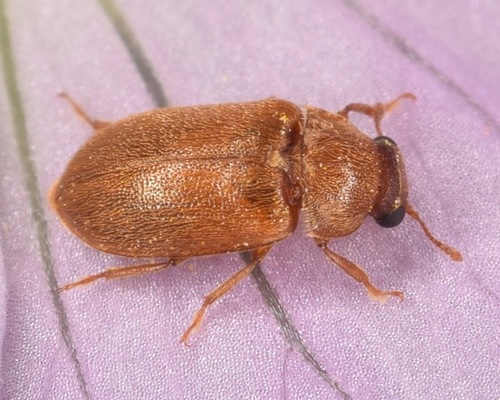
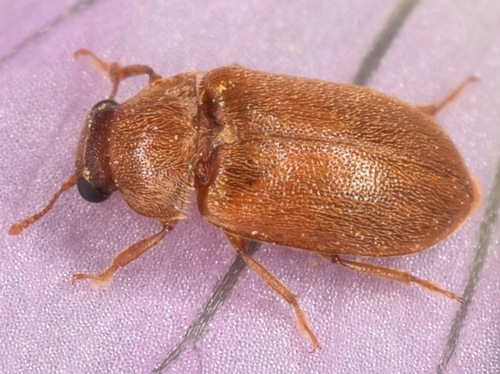
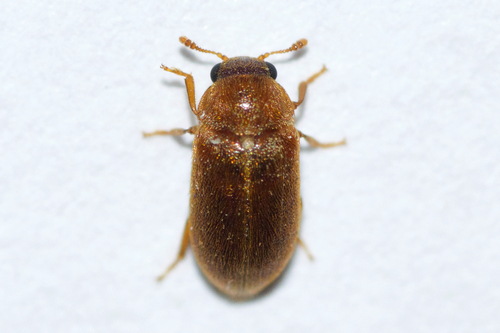
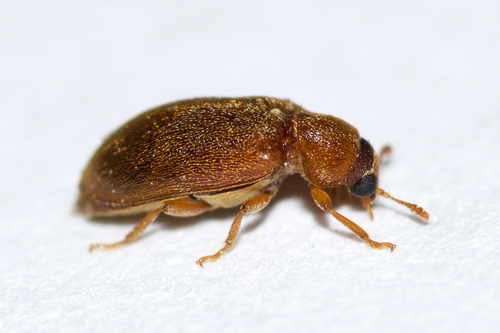
The adult is a tiny yellow-brown beetle 4 to 5 mm long, while the white larva with brown spots reaches about 8 mm.
Source: Wikipedia
How to recognize it
The adult raspberry fruitworm beetle is a small yellow-brown beetle about 4 to 5 mm long. The larva is about 8 mm long, white with brown patches on each segment’s back.
Source: Wikipedia
Size
Adults measure 4 to 5 mm, and larvae grow to roughly 8 mm.
Source: Wikipedia
Is it a pest in the house?
Because its larvae eat raspberry fruit, it is considered a fruitworm beetle that can damage crops.
Source: Wikipedia
Where it lives
It occurs in Central and North America.
Source: Wikipedia
Where it comes from
Its native range includes Central America and North America.
Source: Wikipedia
Lookalikes
It is also called the western raspberry fruitworm or simply fruitworm beetle.
Source: Wikipedia
Where it is found in the US
Recorded in 37 of 51 states and DC. Most records: Kansas, Ohio, Pennsylvania, Indiana, Alaska, Texas, Maryland, Massachusetts.
Darker = more records. Counts are museum and citizen-science records, not population size.
Source: GBIF
Status: native in North America; native in Canada. Source: iNaturalist
Months it is reported in the US
Source: GBIF
More photos
Questions people ask
What damage does the raspberry fruitworm cause?
Its larvae eat raspberry fruit, leading to commercial loss.
Source: Wikipedia
Where is the raspberry fruitworm beetle found?
It lives in Central and North America.
Source: Wikipedia
Same family (Byturidae)

Sources
- Wikipedia: https://en.wikipedia.org/wiki/Byturus_unicolor
Look it up elsewhere: GBIF · iNaturalist · BugGuide · ITIS · Wikipedia
Text written 2026-10-26 from the sources above and checked sentence by sentence against them. Data fetched 2026-10-26.