 Bug FAQ
Rambur's Forktail
Ischnura ramburii · Order: Odonata · Family: Coenagrionidae
Source: Wikipedia

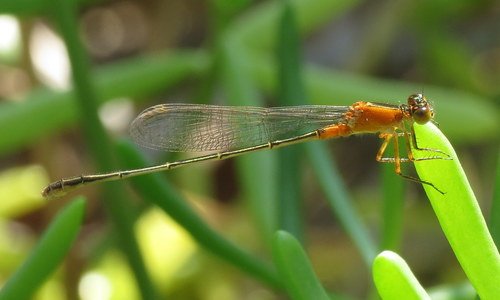
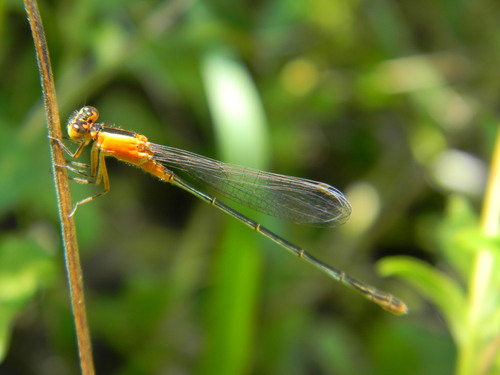
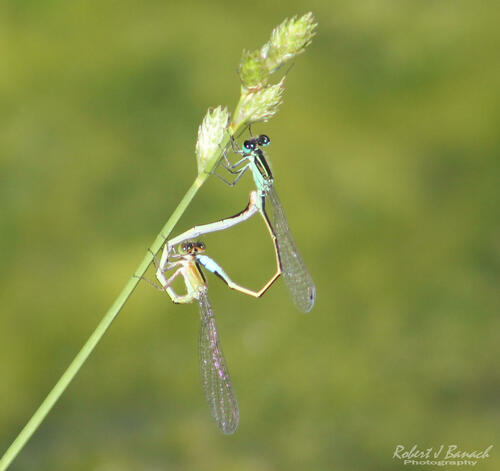
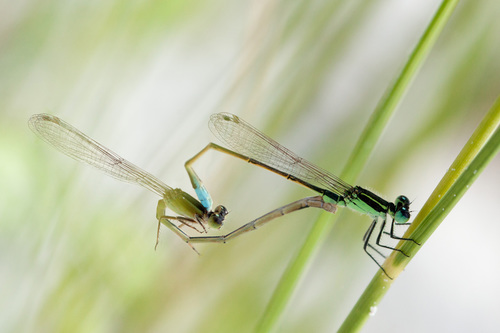
Males are green with blue on the last two abdominal segments, while females can be orange-red, olive green, or look like males. They live around ponds, lakes, marshes and slow streams with plants and sunlight, and their nymphs can even be found in brackish or sulphurous water. They are beneficial insects that eat mosquitoes and other small insects and do not harm humans.
Source: Wikipedia
How to recognize it
Females may be orange-red, olive green, or look similar to males.
Source: Wikipedia
What it eats
They are predators of mosquitoes and other insects and are not harmful to humans.
Source: Wikipedia
Where it is found in the US
Recorded in 36 of 51 states and DC. Most records: Texas, Florida, New Jersey, Arizona, Maryland, Louisiana, North Carolina, Georgia.
Darker = more records. Counts are museum and citizen-science records, not population size.
Source: GBIF
Status: native in North America; native in United States. Source: iNaturalist
Months it is reported in the US
Source: GBIF
More photos
Questions people ask
What do Rambur's Forktail damselflies eat?
They prey on mosquitoes and other small insects.
Source: Wikipedia
Where can I find Rambur's Forktail?
Look for them near ponds, lakes, marshes and slow streams with plants and sunlight; their nymphs may also be in brackish or sulphurous water.
Source: Wikipedia
Same family (Coenagrionidae)


Sources
- Wikipedia: https://en.wikipedia.org/wiki/Rambur%27s_forktail
Look it up elsewhere: GBIF · iNaturalist · BugGuide · ITIS · Wikipedia
Text written 2026-10-23 from the sources above and checked sentence by sentence against them. Data fetched 2026-10-22.