 Bug FAQ
Rainieria antennaepes
Rainieria antennaepes · Order: Diptera · Family: Micropezidae
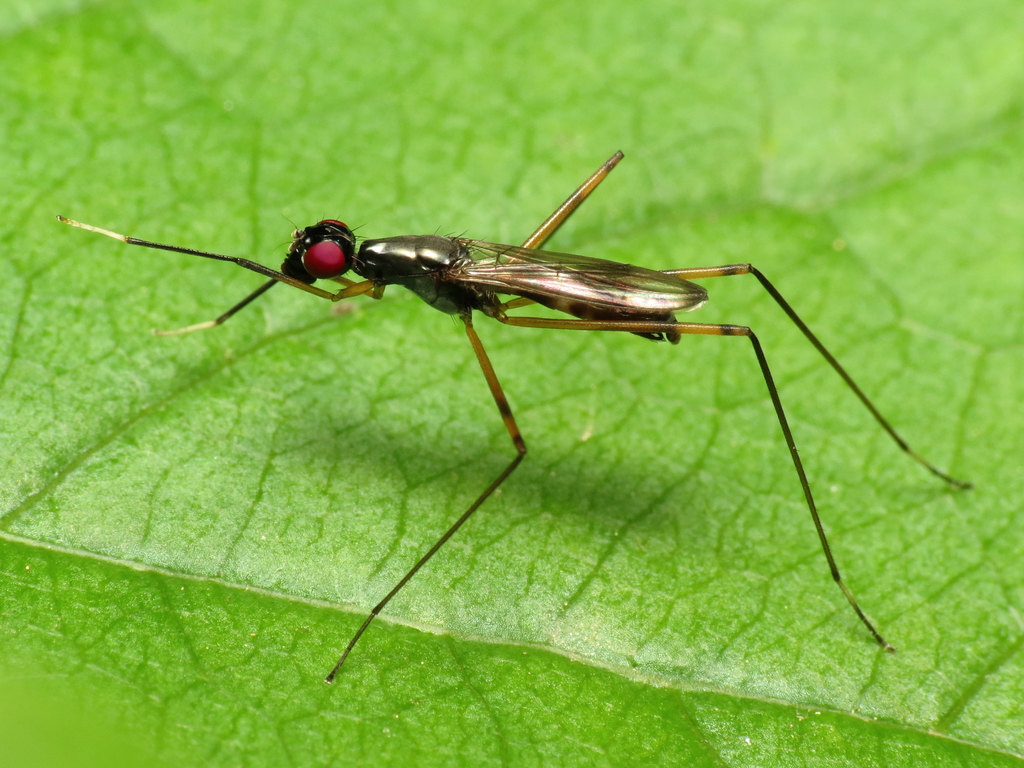
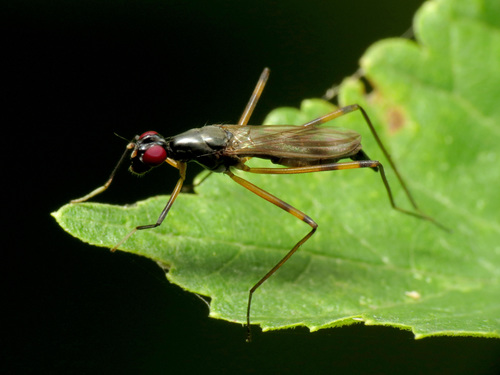
These flies hold their front legs up and wave them like the antennae of ichneumonid wasps, which is a distinctive behavior. Rainieria antennaepes is the only species of its genus found in North America.
Source: Wikipedia
How to recognize it
They frequently raise their white-tipped front legs and wave them, making them look like the antennae of ichneumonid wasps.
Source: Wikipedia
What it eats
They eat detritus, bird droppings and other similar waste material.
Source: Wikipedia
Where it comes from
Their native range is North America east of the Rocky Mountains.
Source: Wikipedia
Lookalikes
It is the only member of its genus that occurs in North America.
Source: Wikipedia
Where it is found in the US
Recorded in 41 of 51 states and DC. Most records: New York, Massachusetts, Virginia, Ohio, Pennsylvania, Maryland, Texas, Illinois.
Darker = more records. Counts are museum and citizen-science records, not population size.
Source: GBIF
Status: native in North America; native in Canada; native in United States. Source: iNaturalist
Months it is reported in the US
Source: GBIF
More photos
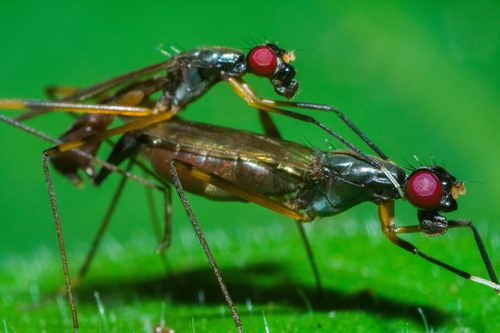
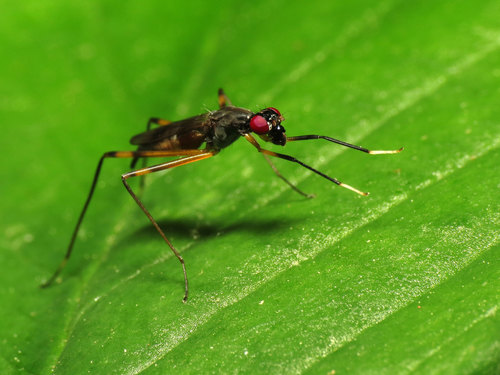
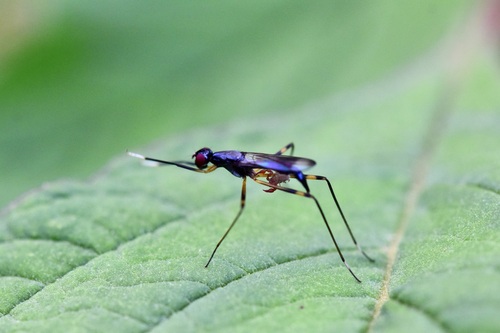
Questions people ask
What does Rainieria antennaepes look like?
It raises its white-tipped front legs and waves them, resembling the antennae of ichneumonid wasps.
Source: Wikipedia
Same family (Micropezidae)
Sources
- Wikipedia: https://en.wikipedia.org/wiki/Rainieria_antennaepes
Look it up elsewhere: GBIF · iNaturalist · BugGuide · ITIS · Wikipedia
Text written 2026-10-22 from the sources above and checked sentence by sentence against them. Data fetched 2026-10-22.