 Bug FAQ
Punchinello
Zemeros flegyas · Order: Lepidoptera · Family: Riodinidae
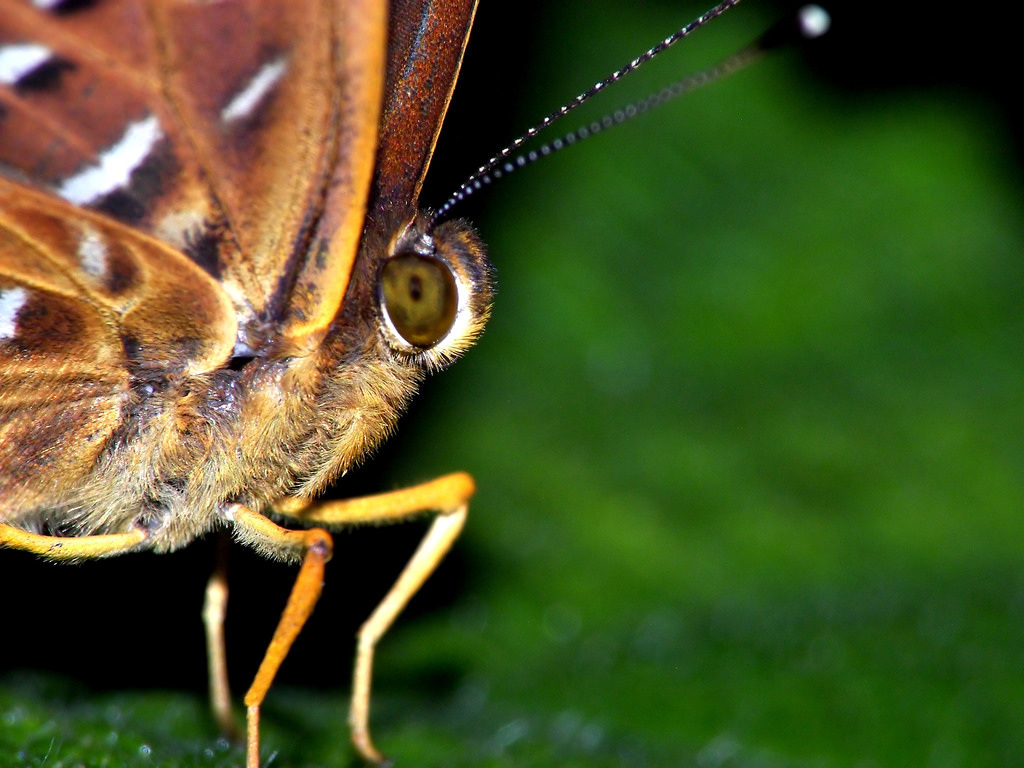
The Punchinello is a tiny butterfly about three-quarters of an inch long, with reddish-brown upper wings and brighter ochre undersides marked by distinct white spots bordered in black. Its caterpillars eat leaves of Maesa shrubs and become full-grown by late March, then spin a silk web to attach themselves to the leaf before pupating. It lives in South and Southeast Asia, shows different wet- and dry-season forms, and belongs to the Riodinidae family.
Source: Wikipedia
How to recognize it
Males have a wine-red brown color on the top side of their wings with ochre-brown veins, while the underside is a brighter ochre brown with larger, clearer white spots edged in black.
Source: Wikipedia
Size
Adults measure roughly 0.75 inches in length. Their length ranges from about 0.55 to 0.70 inches.
Source: Wikipedia
Where it lives
Like many tropical butterflies, they appear in distinct wet-season and dry-season forms.
Source: Wikipedia
What it eats
Caterpillars feed on leaves of Maesa species such as M. chisia, M. montana, and M. indica.
Source: Wikipedia
Life cycle
Larvae are fully grown by the end of March. When ready to pupate, the larva attaches its rear end to the underside of a host-plant leaf with a silk pad and wraps its middle with another silk strand.
Source: Wikipedia
When you see it
The species shows separate wet-season and dry-season appearances. Adults are fully grown at the end of March.
Source: Wikipedia
Where it comes from
The Punchinello lives in South and Southeast Asia and is a member of the Riodinidae family.
Source: Wikipedia
Questions people ask
Are they a garden pest?
Their larvae feed on Maesa shrubs, not on common garden crops, so they are not considered a garden pest.
Source: Wikipedia
When can I see them?
Adults are fully grown by late March and can be seen in both wet-season and dry-season forms.
Source: Wikipedia
Same family (Riodinidae)


Sources
- Wikipedia: https://en.wikipedia.org/wiki/Zemeros_flegyas
Look it up elsewhere: GBIF · iNaturalist · BugGuide · Wikipedia
Text written 2026-10-22 from the sources above and checked sentence by sentence against them. Data fetched 2026-10-22.