 Bug FAQ
Powdered Dancer
Argia moesta · Order: Odonata · Family: Coenagrionidae
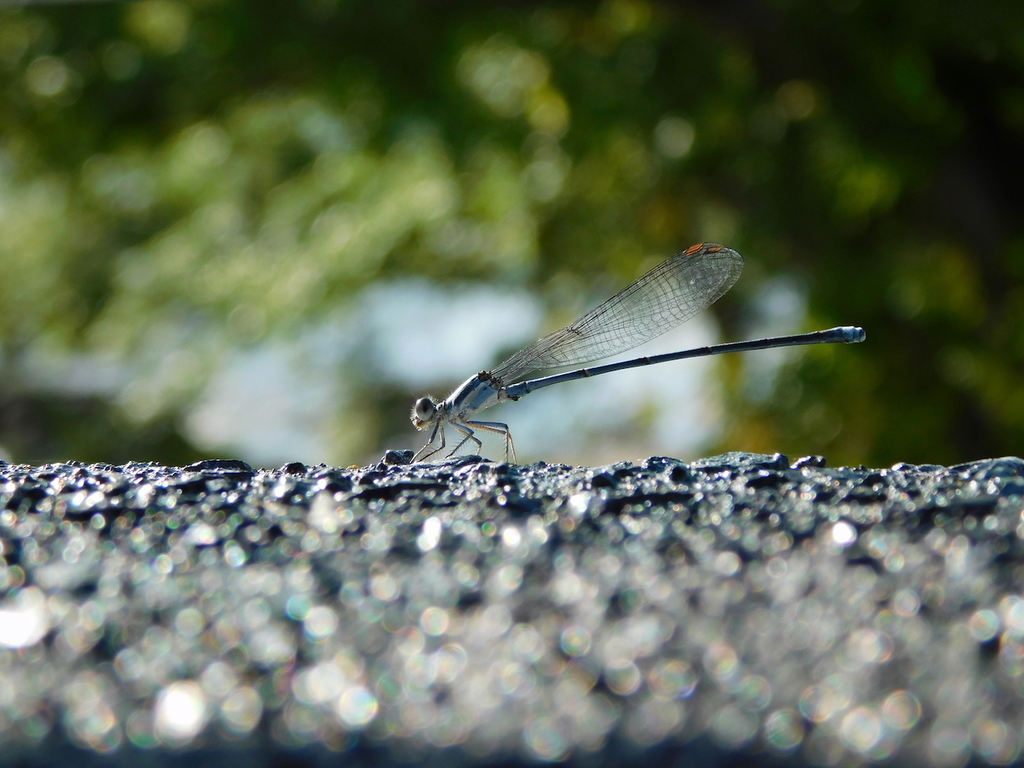
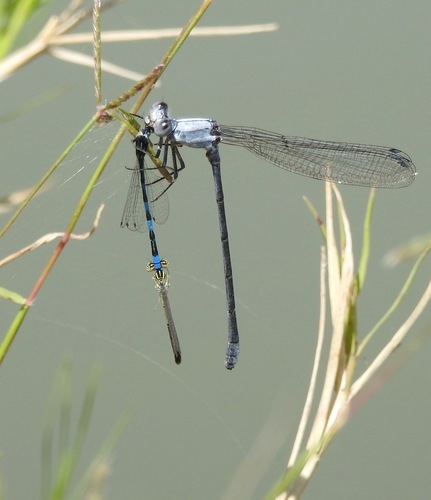
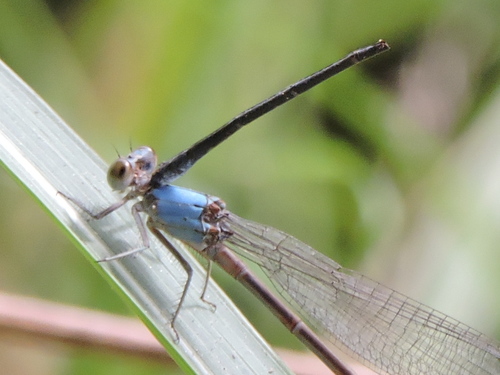
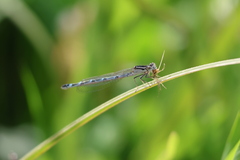
Males have a blue tip on the end of the abdomen, while females come in blue or brown forms distinguished by thorax color and thin dark shoulder stripes. They are native to North America and can be seen throughout the year in parts of their range. Mating involves the male clasping the female behind the head, and the pair often stays together until the female lays eggs on aquatic plants, guarded by the male.
Source: Wikipedia
How to recognize it
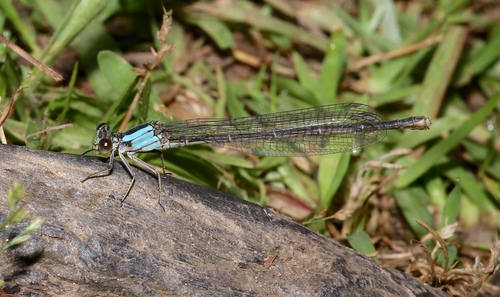
Males have a blue tip at the abdomen’s end. Females are either blue or brown, with thin dark shoulder stripes on the thorax.
Source: Wikipedia
Where it lives
They may be observed year-round in at least part of their range.
Source: Wikipedia
What it eats
Females lay eggs on shallow aquatic plants, inserting them into dead or living tissue while the male guards them.
Source: Wikipedia
Life cycle
The pair often remains attached until the female deposits her eggs.
Source: Wikipedia
When you see it
They can be seen throughout the year in parts of their range.
Source: Wikipedia
Where it comes from
The species is native to North America.
Source: Wikipedia
Lookalikes
Blue-form females look like blue-fronted dancer females, but have two cells below the stigma instead of one.
Source: Wikipedia
Where it is found in the US
Recorded in 46 of 51 states and DC. Most records: Texas, Ohio, Virginia, Oklahoma, Maryland, Pennsylvania, Kansas, Illinois.
Darker = more records. Counts are museum and citizen-science records, not population size.
Source: GBIF
Status: native in North America; native in Canada; native in United States. Source: iNaturalist
Months it is reported in the US
Source: GBIF
More photos
Questions people ask
How can I tell a blue-form Powdered Dancer from a blue-fronted dancer?
Count the cells below the stigma; Powdered Dancers have two, while blue-fronted dancers have one.
Source: Wikipedia
Same family (Coenagrionidae)


Sources
- Wikipedia: https://en.wikipedia.org/wiki/Powdered_dancer
Look it up elsewhere: GBIF · iNaturalist · BugGuide · ITIS · Wikipedia
Text written 2026-10-22 from the sources above and checked sentence by sentence against them. Data fetched 2026-10-22.