 Bug FAQ
Pond Olive
Cloeon dipterum · Order: Ephemeroptera · Family: Baetidae
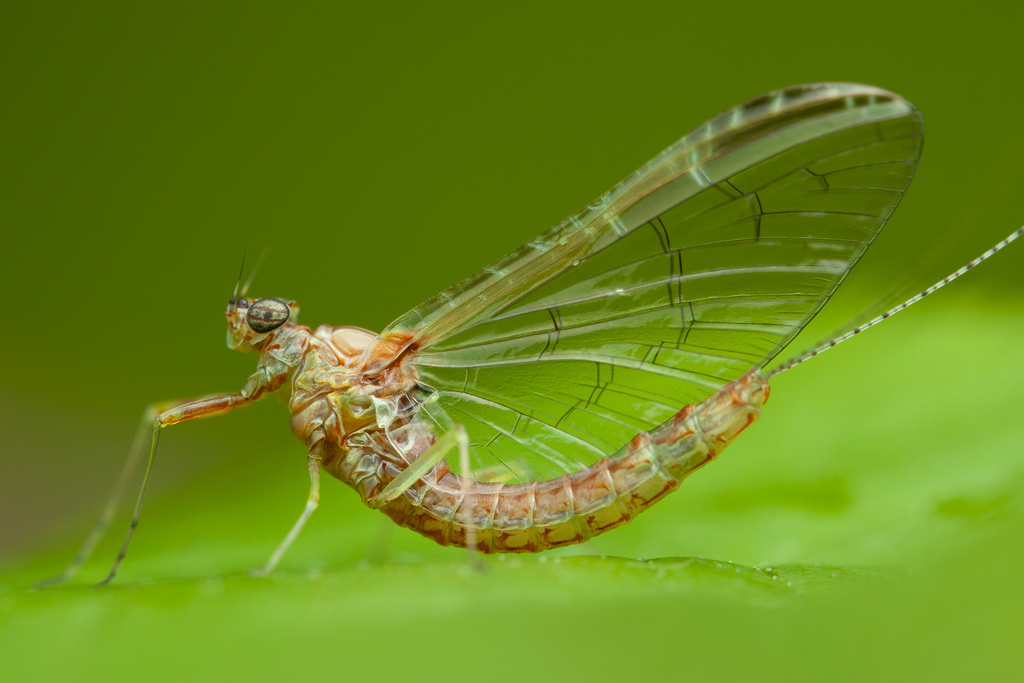
Pond Olive mayflies have one pair of wings and males have distinctive turbinate eyes. The species is found across the Holarctic and its larvae can survive months without oxygen in frozen ponds. Females are ovoviviparous, laying eggs 10 to 14 days after mating that hatch immediately in water.
Source: Wikipedia
How to recognize it
Males have a dorsal turbinate eye region that females lack.
Source: Wikipedia
Size
Both sexes have a single pair of wings, reflected in the name dipterum.
Source: Wikipedia
Where it lives
Larvae can live for months in oxygen-free water, allowing them to survive winter-frozen ponds.
Source: Wikipedia
What it eats
Pond Olive mayflies are ovoviviparous, giving birth to live young rather than laying eggs on substrates.
Source: Wikipedia
Life cycle
It is the only known ovoviviparous mayfly in Europe.
Source: Wikipedia
Where it comes from
The species occurs throughout the Holarctic region.
Source: Wikipedia
Lookalikes
Like other Cloeon and Procloeon species, it has only one pair of wings.
Source: Wikipedia
Where it is found in the US
Recorded in 10 of 51 states and DC. Most records: Vermont, Michigan, New York, Pennsylvania, Massachusetts, Minnesota, Ohio, Connecticut.
Darker = more records. Counts are museum and citizen-science records, not population size.
Source: GBIF
Status: native in North America; native in Canada. Source: iNaturalist
Months it is reported in the US
Source: GBIF
More photos

Same family (Baetidae)


Sources
- Wikipedia: https://en.wikipedia.org/wiki/Cloeon_dipterum
Look it up elsewhere: GBIF · iNaturalist · BugGuide · ITIS · Wikipedia
Text written 2026-10-22 from the sources above and checked sentence by sentence against them. Data fetched 2026-10-22.