 Bug FAQ
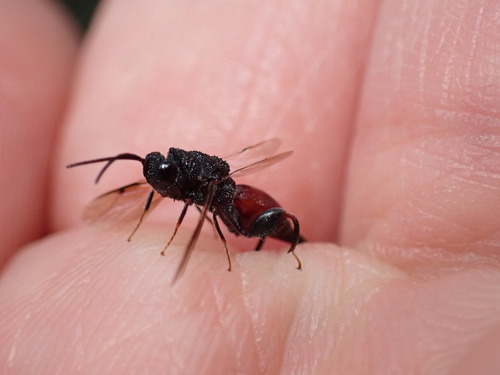
Phasgonophora sulcata
Phasgonophora sulcata · Order: Hymenoptera · Family: Chalcididae
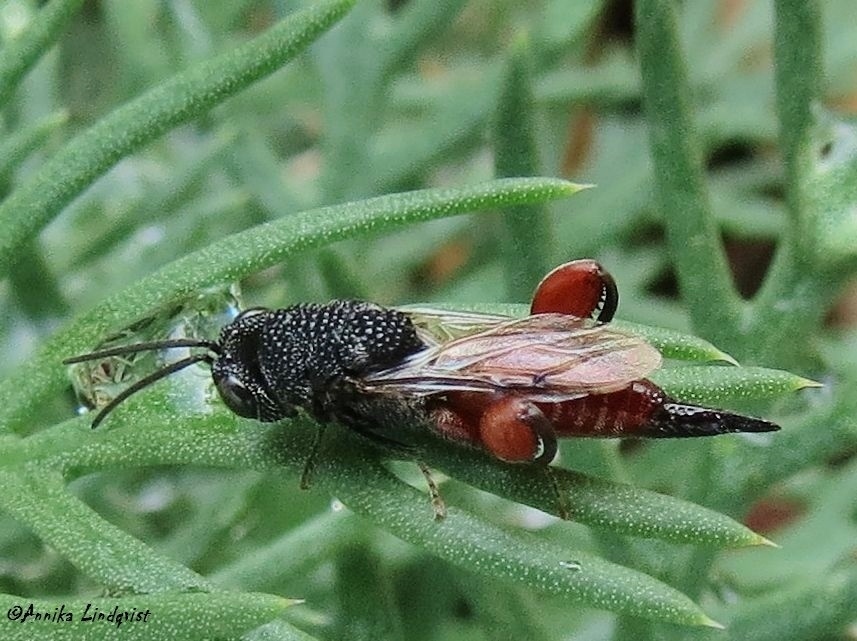
Phasgonophora sulcata is a chalcidid wasp belonging to the family Chalcididae. It lives as an internal parasite of Agrilus beetles and is employed in biological control of the emerald ash borer.
Source: Wikipedia
Is it a pest in the house?
Because it attacks emerald ash borer, it is considered a beneficial biological pest-control agent rather than a household pest.
Source: Wikipedia
How to get rid of it
Researchers use Phasgonophora sulcata in programs aimed at reducing emerald ash borer damage to ash trees.
Source: Wikipedia
Where it lives
It is an endoparasitoid of Agrilus beetles, which makes it useful for controlling emerald ash borer populations.
Source: Wikipedia
What it eats
Its diet consists of developing Agrilus beetle larvae inside the host.
Source: Wikipedia
Where it is found in the US
Recorded in 25 of 51 states and DC. Most records: Florida, Illinois, Texas, Maryland, Massachusetts, Oklahoma, Indiana, Kansas.
Darker = more records. Counts are museum and citizen-science records, not population size.
Source: GBIF
Status: native in North America; native in Canada. Source: iNaturalist
Months it is reported in the US
Source: GBIF
More photos
Questions people ask
What insect does Phasgonophora sulcata parasitize?
It parasitizes Agrilus beetles, including the emerald ash borer.
Source: Wikipedia
Is Phasgonophora sulcata used for biological control?
Yes, it is released to help control emerald ash borer populations.
Source: Wikipedia
Sources
- Wikipedia: https://en.wikipedia.org/wiki/Phasgonophora_sulcata
Look it up elsewhere: GBIF · iNaturalist · BugGuide · Wikipedia
Text written 2026-10-28 from the sources above and checked sentence by sentence against them. Data fetched 2026-10-28.