 Bug FAQ
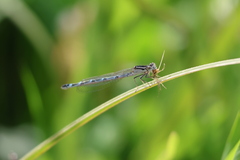
Pacific Forktail
Ischnura cervula · Order: Odonata · Family: Coenagrionidae
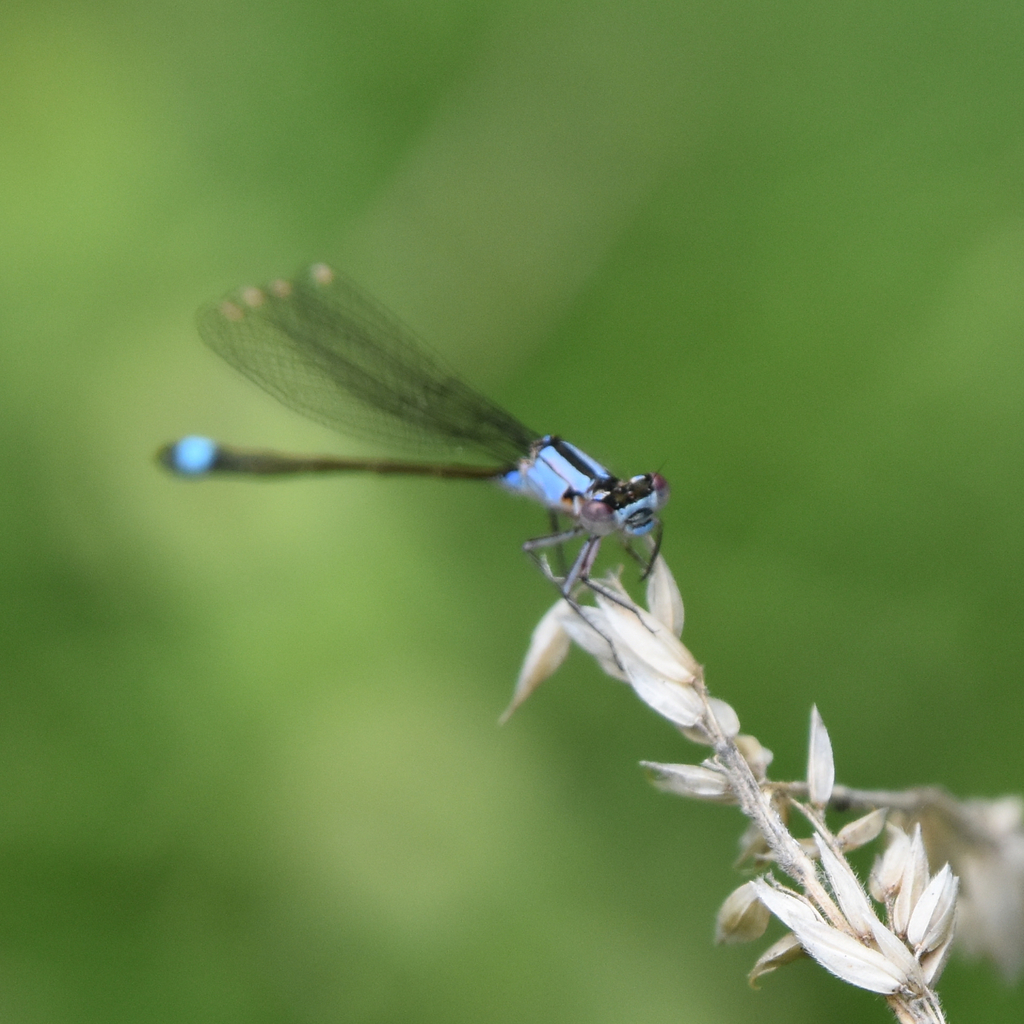
Females of Pacific Forktail damselflies can look like males or have a distinct coloration. They live in freshwater areas such as springs, wetlands, and slow-moving waters with vegetation. Their range covers western North America from southern British Columbia to Arizona and east to Alberta.
Source: Wikipedia
How to recognize it
Females may be andromorphic, mimicking male colors, or heteromorphic, looking different from males.
Source: Wikipedia
How to get rid of it
Drought, water-depth changes, and altered water chemistry from climate change can also impact their survival.
Source: Wikipedia
Where it lives
Long-term records in California show changes in their distribution over time.
Source: Wikipedia
What it eats
Research in Banff National Park has examined their breeding and population dynamics in freshwater ecosystems.
Source: Wikipedia
Where it comes from
The species is native to western North America, from southern British Columbia south to Arizona and east to Alberta.
Source: Wikipedia
Lookalikes
A related species, I. gemina, has non-territorial males that guard females during mating, influenced by habitat structure.
Source: Wikipedia
Where it is found in the US
Recorded in 15 of 51 states and DC. Most records: California, Oregon, Washington, Utah, Arizona, Nevada, Montana, Idaho.
Darker = more records. Counts are museum and citizen-science records, not population size.
Source: GBIF
Status: native in North America; native in Canada; native in United States. Source: iNaturalist
Months it is reported in the US
Source: GBIF
More photos
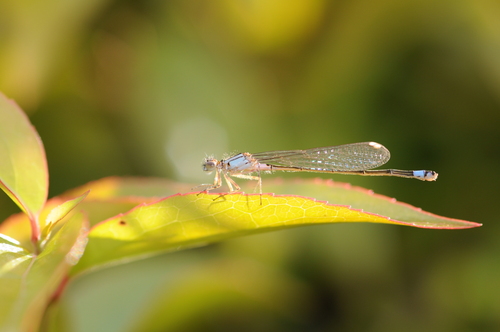
Same family (Coenagrionidae)


Sources
- Wikipedia: https://en.wikipedia.org/wiki/Ischnura_cervula
Look it up elsewhere: GBIF · iNaturalist · BugGuide · ITIS · Wikipedia
Text written 2026-10-22 from the sources above and checked sentence by sentence against them. Data fetched 2026-10-22.