 Bug FAQ
Pacific Foldingdoor Spider
Antrodiaetus pacificus · Order: Araneae · Family: Antrodiaetidae
Also called: Common Foldingdoor Spider, Foldingdoor Spider
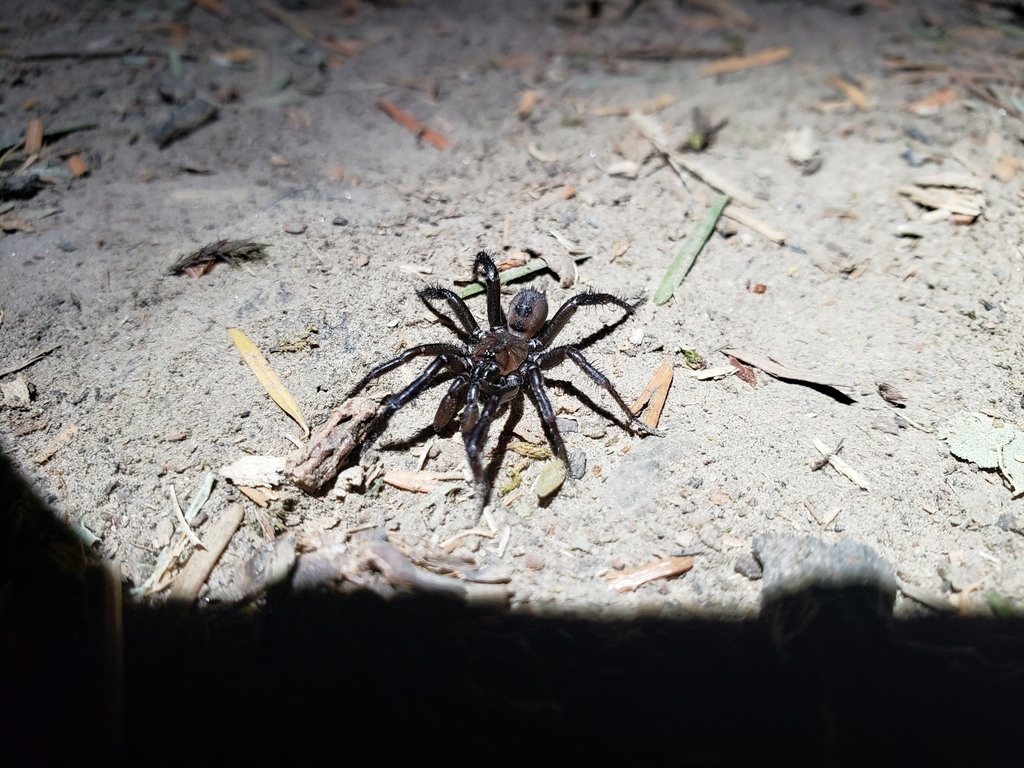
Females reach about 13 mm and males about 11 mm in length. They live in cool, damp forests of the Pacific Northwest, building burrows in sand, moss, or decaying wood. Adults are active year-round, with most activity from late July to early September and a peak during the mating season from early June to late November.
Source: Wikipedia
How to recognize it
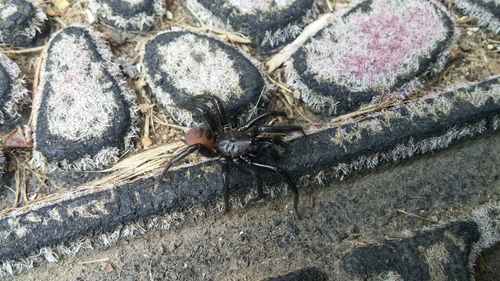
Both sexes have a dark brown to black carapace and two to three hardened patches on the abdomen.
Source: Wikipedia
Size
Females are about 13 mm long, while males are about 11 mm long.
Source: Wikipedia
Where it lives
They inhabit cool, damp forest areas and make burrows in soft substrates such as sand, moss, or decaying wood.
Source: Wikipedia
Life cycle
They are active throughout the year, with the greatest activity from late July to early September.
Source: Wikipedia
When you see it
Their activity peaks during the mating season, which runs from early June to late November.
Source: Wikipedia
Where it comes from
The Pacific folding-door spider is native to the Pacific Northwest region of North America.
Source: Wikipedia
Where it is found in the US
Recorded in 6 of 51 states and DC. Most records: Washington, Oregon, Alaska, Idaho, California, Hawaii.
Darker = more records. Counts are museum and citizen-science records, not population size.
Source: GBIF
Status: native in North America; native in Canada. Source: iNaturalist
Months it is reported in the US
Source: GBIF
More photos
Questions people ask
When are Pacific folding-door spiders most active?
They are active all year but are most active from late July to early September, and they peak during the mating season from early June to late November.
Source: Wikipedia
Same family (Antrodiaetidae)
Sources
- Wikipedia: https://en.wikipedia.org/wiki/Antrodiaetus_pacificus
Look it up elsewhere: GBIF · iNaturalist · BugGuide · ITIS · Wikipedia
Text written 2026-10-25 from the sources above and checked sentence by sentence against them. Data fetched 2026-10-25.