 Bug FAQ
Pacific Dampwood Termite
Zootermopsis angusticollis · Order: Blattodea · Family: Archotermopsidae
Also called: Pacific coast dampwood termite, Rottenwood termite
Source: Wikipedia
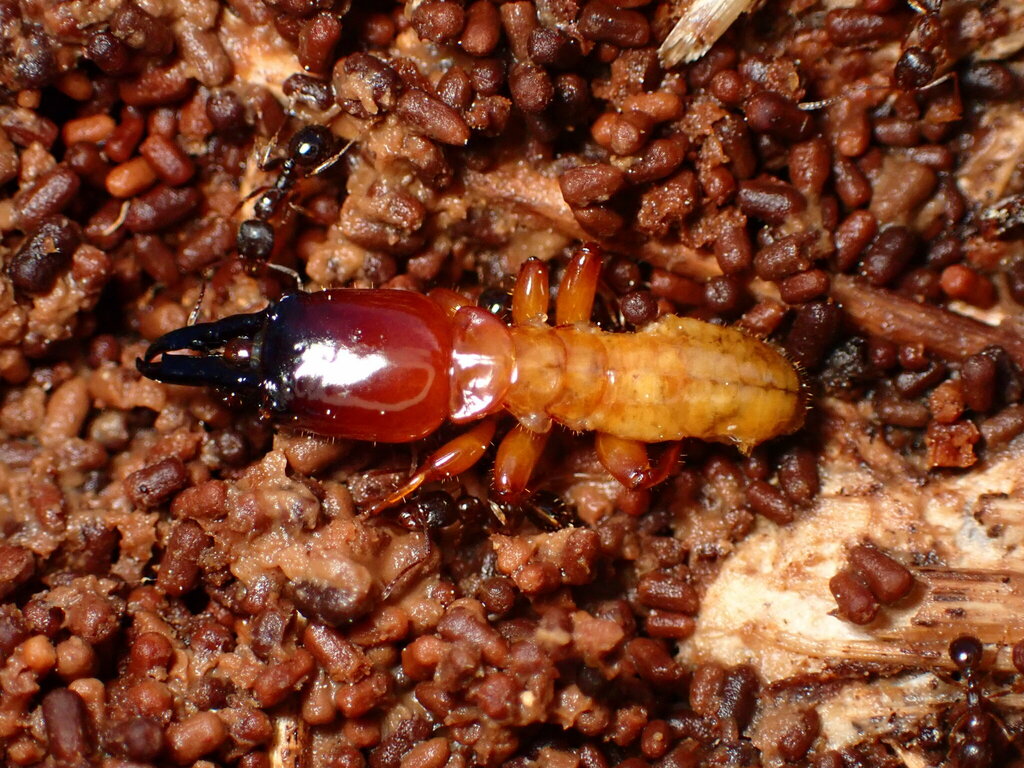
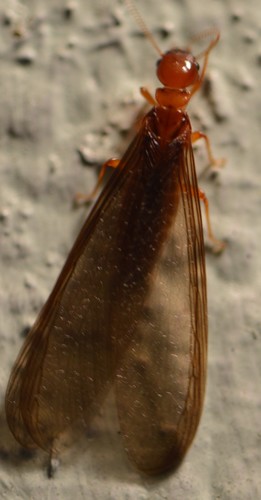
Pacific dampwood termites are large, light-brown winged insects with dark leathery wings; the immature ones are cream-colored with dark abdomens. They live in moist, decaying wood of conifer trees along the Pacific coast, from California up to southern British Columbia. These termites eat only the moist wood they inhabit and never leave to forage, and queens can live for decades.
Source: Wikipedia
Size
They are among the largest termite species in North America.
Source: Wikipedia
Is it a pest in the house?
They can cause some wood damage, though they are not as notorious as dry-wood termites for harming buildings.
Source: Wikipedia
Where it lives
They prefer damp, rotting wood such as stumps, logs, or debris from coniferous trees. Winged females leave the colony on a mating flight to become queens.
Source: Wikipedia
What it eats
They survive by feeding on wood that contains high moisture content and do not forage away from their wood source.
Source: Wikipedia
Life cycle
Hatchlings look like small adults but lack genitalia. Queens can live for many years, with the longest recorded lifespan of 28.5 years.
Source: Wikipedia
Where it comes from
Their range follows wet Pacific-coast environments, especially in California, Oregon, Washington, Idaho, western Nevada, and southern British Columbia.
Source: Wikipedia
Where it is found in the US
Recorded in 6 of 51 states and DC. Most records: Washington, California, Oregon, Hawaii, Nevada, New Mexico.
Darker = more records. Counts are museum and citizen-science records, not population size.
Source: GBIF
Status: native in North America; native in Canada; native in United States. Source: iNaturalist
Months it is reported in the US
Source: GBIF
More photos
Questions people ask
How can I tell if I have dampwood termites?
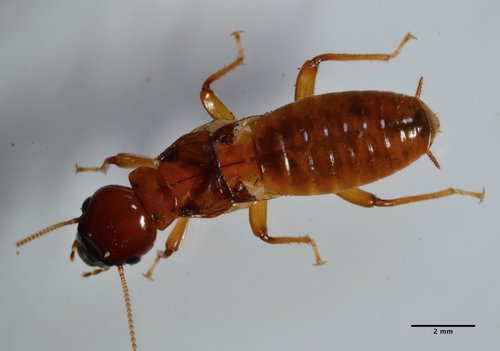
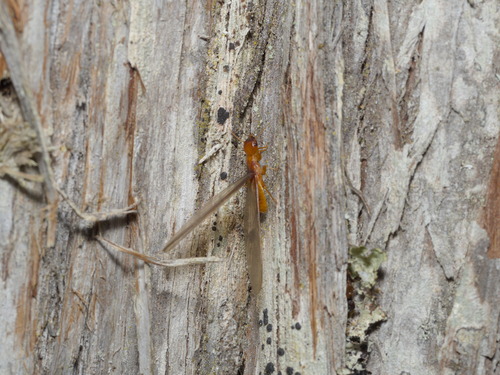
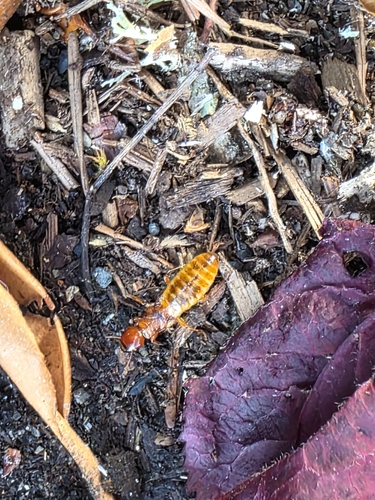
Look for large, light-brown winged insects with dark leathery wings or cream-colored nymphs with dark abdomens in moist, decaying wood.
Source: Wikipedia
Are they a serious threat to my house?
They can damage wood but are generally less destructive to structures than dry-wood termites.
Source: Wikipedia
Same family (Archotermopsidae)

Sources
- Wikipedia: https://en.wikipedia.org/wiki/Zootermopsis_angusticollis
Look it up elsewhere: GBIF · iNaturalist · BugGuide · ITIS · Wikipedia
Text written 2026-10-22 from the sources above and checked sentence by sentence against them. Data fetched 2026-10-22.