 Bug FAQ
Ornate Bluet
Coenagrion ornatum · Order: Odonata · Family: Coenagrionidae
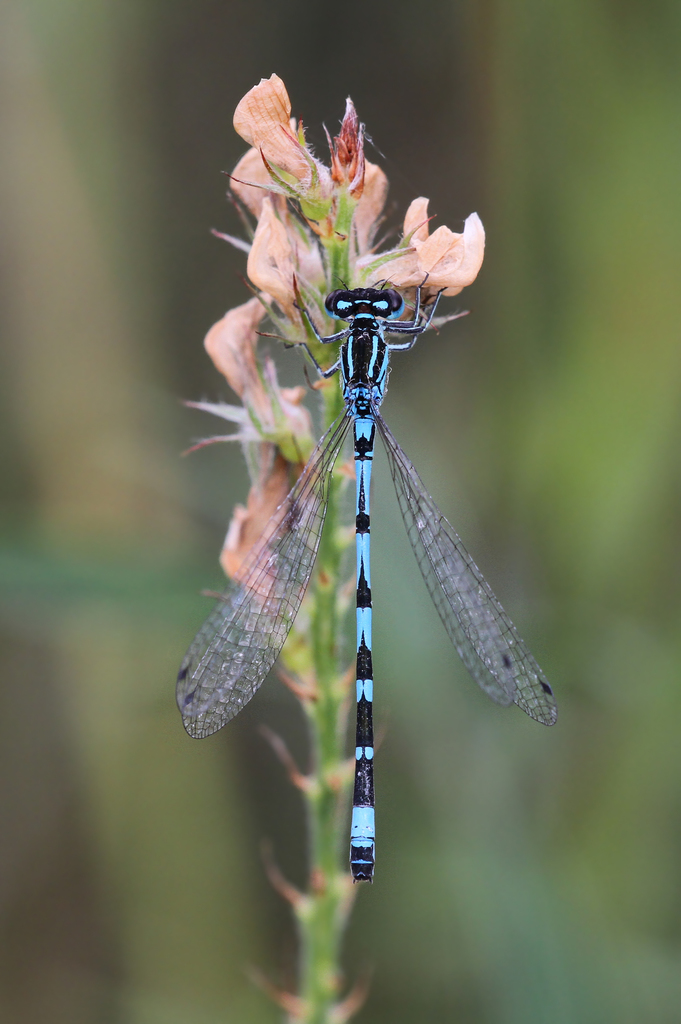
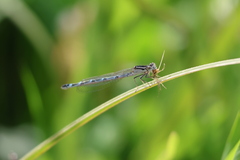
The ornate bluet is a damselfly about 30 mm long, with a wingspan of 17 to 24 mm. Males are blue with black markings and may have a wine-glass-shaped mark on the second abdominal segment, while females have darker abdomens with some blue on each segment. It breeds in shallow, unshaded, slow-flowing streams and ditches in agricultural areas across much of Europe and western Asia.
Source: Wikipedia
How to recognize it
The base colour is blue with black markings, typical of coenagrionids. Males may show a stalked-wine-glass or trident mark on the top of abdominal segment 2, though it is not always present. Females have darker abdomens but retain some blue on the front half of each segment; they differ from brighter azure damselfly females by having only one forward-pointing black spur.
Source: Wikipedia
Size
Adults reach 30 to 31 mm in total length, with the abdomen accounting for 20 to 30 mm. Wingspan ranges from 17 to 24 mm.
Source: Wikipedia
Where it lives
Most European records are from ditches in agricultural fields where banks are regularly mowed and bottoms cleaned.
Source: Wikipedia
When you see it
The flight period is short, limited to the summer months of May through July or mid-August.
Source: Wikipedia
Where it comes from
The Balkans form the core of its distribution, with isolated western populations in the Danube valley of Bavaria and central France.
Source: Wikipedia
Lookalikes
Males resemble southern damselfly males but can be told apart by serrated hind edges of the eye-spots on the head and specific abdominal markings. Females look similar to brighter azure damselfly females, yet only have a single central black spur rather than three forward-pointing spires.
Source: Wikipedia
Questions people ask
How can I tell an ornate bluet apart from similar damselflies?
Look for the wine-glass-shaped mark on the second abdominal segment of males and the single central black spur on female abdomens; also check the serrated eye-spot edges on the head.
Source: Wikipedia
When are ornate bluets active?
Adults fly during the summer, typically from May until July or mid-August.
Source: Wikipedia
What habitats do ornate bluets prefer?
They breed in shallow, unshaded, slowly flowing streams and in agricultural ditches that are regularly mowed and cleaned.
Source: Wikipedia
Same family (Coenagrionidae)


Sources
- Wikipedia: https://en.wikipedia.org/wiki/Coenagrion_ornatum
Look it up elsewhere: GBIF · iNaturalist · BugGuide · Wikipedia
Text written 2026-10-23 from the sources above and checked sentence by sentence against them. Data fetched 2026-10-23.