 Bug FAQ
Oriulus venustus
Oriulus venustus · Order: Julida · Family: Parajulidae
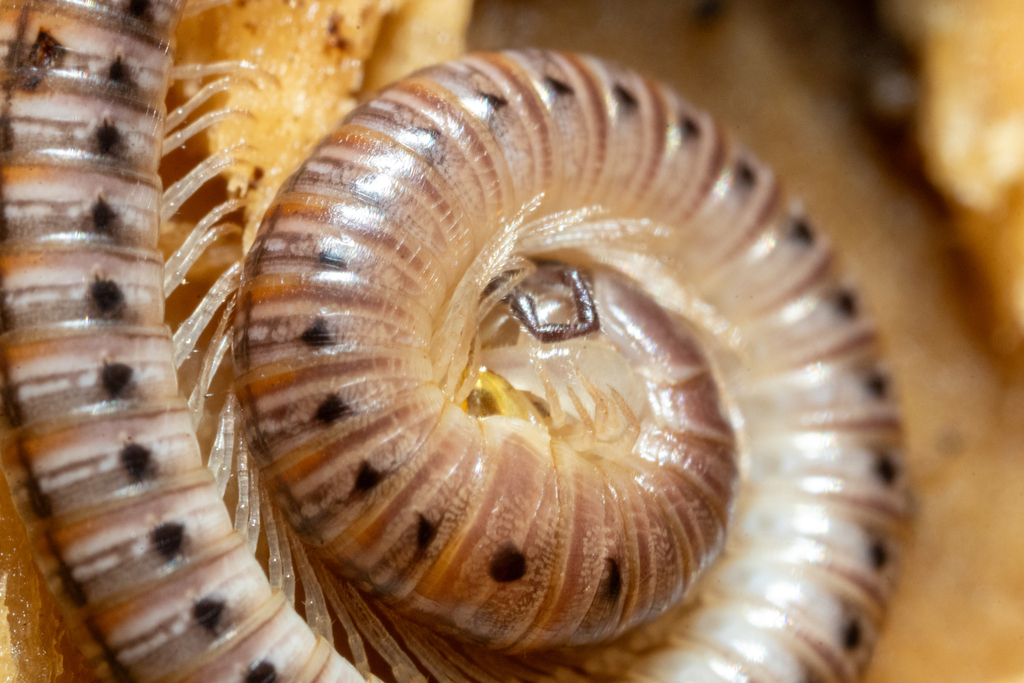
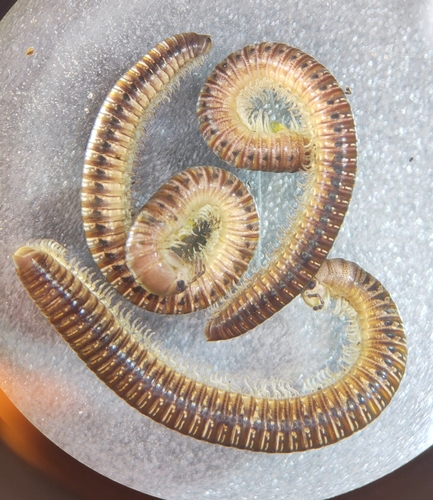
Adults measure about 19 to 26 mm long and 1.5 to 2.5 mm wide. The species occurs across most of North America north of Mexico, mainly east of the Rockies, with a patchier presence in the southeastern United States.
Source: Wikipedia
How to recognize it
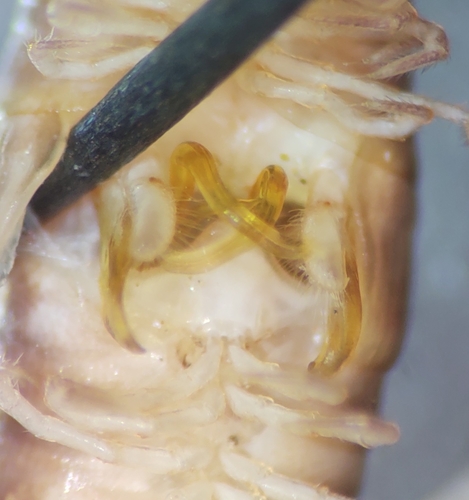
Males can be recognized by an enlarged sternum 8 that projects dorsally into the body cavity and by their uniquely curved gonopodal telopodites.
Source: Wikipedia
Where it lives
It is found throughout most of North America north of Mexico, primarily east of the Rocky Mountains, becoming less common in the southeastern United States.
Source: Wikipedia
Where it comes from
Oriulus venustus is native to North America.
Source: Wikipedia
Where it is found in the US
Recorded in 17 of 51 states and DC. Most records: Illinois, New Mexico, Colorado, Wisconsin, New York, Georgia, Massachusetts, Minnesota.
Darker = more records. Counts are museum and citizen-science records, not population size.
Source: GBIF
Status: native in North America; native in United States; native in Canada. Source: iNaturalist
Months it is reported in the US
Source: GBIF
More photos
Questions people ask
Where is Oriulus venustus found?
It lives across most of North America north of Mexico, mainly east of the Rockies, with a sparser presence in the southeastern United States.
Source: Wikipedia
What is the size of an adult Oriulus venustus?
Adults are about 19 to 26 mm long and 1.5 to 2.5 mm wide.
Source: Wikipedia
Sources
- Wikipedia: https://en.wikipedia.org/wiki/Oriulus_venustus
Look it up elsewhere: GBIF · iNaturalist · BugGuide · ITIS · Wikipedia
Text written 2026-10-26 from the sources above and checked sentence by sentence against them. Data fetched 2026-10-26.