 Bug FAQ
Orange-tailed Marsh Dart
Ceriagrion cerinorubellum · Order: Odonata · Family: Coenagrionidae
Also called: Ornate Coraltail, Painted Waxtail, bi-coloured damsel

It is a medium-sized damselfly. Its thorax is yellow-green and its abdomen has brick-red on segments 1, 2, the basal half of segment 3 and the apical half of segments 7-10, while the other segments are black on the dorsal side and pale blue underneath.
Source: Wikipedia
How to recognize it
The thorax is yellow-green; abdomen segments 1, 2, the base of 3 and the tip of 7-10 are brick-red, with the remaining segments black on top and pale blue below.
Source: Wikipedia
Size
It is a medium-sized damselfly.
Source: Wikipedia
Lookalikes
Females look similar to males but are more robust and have duller colors.
Source: Wikipedia
More photos


Questions people ask
How can I tell a female from a male?
Females are more robust and display duller colors than males.
Source: Wikipedia
Same family (Coenagrionidae)
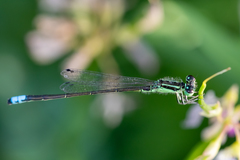
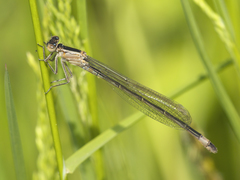

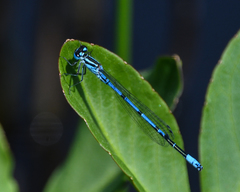

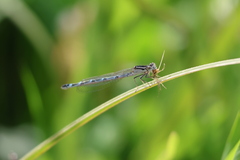


Sources
- Wikipedia: https://en.wikipedia.org/wiki/Ceriagrion_cerinorubellum
Look it up elsewhere: GBIF · iNaturalist · BugGuide · Wikipedia
Text written 2026-10-23 from the sources above and checked sentence by sentence against them. Data fetched 2026-10-22.