 Bug FAQ
Orange Bluet
Enallagma signatum · Order: Odonata · Family: Coenagrionidae
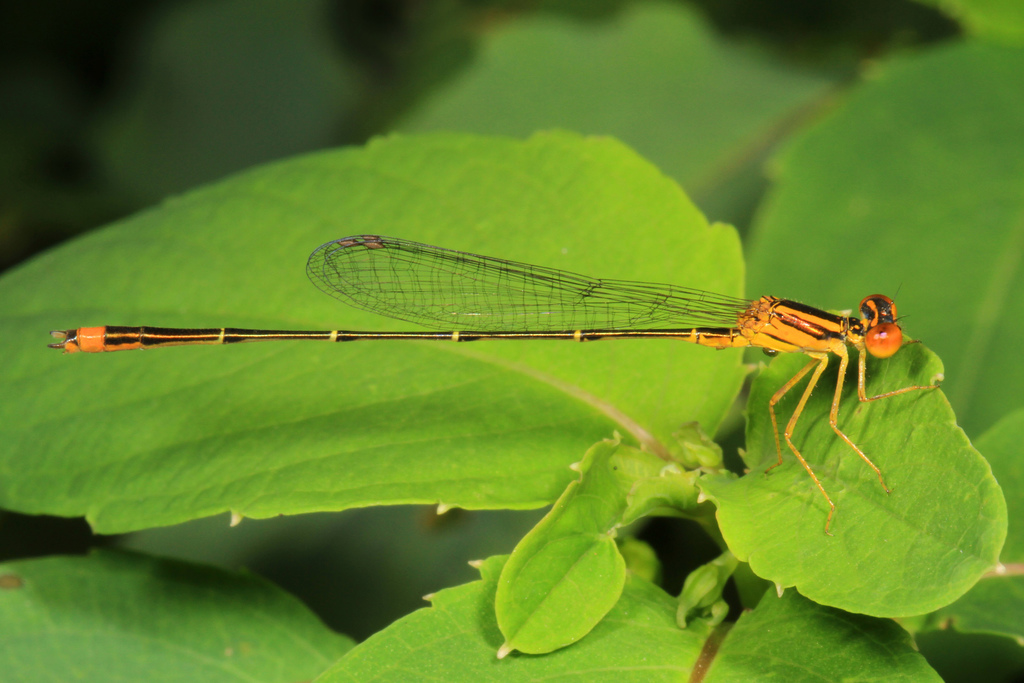
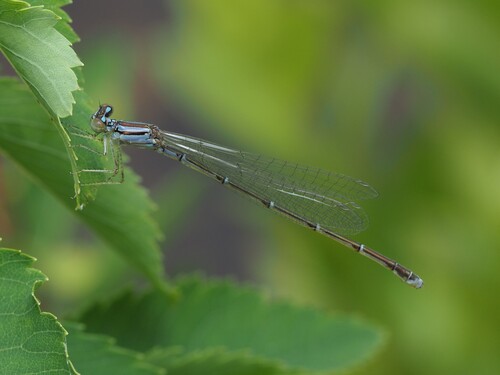
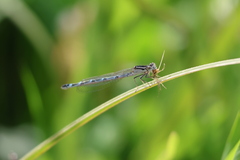
The orange bluet is a small damselfly about 1 to 1.5 inches long, with orange and black markings on the male's thorax and abdomen. It lives near still or slow-moving water such as streams, ponds, and rivers across parts of Mexico, the United States, and Canada, and is active from early March to early November, especially in late afternoons.
Source: Wikipedia
How to recognize it
Male orange bluets have an orange thorax with a thick black stripe down the back and black shoulder stripes; their abdomen is mostly black with orange rings, orange on the underside, and orange near the tip.
Source: Wikipedia
Size
They measure about 25 to 38 mm in total length, and their hindwings are 15 to 21 mm long.
Source: Wikipedia
Where it lives
They are commonly found near streams, ponds, pools with still water, slow-moving streams, and rivers.
Source: Wikipedia
What it eats
Orange bluets feed on insects and fly slowly among emergent vegetation.
Source: Wikipedia
When you see it
Their flight season runs from early March to early November, and they are most active in the late afternoon.
Source: Wikipedia
Lookalikes
They resemble cherry, burgundy, and scarlet bluets, while orange threadtail damselflies have much longer, thinner abdomens.
Source: Wikipedia
Where it is found in the US
Recorded in 39 of 51 states and DC. Most records: Ohio, Texas, New Jersey, Virginia, New York, Maryland, North Carolina, Illinois.
Darker = more records. Counts are museum and citizen-science records, not population size.
Source: GBIF
Status: native in North America; native in Canada; native in United States. Source: iNaturalist
Months it is reported in the US
Source: GBIF
More photos
Questions people ask
Where can I find orange bluets?
Look near still or slow-moving water such as streams, ponds, and rivers in their range across parts of Mexico, the United States, and Canada.
Source: Wikipedia
What do orange bluets eat?
They feed on insects while flying slowly among vegetation.
Source: Wikipedia
Same family (Coenagrionidae)


Sources
- Wikipedia: https://en.wikipedia.org/wiki/Orange_bluet
Look it up elsewhere: GBIF · iNaturalist · BugGuide · ITIS · Wikipedia
Text written 2026-10-22 from the sources above and checked sentence by sentence against them. Data fetched 2026-10-22.