 Bug FAQ
Wasp (Ooencyrtus kuvanae)
Ooencyrtus kuvanae · Order: Hymenoptera · Family: Encyrtidae
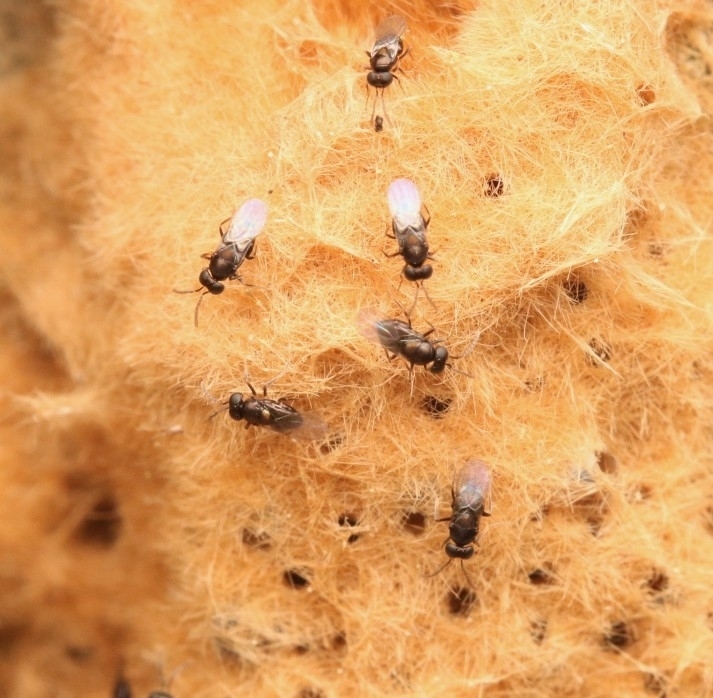
Ooencyrtus kuvanae is a chalcid wasp that was brought to North America in the early 20th century to control moth pests. In North America it now attacks the invasive spotted lanternfly, acting as a parasitoid of that pest.
Source: Wikipedia
Size
It belongs to the chalcid wasp group.
Source: Wikipedia
Where it lives
It is found in North America where it parasitizes the spotted lanternfly.
Source: Wikipedia
What it eats
It parasitizes the invasive spotted lanternfly.
Source: Wikipedia
Where it is found in the US
Recorded in 7 of 51 states and DC. Most records: New York, Massachusetts, Connecticut, New Jersey, Vermont, Maryland, Pennsylvania.
Darker = more records. Counts are museum and citizen-science records, not population size.
Source: GBIF
Status: native in North America; native in Canada. Source: iNaturalist
Months it is reported in the US
Source: GBIF
More photos

Questions people ask
What does Ooencyrtus kuvanae parasitize?
It parasitizes the invasive spotted lanternfly.
Source: Wikipedia
When was Ooencyrtus kuvanae introduced to North America?
It was introduced in 1908 to help control Lymantria moths.
Source: Wikipedia
Sources
- Wikipedia: https://en.wikipedia.org/wiki/Ooencyrtus_kuvanae
Look it up elsewhere: GBIF · iNaturalist · BugGuide · Wikipedia
Text written 2026-10-27 from the sources above and checked sentence by sentence against them. Data fetched 2026-10-27.