 Bug FAQ
Oak Skeletonizer Moth
Bucculatrix ainsliella · Order: Lepidoptera · Family: Bucculatricidae
Also called: Oak Skeletonizer
Source: Wikipedia
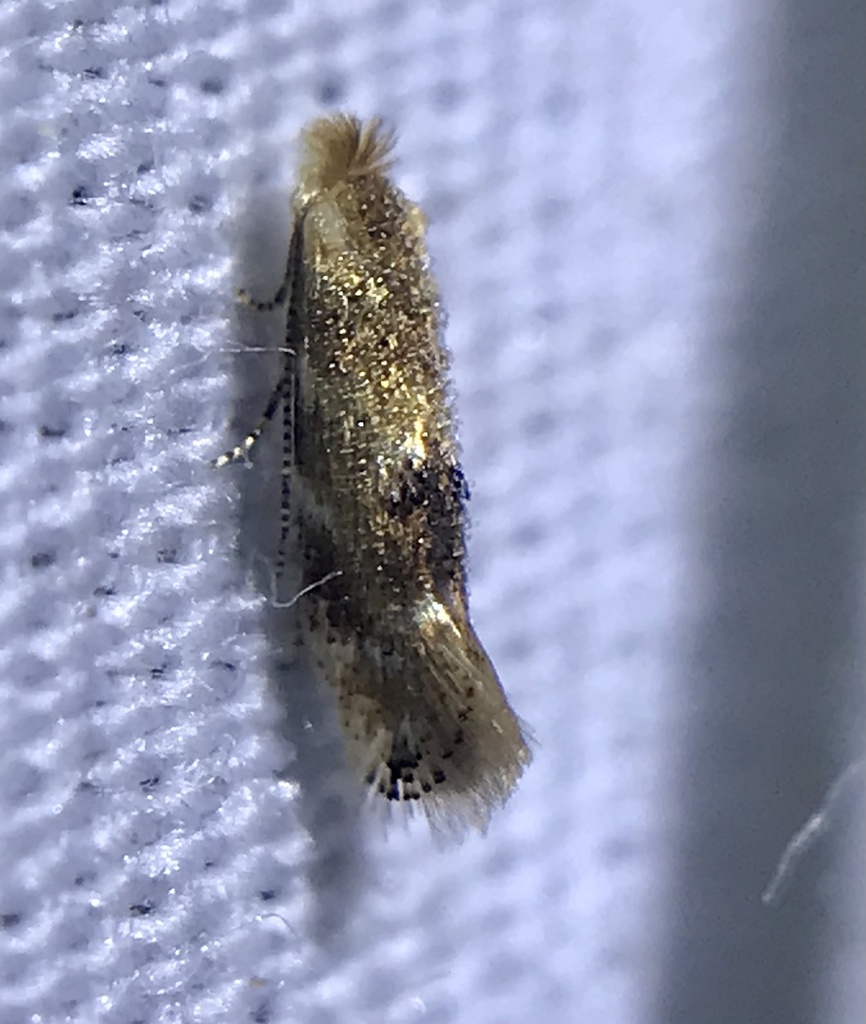
Bucculatrix ainsliella, known as the oak skeletonizer moth, belongs to the family Bucculatricidae. Its wingspan measures about 7 to 8 mm. The larvae mine and then eat oak leaves, which can harm oak trees.
Source: Wikipedia
Size
Adults have a wingspan of 7 to 8 mm.
Source: Wikipedia
Where it lives
It was first recorded in Europe in the Netherlands and Belgium in 2011.
Source: Wikipedia
What it eats
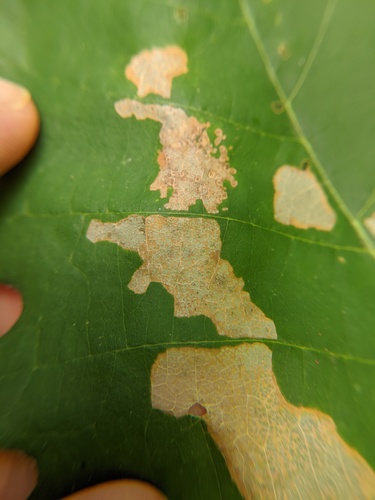
Larvae feed on oak (Quercus) species, starting as leaf miners and later feeding on the leaf surface.
Source: Wikipedia
Life cycle
Adults are on the wing from February through August, depending on location.
Source: Wikipedia
When you see it
The flight period of adults spans February to August, varying with region.
Source: Wikipedia
Where it comes from
The moth is native to the northern United States and southern Canada.
Source: Wikipedia
Where it is found in the US
Recorded in 20 of 51 states and DC. Most records: Michigan, New York, Virginia, Massachusetts, Ohio, Pennsylvania, Minnesota, Washington.
Darker = more records. Counts are museum and citizen-science records, not population size.
Source: GBIF
Status: native in North America; native in Canada. Source: iNaturalist
Months it is reported in the US
Source: GBIF
More photos
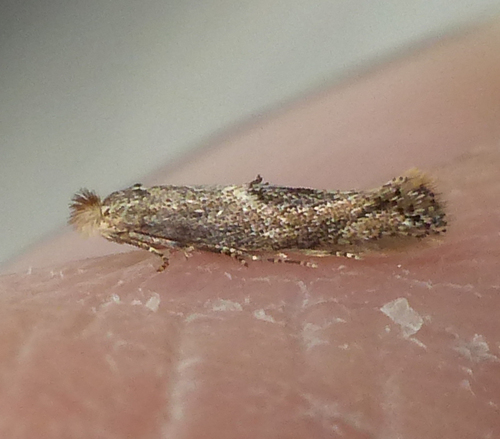
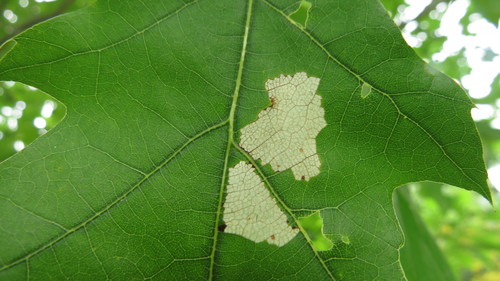
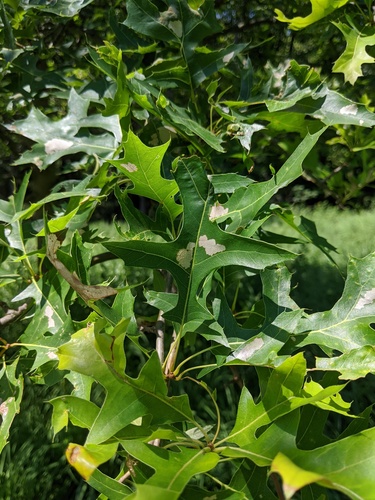
Questions people ask
What trees do oak skeletonizer moth larvae damage?
The larvae feed on oak (Quercus) leaves, mining them and then eating the leaf tissue.
Source: Wikipedia
When can I see adult oak skeletonizer moths?
Adults are active from February to August, with exact timing depending on where you are.
Source: Wikipedia
Sources
- Wikipedia: https://en.wikipedia.org/wiki/Bucculatrix_ainsliella
Look it up elsewhere: GBIF · iNaturalist · BugGuide · Wikipedia
Text written 2026-10-27 from the sources above and checked sentence by sentence against them. Data fetched 2026-10-27.