 Bug FAQ
Oak Lantern
Carcina quercana · Order: Lepidoptera · Family: Peleopodidae
Also called: Long-horned Flat-body, Oak Long-horn
Source: Wikipedia
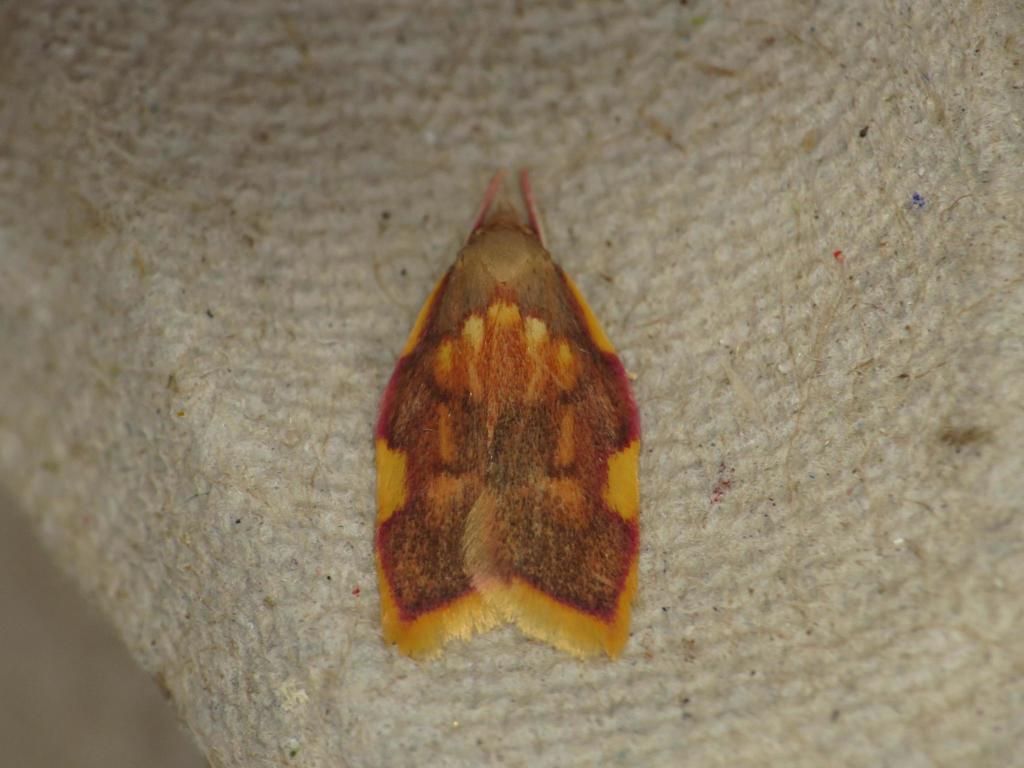
The oak lantern is a small moth with a 16 to 20 mm wingspan. Its forewings are light ochreous with purple tinges, yellow blotches, and a bright-yellow fringe, while the hindwings are pale yellow-white with a rosy tip. The larvae feed on deciduous trees such as oak and beech, stripping leaves.
Source: Wikipedia
How to recognize it
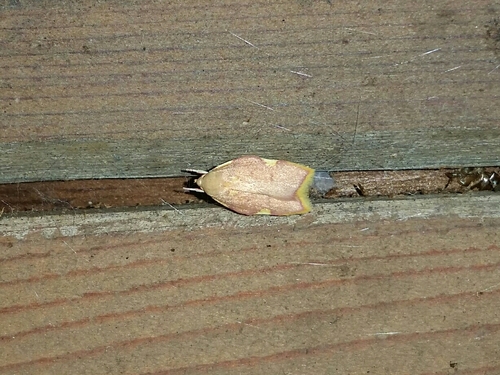
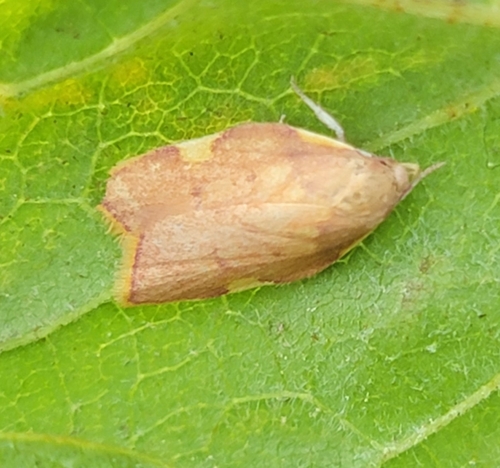
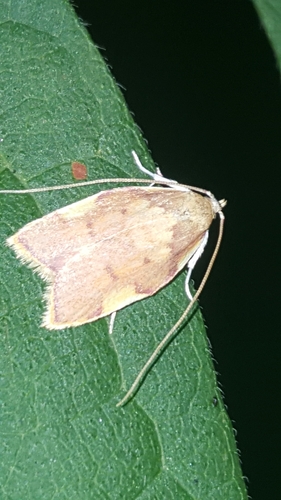
Forewings are light ochreous, often purple-tinged, with dark speckles, a purple costal edge, yellow blotches near the base and beyond the middle, a dark transverse line near one-quarter, and a terminal purple line; the fringe is bright yellow except at the tornus. Hindwings are yellow-whitish with a rosy-tinged apex. The larva is pale green with a darker dorsal line edged in lighter colour and a yellowish-green head.
Source: Wikipedia
Size
Wingspan ranges from 16 to 20 mm.
Source: Wikipedia
Where it lives
It occurs throughout Europe and has recently been introduced to western North America, including British Columbia and Washington.
Source: Wikipedia
What it eats
Larvae feed on a variety of deciduous trees, especially oak and beech.
Source: Wikipedia
Where it comes from
Native to Europe.
Source: Wikipedia
Lookalikes
Also called long-horned flat-body or oak-skeletonizer moth, especially in North America.
Source: Wikipedia
Where it is found in the US
Recorded in 2 of 51 states and DC. Most records: Washington, Kansas.
Darker = more records. Counts are museum and citizen-science records, not population size.
Source: GBIF
Status: introduced in Canada; introduced in United States. Source: iNaturalist
Months it is reported in the US
Source: GBIF
More photos
Questions people ask
What trees does the oak lantern damage?
Its caterpillars eat the leaves of oak and beech trees.
Source: Wikipedia
Where is the oak lantern found?
It lives across Europe and has recently spread to western Canada and the US Pacific Northwest.
Source: Wikipedia
What does the oak lantern look like?
It has light ochreous forewings with purple tinges, yellow blotches, a dark line near the base, and bright-yellow fringe; hindwings are pale yellow-white with a rosy tip.
Source: Wikipedia
Same family (Peleopodidae)

Sources
- Wikipedia: https://en.wikipedia.org/wiki/Carcina_quercana
Look it up elsewhere: GBIF · iNaturalist · BugGuide · Wikipedia
Text written 2026-10-22 from the sources above and checked sentence by sentence against them. Data fetched 2026-10-22.