 Bug FAQ
Nosy Pill Woodlouse
Armadillidium nasatum · Order: Isopoda · Family: Armadillidiidae
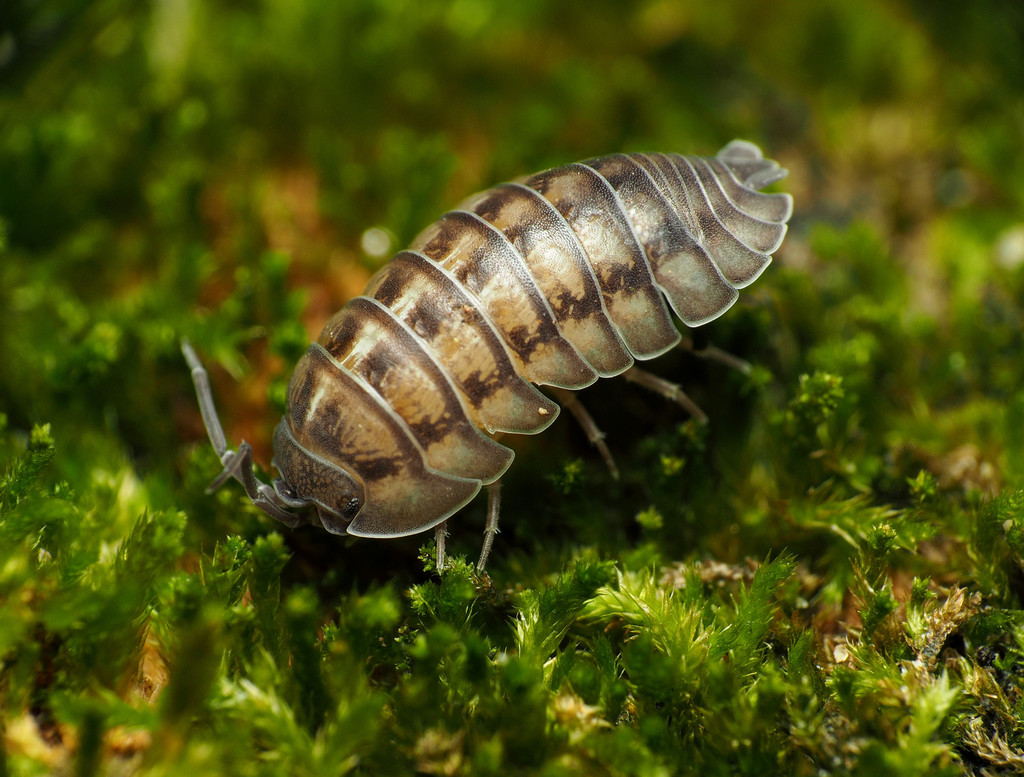
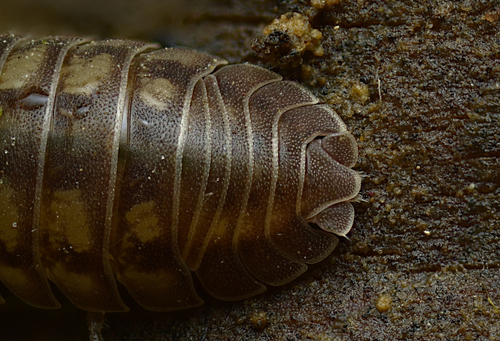
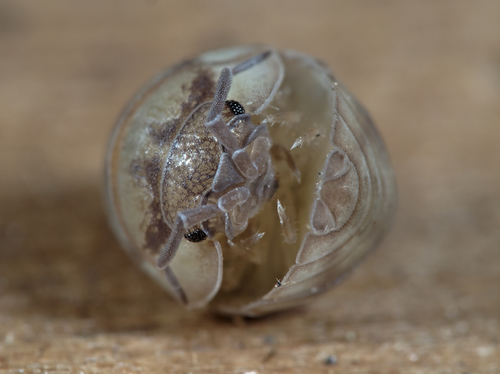
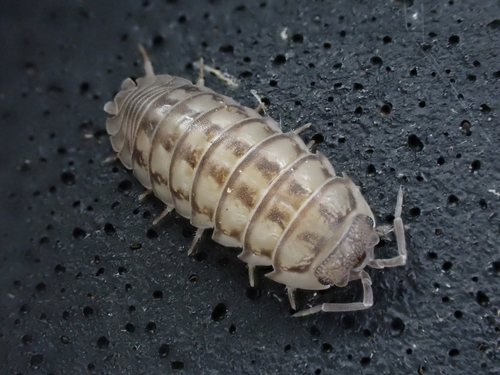
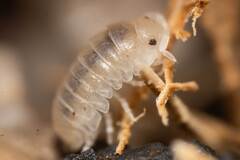
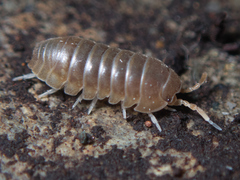
The nosy pill woodlouse can grow up to about 21 mm long and sometimes shows pale stripes along its body, though the stripes are not reliable for identification. It prefers drier places, often living near humans in railway lines, industrial waste grounds, under stones and wood, and does not roll into a complete ball like some relatives. It looks similar to other pill bugs but can be told apart by a rectangular “nose” on the head and by its inability to fully enroll.
Source: Wikipedia
How to recognize it
Some individuals have pale longitudinal stripes from head to rear, but this varies and is not a reliable ID feature.
Source: Wikipedia
Size
Adults can reach lengths of up to 21 mm.
Source: Wikipedia
Is it a pest in the house?
Because it tolerates drier conditions and lives near human structures, it can appear in homes and other built environments.
Source: Wikipedia
Where it lives
It lives in drier habitats than most woodlice and is often found in human-associated sites like railway lines and industrial waste areas. Like other woodlice, it hides under stones and pieces of wood.
Source: Wikipedia
Lookalikes
Although it resembles Armadillidium vulgare in dark grey colour, it has a rectangular protrusion (“nose”) at the head apex.
Source: Wikipedia
Where it is found in the US
Recorded in 46 of 51 states and DC. Most records: North Carolina, Pennsylvania, Virginia, Ohio, New York, Maryland, Georgia, Tennessee.
Darker = more records. Counts are museum and citizen-science records, not population size.
Source: GBIF
Status: introduced in North America; introduced in Canada; introduced in United States. Source: iNaturalist
Months it is reported in the US
Source: GBIF
More photos

Questions people ask
How can I tell them apart from other pill bugs?
Look for the rectangular “nose” on the head and note that they do not roll into a perfect ball.
Source: Wikipedia
Same family (Armadillidiidae)
Sources
- Wikipedia: https://en.wikipedia.org/wiki/Armadillidium_nasatum
Look it up elsewhere: GBIF · iNaturalist · BugGuide · ITIS · Wikipedia
Text written 2026-10-22 from the sources above and checked sentence by sentence against them. Data fetched 2026-10-22.