 Bug FAQ
Northern Grass Mantis
Brunneria borealis · Order: Mantodea · Family: Coptopterygidae
Also called: Brunner's Mantis, Mantis
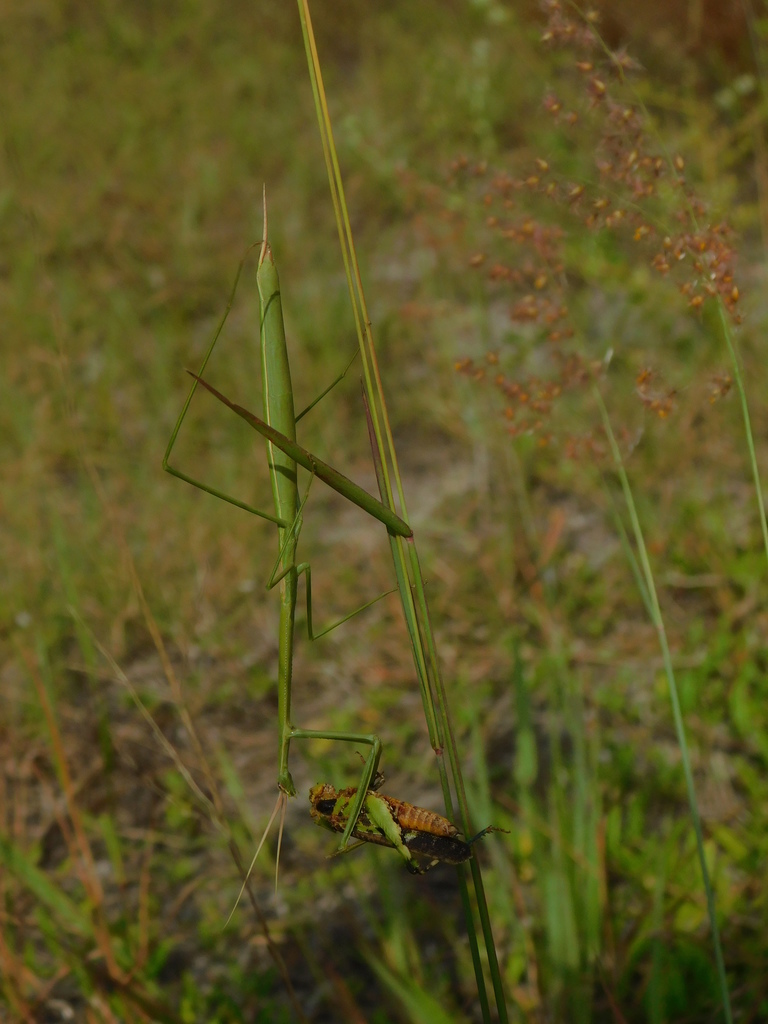
The northern grass mantis is a long, green insect with the typical grasping forelegs of a mantis. Adults grow to about 77 mm (3 in) in length. It lives in southern U.S. grasslands and flowerheads, such as slender aster in Austin and little bluestem meadows in Cedar Creek, Texas.
Source: Wikipedia
How to recognize it
It is an elongated green mantis with the usual raptorial forelimbs.
Source: Wikipedia
Size
Adults can reach about 77 mm (3 in) long.
Source: Wikipedia
Where it lives
In Austin it has been found on flowerheads of slender aster (Symphyotrichum subulatum). In Cedar Creek it occurs in little bluestem grass meadows, where it is active at night and hard to see by day.
Source: Wikipedia
What it eats
Its size suggests it probably eats grasshoppers. It also feeds on slender, grass-dwelling stick insects (phasmatodea) that have few defenses.
Source: Wikipedia
Life cycle
All adults are female and lay eggs without mating. Nymphs look like smaller adults and molt several times as they grow.
Source: Wikipedia
Lookalikes
When disturbed it may sway or stiffen like a stick insect.
Source: Wikipedia
Where it is found in the US
Recorded in 13 of 51 states and DC. Most records: Texas, Florida, Georgia, North Carolina, South Carolina, Oklahoma, Alabama, Mississippi.
Darker = more records. Counts are museum and citizen-science records, not population size.
Source: GBIF
Months it is reported in the US
Source: GBIF
More photos

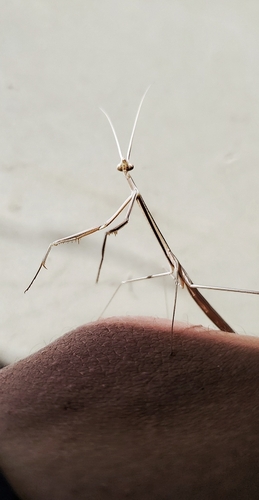
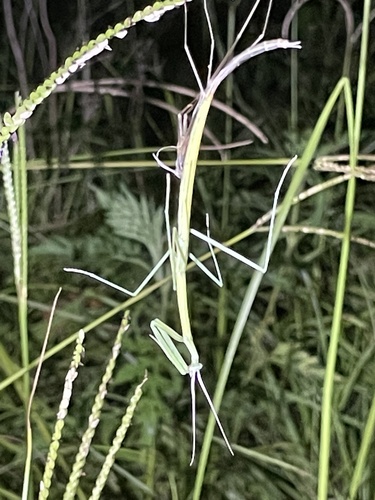
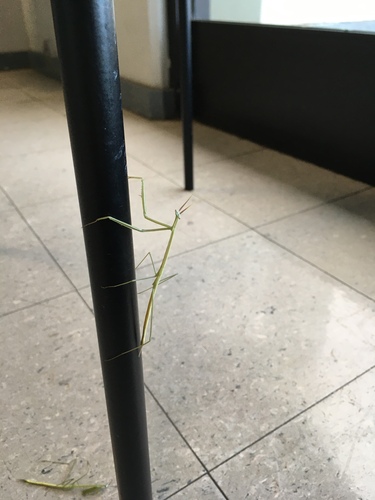
Same family (Coptopterygidae)

Sources
- Wikipedia: https://en.wikipedia.org/wiki/Brunneria_borealis
Look it up elsewhere: GBIF · iNaturalist · BugGuide · ITIS · Wikipedia
Text written 2026-10-23 from the sources above and checked sentence by sentence against them. Data fetched 2026-10-23.