 Bug FAQ
New Zealand Glowworm
Arachnocampa luminosa · Order: Diptera · Family: Keroplatidae
Also called: Fungus gnat, New Zealand Glow Worm
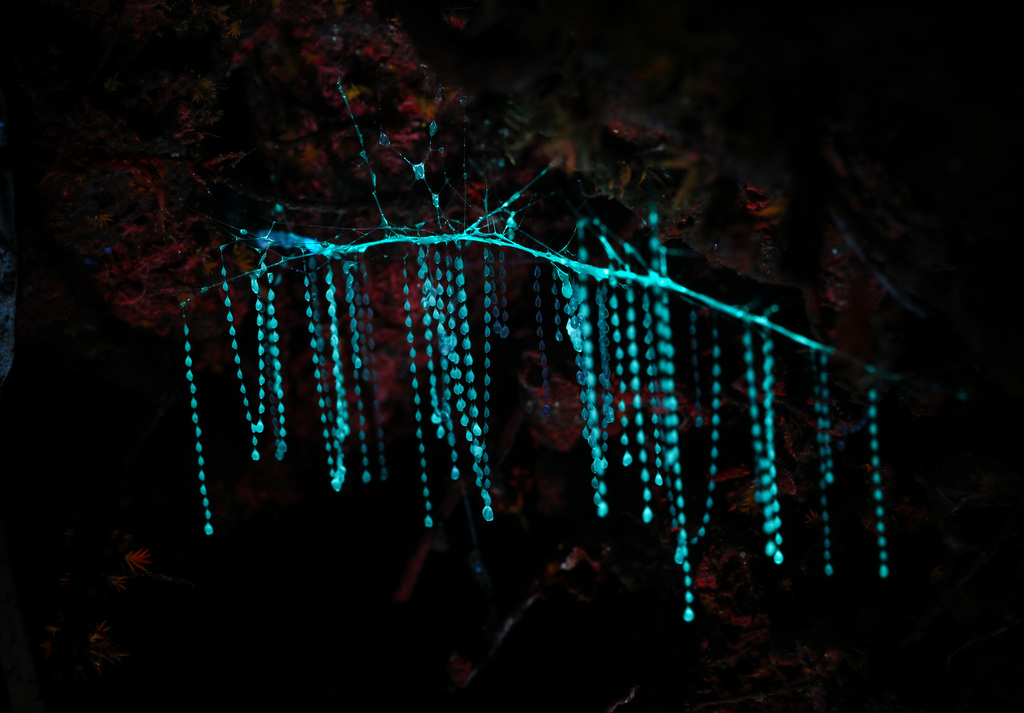
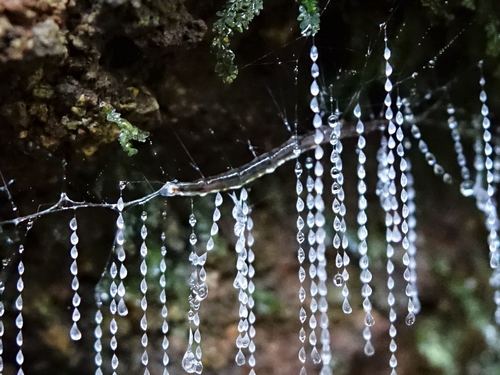
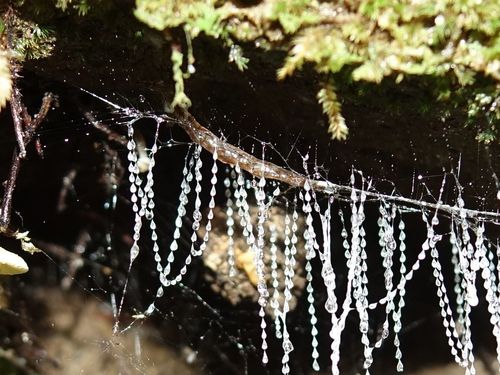
New Zealand glowworms are the larval and adult stages of a fungus gnat that glow blue-green. They live in humid, dark caves or sheltered banks where they hang silk threads to catch small insects.
Source: Wikipedia
How to recognize it
Both larvae and adults produce a blue-green light. Females lay tiny spherical eggs about three-quarters of a millimetre across on cave walls.
Source: Wikipedia
Size
Newly emerged larvae are 3 to 5 mm long and grow to 30 to 40 mm over several months.
Source: Wikipedia
Where it lives
They are found in caves and on moist, sheltered banks in native bush where humidity is high.
Source: Wikipedia
What it eats
Unlike most fungus gnats, they are carnivorous rather than feeding on fungi.
Source: Wikipedia
Life cycle
Eggs are deposited on cave walls; larvae select a site, build silk nests, and remain in the larval stage for up to a year.
Source: Wikipedia
When you see it
Most larvae emerge in spring, while adults appear in winter and are weak fliers.
Source: Wikipedia
Where it comes from
The species is endemic to New Zealand and occurs on both the North and South Islands.
Source: Wikipedia
Lookalikes
It was once mistaken for a European glowworm beetle, but was shown to be a gnat larva. It was first described in 1891 under the name Bolitophila luminosa and placed in the Mycetophilidae family.
Source: Wikipedia
More photos
Questions people ask
When do glowworms appear?
Larvae typically emerge in spring, and the adult glowworms emerge in winter.
Source: Wikipedia
Sources
- Wikipedia: https://en.wikipedia.org/wiki/Arachnocampa_luminosa
Look it up elsewhere: GBIF · iNaturalist · BugGuide · Wikipedia
Text written 2026-10-23 from the sources above and checked sentence by sentence against them. Data fetched 2026-10-23.