 Bug FAQ
New York Weevil
Ithycerus noveboracensis · Order: Coleoptera · Family: Ithyceridae
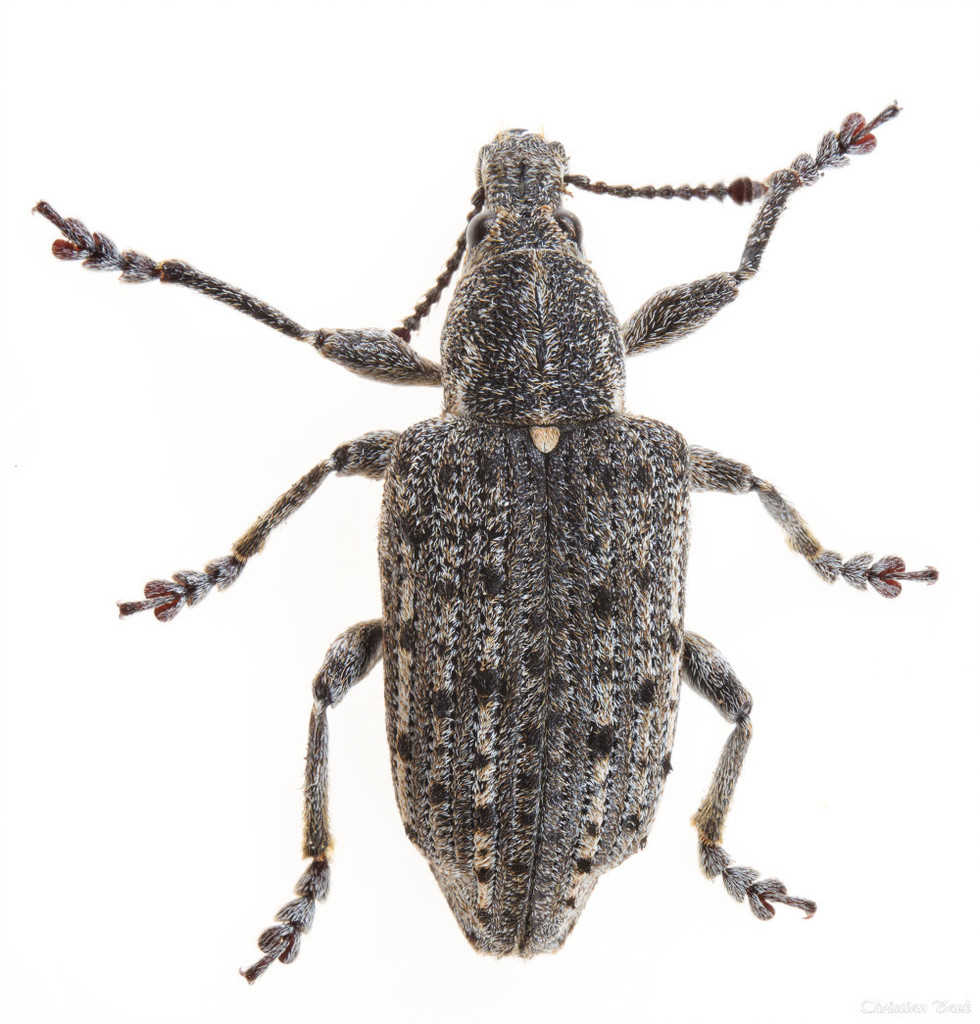
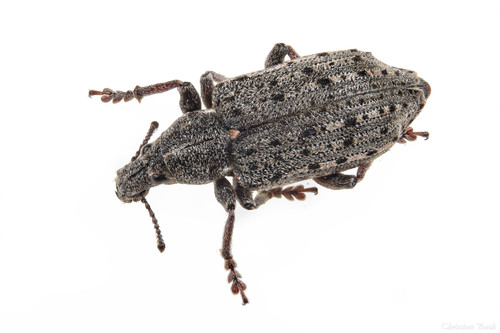
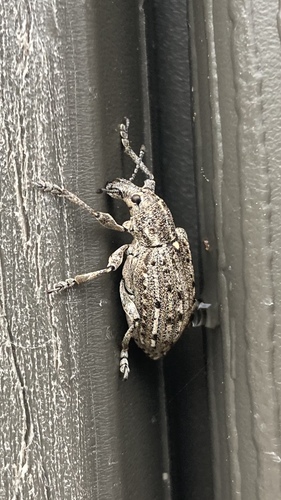
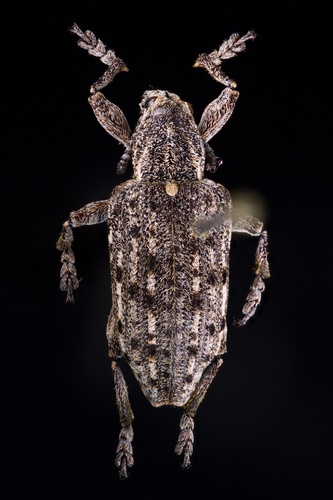
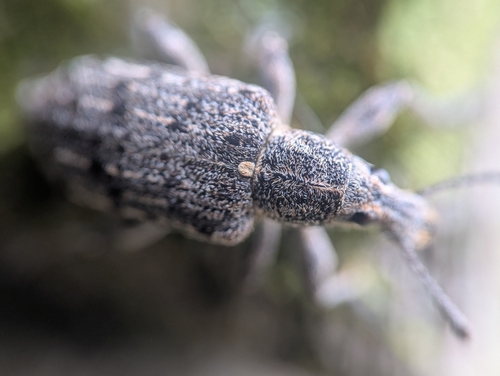
The New York weevil is a relatively large beetle, measuring about 12 to 18 mm, covered in fine bristles with a pattern of light and dark spots, a broad snout and straight antennae ending in a small club.
Source: Wikipedia
How to recognize it
Its rostrum is broad and stout, and the antennae are straight, thin, with the last three segments forming a small club.
Source: Wikipedia
Size
Adults are 12 to 18 mm long, which is large for weevils.
Source: Wikipedia
Where it lives
The beetle is associated with plants in the oak, beech, birch and walnut families, especially white oak and American beech.
Source: Wikipedia
What it eats
Adults feed on new growth, leaf petioles and buds of their host trees. The larvae (grubs) eat the roots of the same host plants.
Source: Wikipedia
Life cycle
Females lay eggs in the soil, and the hatched grubs feed on plant roots.
Source: Wikipedia
Where it comes from
Its native range includes the eastern United States and southern Canada.
Source: Wikipedia
Lookalikes
Although it resembles true weevils, it lacks the elbowed antennae typical of that group.
Source: Wikipedia
Where it is found in the US
Recorded in 29 of 51 states and DC. Most records: Pennsylvania, Michigan, Wisconsin, New York, North Carolina, Indiana, Kentucky, Maryland.
Darker = more records. Counts are museum and citizen-science records, not population size.
Source: GBIF
Status: native in North America; native in Canada. Source: iNaturalist
Months it is reported in the US
Source: GBIF
More photos
Questions people ask
What trees does the New York weevil affect?
It feeds on white oak and American beech, eating new growth as an adult and the roots as a larva.
Source: Wikipedia
How can I tell this weevil apart from true weevils?
It has straight, thin antennae without the elbowed bend seen in true weevils, and its snout is broader and stouter.
Source: Wikipedia
Sources
- Wikipedia: https://en.wikipedia.org/wiki/New_York_weevil
Look it up elsewhere: GBIF · iNaturalist · BugGuide · ITIS · Wikipedia
Text written 2026-10-28 from the sources above and checked sentence by sentence against them. Data fetched 2026-10-28.