 Bug FAQ
Neureclipsis bimaculata
Neureclipsis bimaculata · Order: Trichoptera · Family: Polycentropodidae
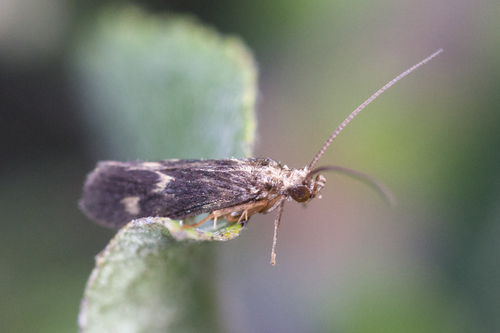
Adults are a dull brownish-grey color. Males have a brownish-grey tint on the tip of the hindwing, while females show golden-brown forewings and a golden-brown tint on the hindwing tip. They live near waterways, from small creeks to large rivers, and the larvae are predatory filter-feeders that stay in slower currents.
Source: Wikipedia
How to recognize it
Male hindwings are tinted brownish-grey near the tip. Female forewings are golden brown and the distal hindwing is tinted golden brown.
Source: Wikipedia
Size
Adults have a dull brownish-grey overall coloration.
Source: Wikipedia
Where it lives
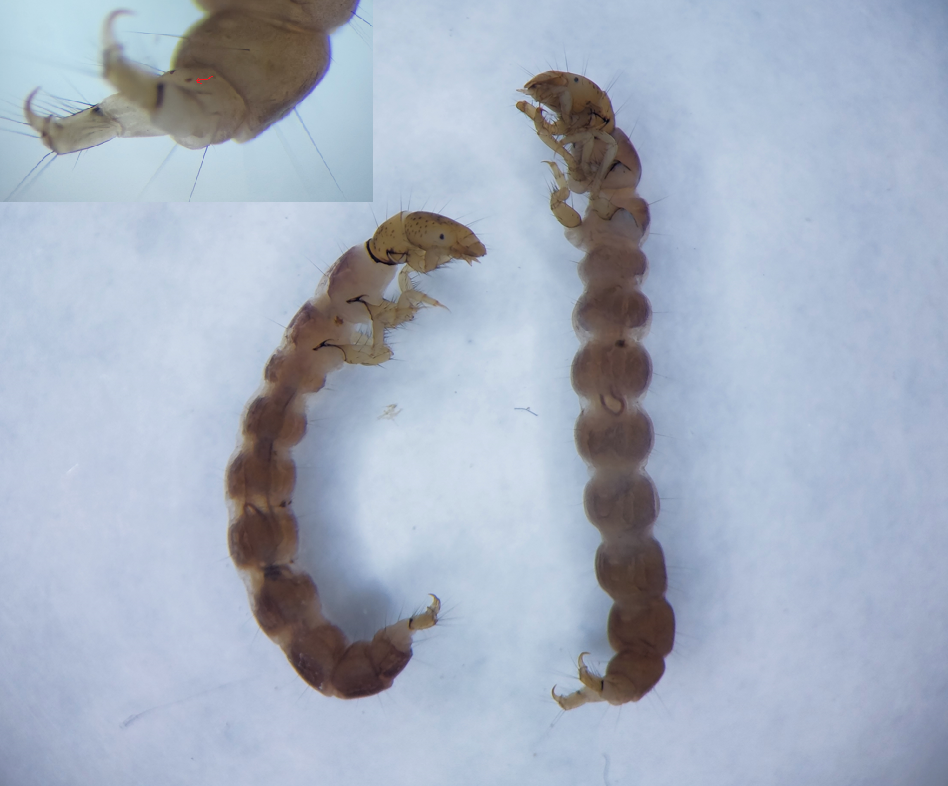
Larvae are predacious filter feeders that require slower currents.
Source: Wikipedia
Life cycle
Adults are present from late May through late September.
Source: Wikipedia
When you see it
Adults are seen from late May to late September.
Source: Wikipedia
Where it comes from
It occurs in Alaska and other parts of northern North America, as well as throughout northern Europe.
Source: Wikipedia
Where it is found in the US
Recorded in 8 of 51 states and DC. Most records: Minnesota, Illinois, Wisconsin, Alaska, Michigan, Maine, Pennsylvania, Virginia.
Darker = more records. Counts are museum and citizen-science records, not population size.
Source: GBIF
Status: native in North America; native in Canada. Source: iNaturalist
Months it is reported in the US
Source: GBIF
More photos
Questions people ask
When are adult Neureclipsis bimaculata active?
Adults appear from late May until late September.
Source: Wikipedia
What habitats does this species prefer?
It lives near waterways, from small creeks to large rivers, with larvae in slower currents.
Source: Wikipedia
Where is Neureclipsis bimaculata found geographically?
It is found in Alaska and other northern parts of North America and throughout northern Europe.
Source: Wikipedia
Sources
- Wikipedia: https://en.wikipedia.org/wiki/Neureclipsis_bimaculata
Look it up elsewhere: GBIF · iNaturalist · BugGuide · ITIS · Wikipedia
Text written 2026-10-23 from the sources above and checked sentence by sentence against them. Data fetched 2026-10-23.