 Bug FAQ
Nettle ground bug
Heterogaster urticae · Order: Hemiptera · Family: Heterogastridae
Also called: Seed bug, Nettle Groundbug
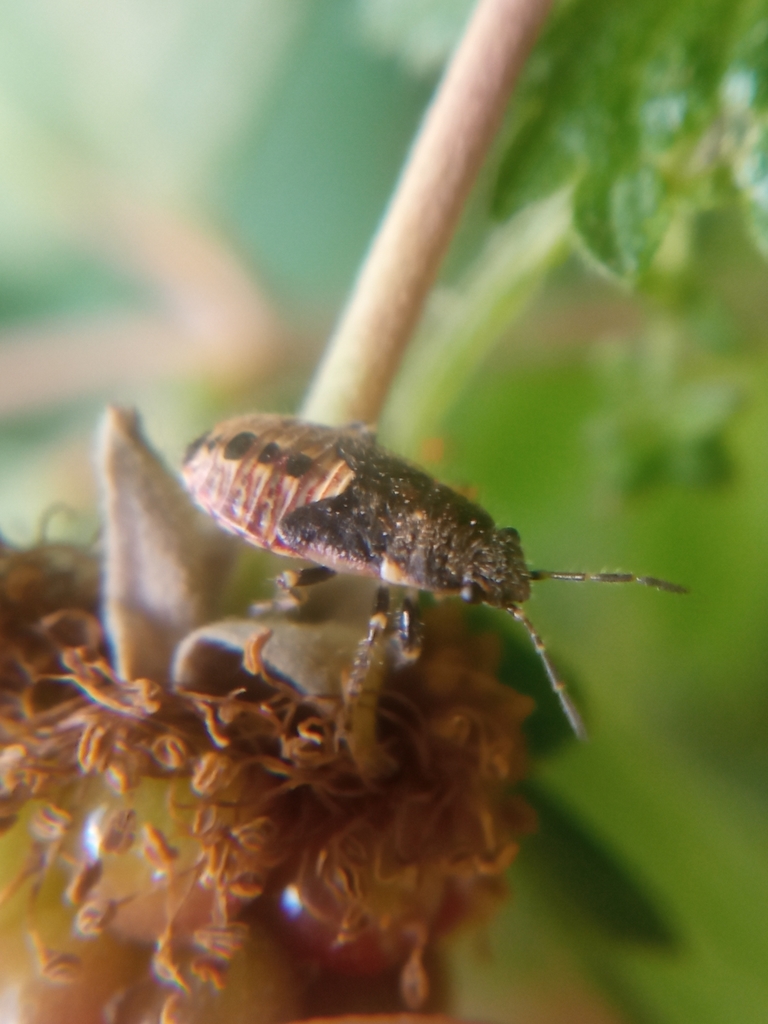
The nettle ground bug is about 6 to 7 mm long and has a shiny yellow-brown to brown back with whitish long hairs on the head and pronotum. Adults overwinter under bark or in hollow stems and often gather in large groups on nettles, feeding mainly on stinging nettles and sometimes on marram grass roots.
Source: Wikipedia
How to recognize it
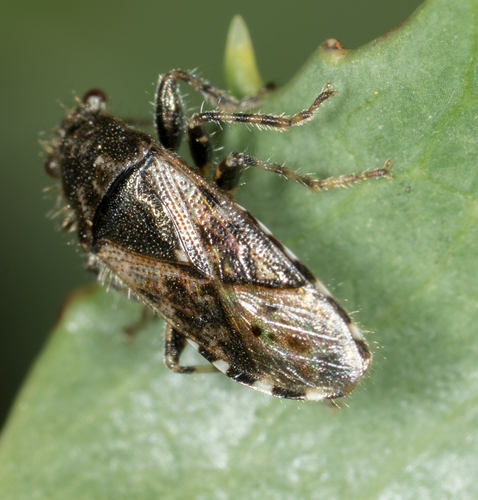
Its back (pronotum and corium) is shiny yellow-brown to brown, the head and pronotum have long whitish hairs, and the legs and side edges show alternating dark and light bands. The front femora each have a single spine and the pale tibiae display three dark rings.
Source: Wikipedia
Where it lives
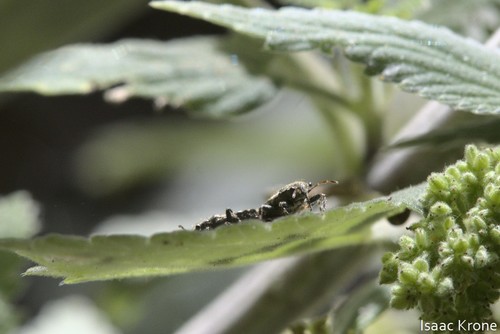
They spend the winter beneath bark or inside hollow woody stems. In spring they emerge and form conspicuous groups on nettles.
Source: Wikipedia
What it eats
In Europe they mainly feed on stinging nettles (Urtica dioica) and have also been found on other Urtica species and on the roots of marram grass (Ammophila arenaria).
Source: Wikipedia
Life cycle
Adults overwinter under bark or in hollow stems, emerge in spring, and mate in June-July. Females lay eggs in the ground near the host plant with a copious secretion; larvae are present until September and the new generation is completed by late summer.
Source: Wikipedia
When you see it
Adults appear in spring, mate in early summer, and larvae can be found through September.
Source: Wikipedia
Lookalikes
Heterogaster urticae, commonly called the nettle ground bug, belongs to the true-bug family Heterogastridae.
Source: Wikipedia
Where it is found in the US
Recorded in 3 of 51 states and DC. Most records: California, Pennsylvania, Oregon.
Darker = more records. Counts are museum and citizen-science records, not population size.
Source: GBIF
Status: native in North America; native in Canada. Source: iNaturalist
Months it is reported in the US
Source: GBIF
More photos
Questions people ask
How can I identify a nettle ground bug?
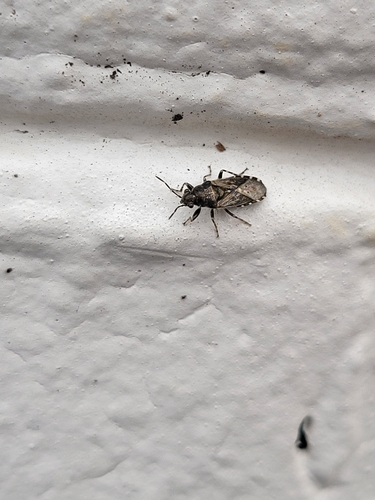
Look for a shiny yellow-brown to brown back, whitish long hairs on the head and pronotum, alternating dark-light markings on the legs and side edges, a single spine on each front femur, and three dark rings on the pale tibiae; the bug is about 6 to 7 mm long.
Source: Wikipedia
Where does the nettle ground bug live?
It overwinters beneath bark or in hollow woody stems and in spring forms noticeable groups on nettles.
Source: Wikipedia
What does the nettle ground bug eat?
It mainly feeds on stinging nettles and other nettle species, and has also been recorded feeding on the roots of marram grass.
Source: Wikipedia
When are nettle ground bugs active?
Adults emerge in spring, mate in June-July, and larvae are present until September, with the new generation completing by late summer.
Source: Wikipedia
Sources
- Wikipedia: https://en.wikipedia.org/wiki/Heterogaster_urticae
Look it up elsewhere: GBIF · iNaturalist · BugGuide · ITIS · Wikipedia
Text written 2026-10-23 from the sources above and checked sentence by sentence against them. Data fetched 2026-10-22.