 Bug FAQ
Nepa apiculata
Nepa apiculata · Order: Hemiptera · Family: Nepidae
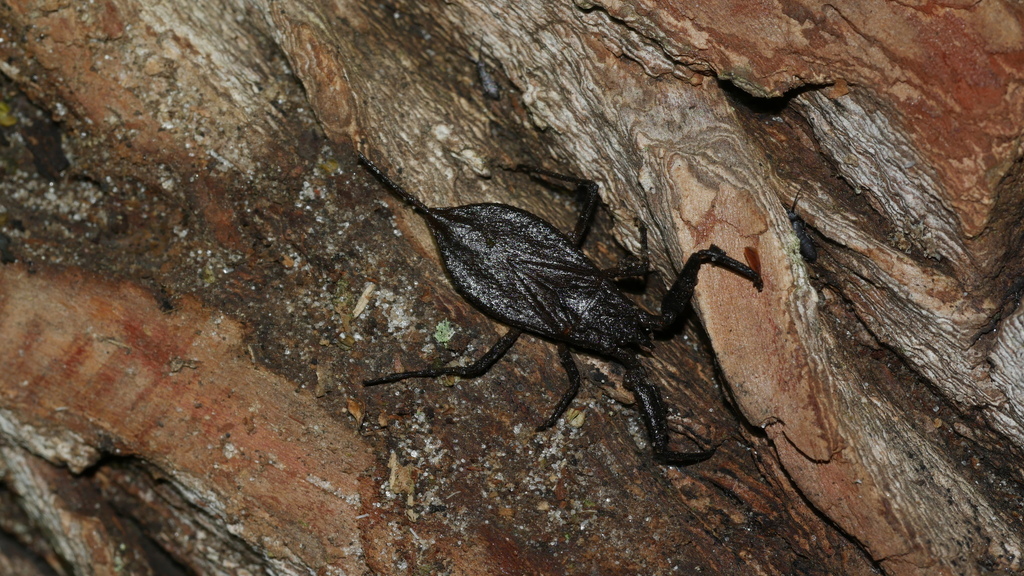
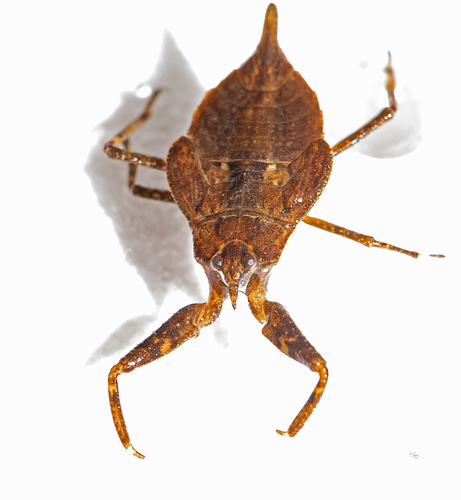
Nepa apiculata has a leaf-shaped body that helps it blend into its surroundings. It lives in eastern North America, including Canada and the United States. The bug is active from spring through fall, feeds on many aquatic invertebrates, and can hibernate during droughts or winter.
Source: Wikipedia
How to recognize it
Their bodies are leaf-shaped, providing camouflage.
Source: Wikipedia
Where it lives
They are found in eastern North America.
Source: Wikipedia
Life cycle
They can hibernate during droughts and also during winter.
Source: Wikipedia
When you see it
They are active from spring to fall.
Source: Wikipedia
Where it comes from
Their native range includes eastern Canada and the United States.
Source: Wikipedia
Where it is found in the US
Recorded in 24 of 51 states and DC. Most records: Kentucky, Illinois, Ohio, Minnesota, New Jersey, Michigan, Pennsylvania, Massachusetts.
Darker = more records. Counts are museum and citizen-science records, not population size.
Source: GBIF
Status: native in North America; native in Canada. Source: iNaturalist
Months it is reported in the US
Source: GBIF
More photos
Questions people ask
Where does Nepa apiculata live?
They live in eastern North America, including Canada and the United States.
Source: Wikipedia
Same family (Nepidae)

Sources
- Wikipedia: https://en.wikipedia.org/wiki/Nepa_apiculata
Look it up elsewhere: GBIF · iNaturalist · BugGuide · ITIS · Wikipedia
Text written 2026-10-26 from the sources above and checked sentence by sentence against them. Data fetched 2026-10-26.