 Bug FAQ
Mexican Wedgetail
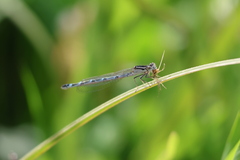
Acanthagrion quadratum · Order: Odonata · Family: Coenagrionidae
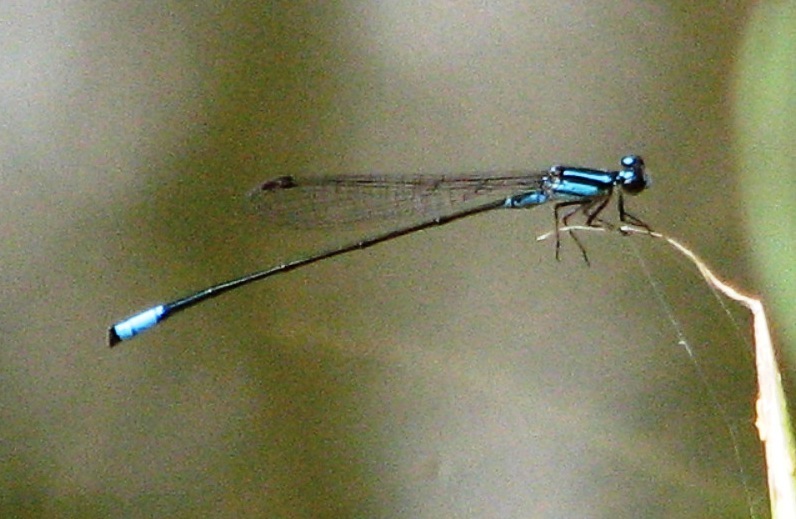
It inhabits vegetated ponds, slow-moving creeks, open marshes and marshy areas under vegetation.
Source: Wikipedia
What it eats
Pairs lay their eggs on herbaceous vegetation.
Source: Wikipedia
Life cycle
The larvae are identified by three pre-mental setae, four setae on the labial palpus, and a caudal lamella eight to ten times longer than its widest part.
Source: Wikipedia
When you see it
In Texas the flight period runs from May to October, while in more tropical locations the season can be longer.
Source: Wikipedia
Lookalikes
Larvae can be separated from other Acanthagrion species by the same three pre-mental setae, four palpal setae and the very long caudal lamella.
Source: Wikipedia
Where it is found in the US
Recorded in 1 of 51 states and DC. Most records: Texas.
Darker = more records. Counts are museum and citizen-science records, not population size.
Source: GBIF
Months it is reported in the US
Source: GBIF
Questions people ask
What habitats does it prefer?
It prefers vegetated ponds, slow-moving creeks, open marshes and marshy areas under plant cover.
Source: Wikipedia
When am I likely to see adults?
Adults are on the wing from May through October in Texas, and for a longer period in more tropical regions.
Source: Wikipedia
Same family (Coenagrionidae)


Sources
- Wikipedia: https://en.wikipedia.org/wiki/Acanthagrion_quadratum
Look it up elsewhere: GBIF · iNaturalist · BugGuide · ITIS · Wikipedia
Text written 2026-10-25 from the sources above and checked sentence by sentence against them. Data fetched 2026-10-25.