 Bug FAQ
Mediterranean stick insect
Bacillus rossius · Order: Phasmida · Family: Bacillidae
Also called: Corsican Stick-insect
Source: Wikipedia
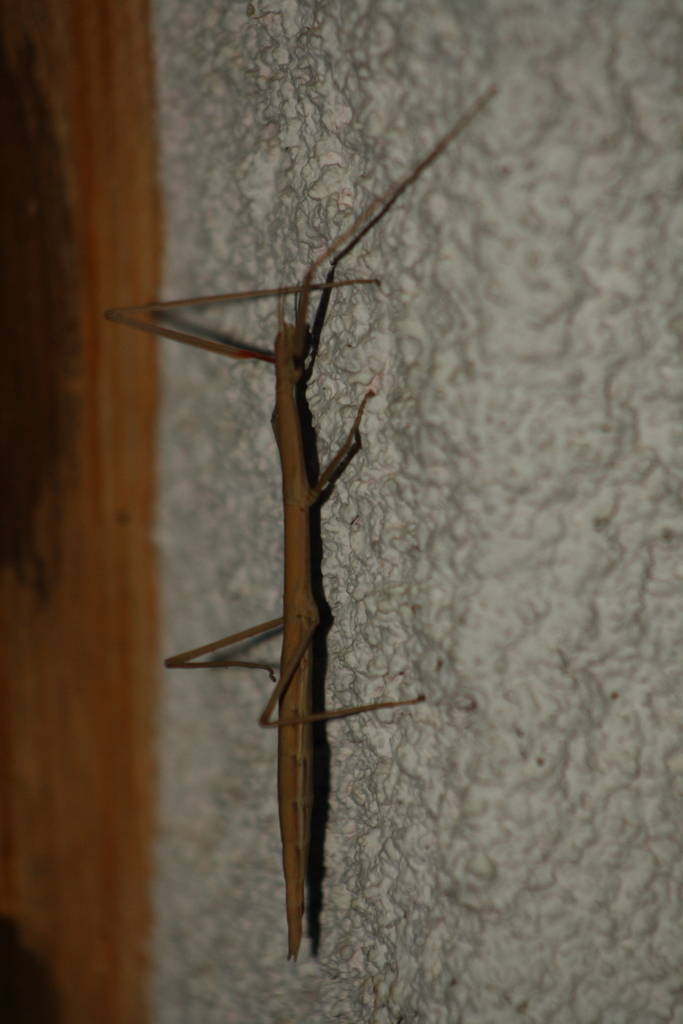
Their colour ranges from brown to green and may show a pinkish tint on the head, legs and sides.
Source: Wikipedia
How to recognize it
Adults have a slim body, short antennae and long, thin legs.
Source: Wikipedia
Size
An adult can reach about 10 cm (4 inches) in length.
Source: Wikipedia
Where it lives
The species is endemic to the north-western Mediterranean region.
Source: Wikipedia
What it eats
It feeds on bramble leaves, ivy and privet.
Source: Wikipedia
Life cycle
Females lay seed-like eggs that hatch into nymphs after 8 weeks to 2 months. The species lives up to about one year.
Source: Wikipedia
When you see it
Adults can be found from June through mid-December.
Source: Wikipedia
Where it comes from
It is native to Italy, Spain, southern France and the Balkans.
Source: Wikipedia
Lookalikes
It is also known as the European stick insect, European walking stick, or Mediterranean stick insect.
Source: Wikipedia
Questions people ask
What does the Mediterranean stick insect eat?
It feeds on bramble leaves, ivy and privet.
Source: Wikipedia
Same family (Bacillidae)


Sources
- Wikipedia: https://en.wikipedia.org/wiki/Bacillus_rossius
Look it up elsewhere: GBIF · iNaturalist · BugGuide · Wikipedia
Text written 2026-10-23 from the sources above and checked sentence by sentence against them. Data fetched 2026-10-22.