 Bug FAQ
Mediterranean Spiny False Wolf Spider
Zoropsis spinimana · Order: Araneae · Family: Zoropsidae
Also called: Zoropsid spider
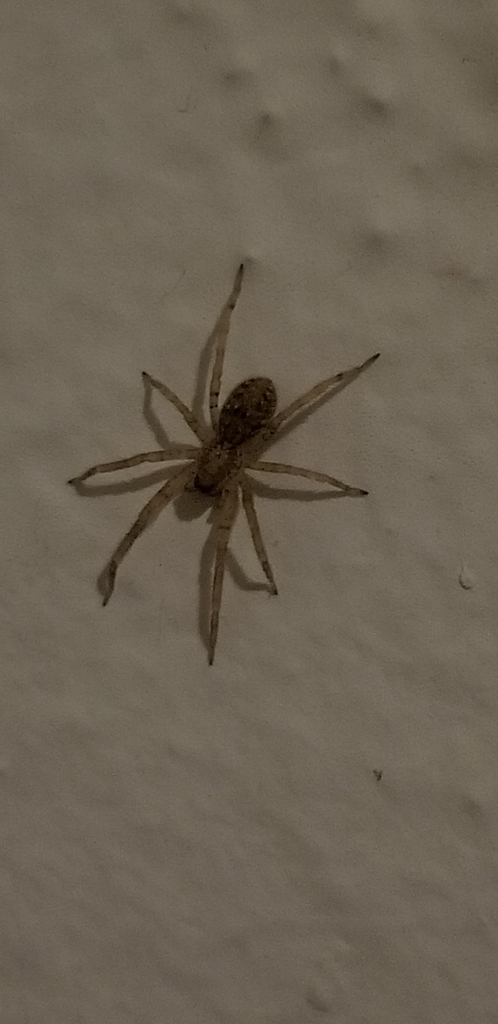
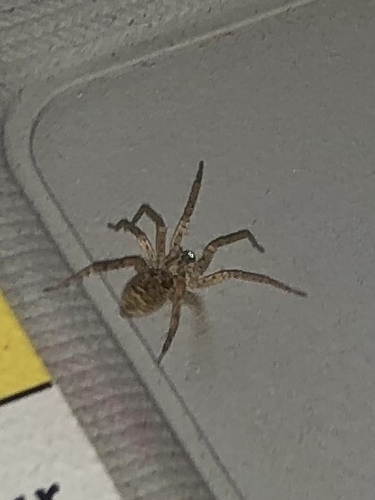
Males are about 10 to 12 mm long and females 15 to 18 mm. They have a brownish front body with darker markings and a abdomen with a central black pattern. They live on forest edges under rocks or bark, but often move into houses for milder temperatures and more food.
Source: Wikipedia
How to recognize it
The front part of the body is brown with broad dark marks, and the abdomen shows a median black marking.
Source: Wikipedia
Size
Males reach about 10 to 12 mm, while females grow to 15 to 18 mm.
Source: Wikipedia
Is it a pest in the house?
The spider often seeks shelter inside homes where conditions are milder and prey is abundant.
Source: Wikipedia
Where it lives
Because they cannot survive harsh climates, they often enter houses where it is warmer and food is plentiful.
Source: Wikipedia
What it eats
It does not spin a web but actively hunts its prey.
Source: Wikipedia
Life cycle
Adults become sexually mature in autumn, and females lay eggs in spring within a brood chamber.
Source: Wikipedia
When you see it
Sexual maturity occurs in the autumn months.
Source: Wikipedia
Where it comes from
The species is native to the Mediterranean, extends into Russia, and has been introduced to the San Francisco Bay Area in the USA and to London in the UK.
Source: Wikipedia
Lookalikes
It looks like a wolf spider because of the eye arrangement, but its eyes are spaced farther apart along the front third of the cephalothorax.
Source: Wikipedia
Where it is found in the US
Recorded in 6 of 51 states and DC. Most records: California, Oregon, Washington, Florida, Kansas, Colorado.
Darker = more records. Counts are museum and citizen-science records, not population size.
Source: GBIF
Status: introduced in North America; introduced in Canada; introduced in United States. Source: iNaturalist
Months it is reported in the US
Source: GBIF
More photos
Questions people ask
Why do I find these spiders inside my house?
They enter homes to escape cold weather and to find more food.
Source: Wikipedia
How can I tell this spider apart from a wolf spider?
Its eyes are more widely spaced along the front third of the cephalothorax, unlike the tighter eye cluster of true wolf spiders.
Source: Wikipedia
Sources
- Wikipedia: https://en.wikipedia.org/wiki/Zoropsis_spinimana
Look it up elsewhere: GBIF · iNaturalist · BugGuide · ITIS · Wikipedia
Text written 2026-10-22 from the sources above and checked sentence by sentence against them. Data fetched 2026-10-22.