 Bug FAQ
Marsh Bluet
Enallagma ebrium · Order: Odonata · Family: Coenagrionidae
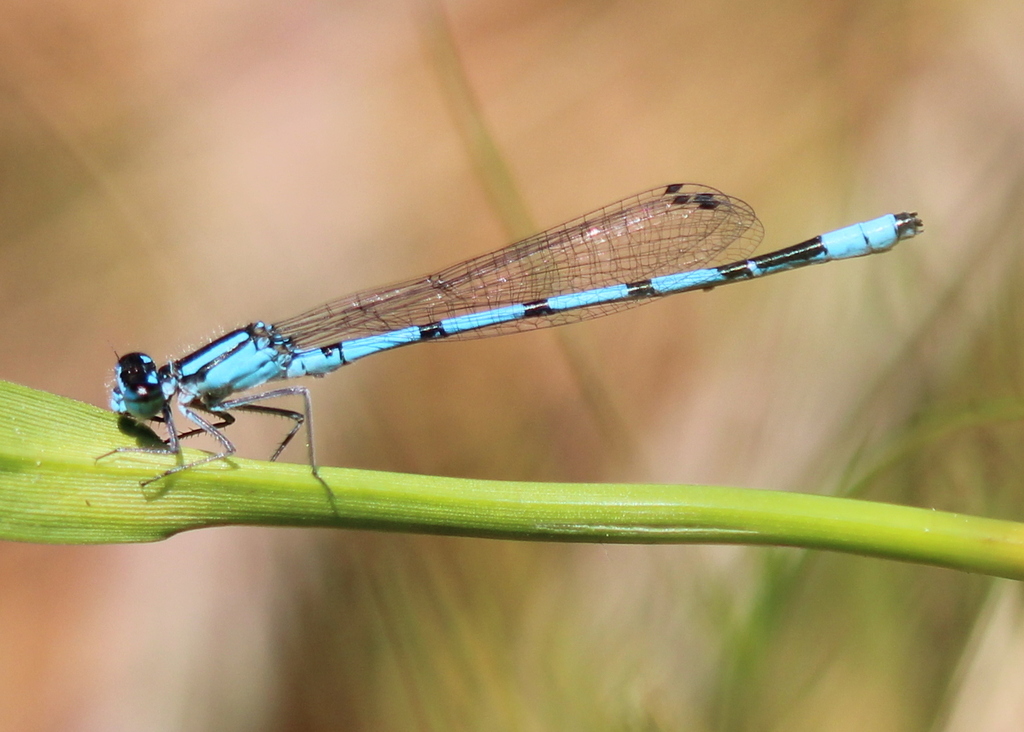
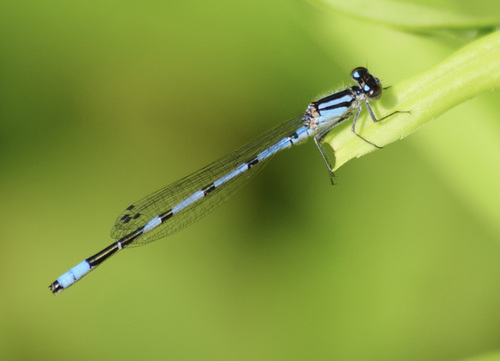
Marsh bluets are small damselflies about 25 to 34 mm long and are most active from early June to early September. They live around lowland lakes, ponds and marshes, preferring alkaline water, and are found across many U.S. states and Canadian provinces.
Source: Wikipedia
How to recognize it
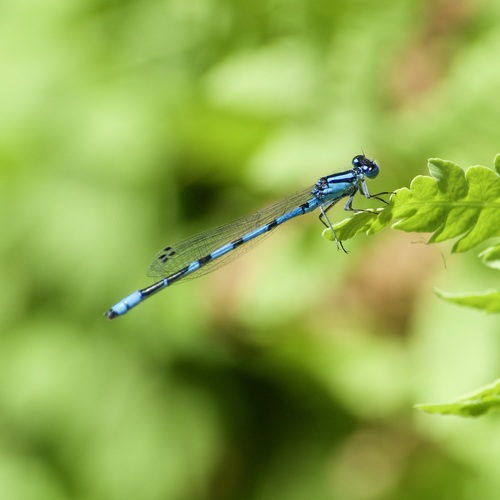
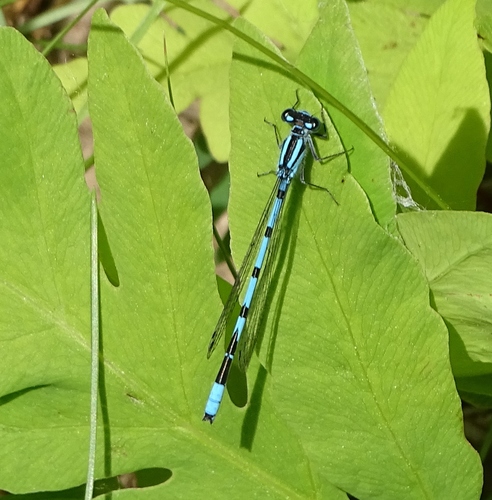
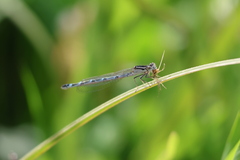
Male marsh bluets show a blue thorax with a wide black stripe and two black shoulder stripes; their abdomen is slender, mostly blue with black tops and a black tip. Females have a similar thorax but in tan or blue-green, and their abdomen is dark on top and tan or blue-green below.
Source: Wikipedia
Size
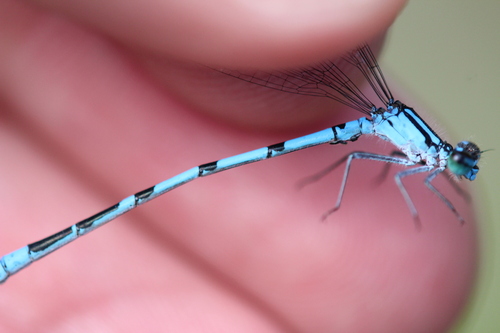
They measure 25 to 34 mm (about 1 in) in length.
Source: Wikipedia
What it eats
Aquatic larvae such as mosquito and mayfly larvae are eaten by the nymph stage, while adults catch small soft-bodied flying insects like mosquitoes, mayflies, flies and tiny moths, and may also pick aphids from plants.
Source: Wikipedia
Life cycle
Males defend territories at breeding sites; after mating, females lay eggs singly or in tandem, sometimes descending up to a foot underwater to deposit them in aquatic vegetation. They are common at alkaline marshes in mid-summer.
Source: Wikipedia
When you see it
Adults are on the wing from early June through early September.
Source: Wikipedia
Where it comes from
Their range includes many U.S. states from Colorado to Washington and Canadian provinces from Alberta to Quebec.
Source: Wikipedia
Lookalikes
They resemble Hagen's bluet and the familiar bluet.
Source: Wikipedia
Where it is found in the US
Recorded in 26 of 51 states and DC. Most records: Michigan, New York, Vermont, Maine, Minnesota, Wisconsin, New Hampshire, Massachusetts.
Darker = more records. Counts are museum and citizen-science records, not population size.
Source: GBIF
Status: native in North America; native in Canada; native in United States. Source: iNaturalist
Months it is reported in the US
Source: GBIF
More photos
Questions people ask
Where are marsh bluets most likely to be found?
They prefer alkaline waters of lowland lakes, ponds and marshes across many U.S. states and Canadian provinces.
Source: Wikipedia
Same family (Coenagrionidae)


Sources
- Wikipedia: https://en.wikipedia.org/wiki/Marsh_bluet
Look it up elsewhere: GBIF · iNaturalist · BugGuide · ITIS · Wikipedia
Text written 2026-10-23 from the sources above and checked sentence by sentence against them. Data fetched 2026-10-22.