 Bug FAQ
Bordered Wedge-shaped Beetle
Macrosiagon limbata · Order: Coleoptera · Family: Ripiphoridae
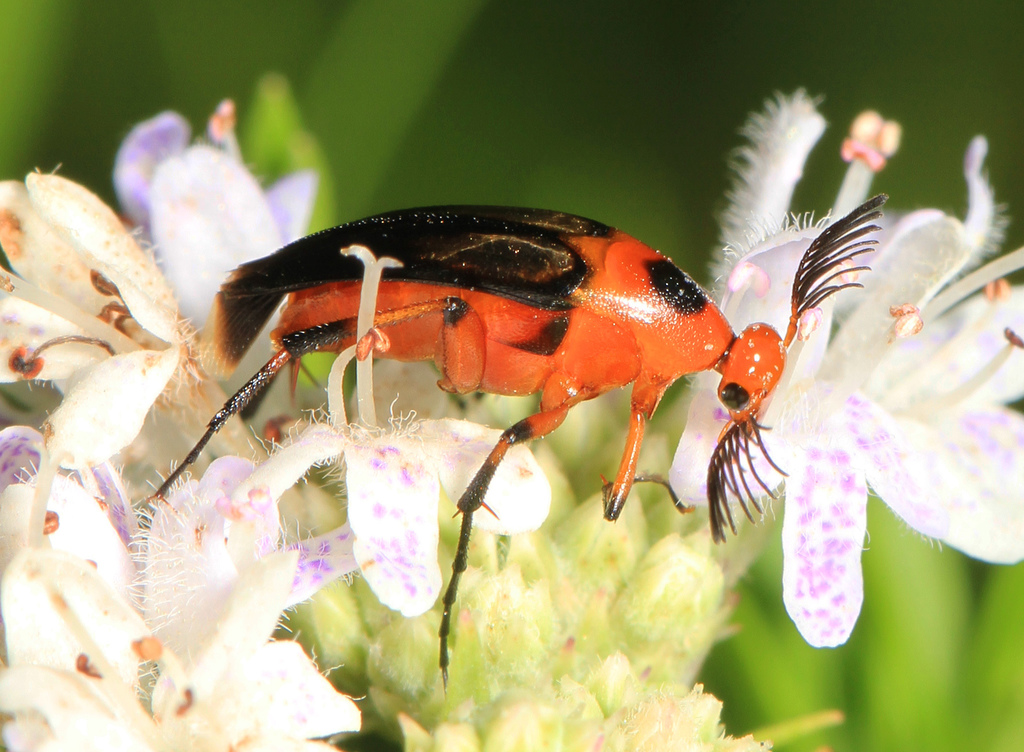
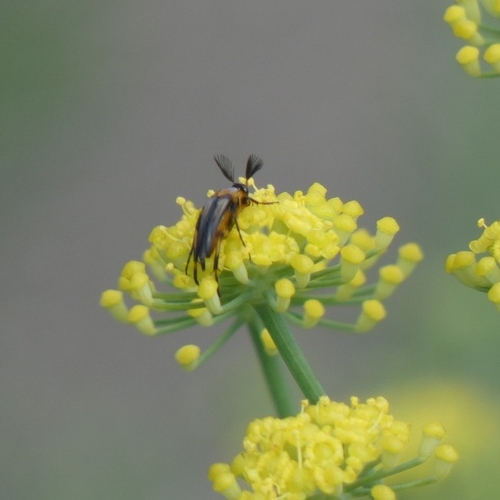
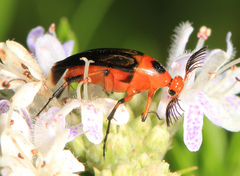
Males have comb-like antennae while females have serrated ones, and the wing covers are longer than the abdomen and spread apart at the tip. Adults are seen in summer on flowers such as elderberries and goldenrod across the eastern U.S., southeastern Canada and Central America. They have long mouthparts for sipping nectar, and their early larvae lack legs and feed on other insect larvae or stored pollen and nectar.
Source: Wikipedia
How to recognize it
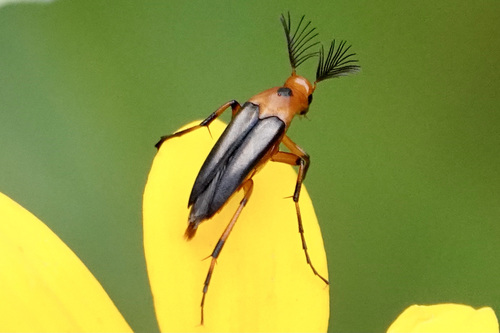
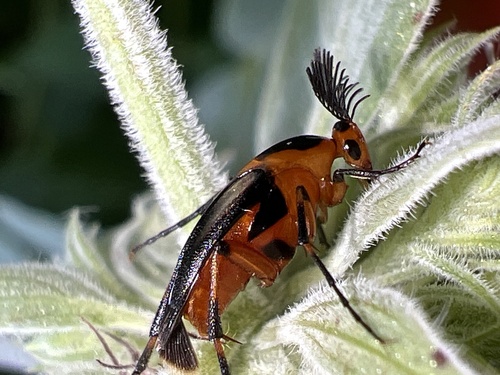
Males have comb-like antennae; females have serrated antennae. The elytra extend beyond the abdomen and diverge at the apex.
Source: Wikipedia
Where it lives
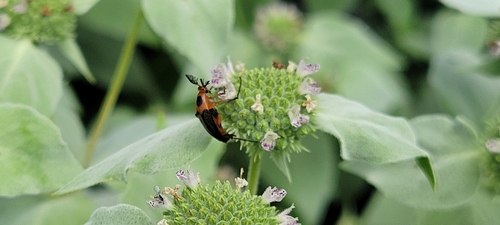
Adults are active in summer and visit flowers such as elderberries and goldenrod.
Source: Wikipedia
What it eats
Adults have elongated mouthparts used to sip nectar. Early larval stages lack legs and feed on other insect larvae or stored pollen and nectar.
Source: Wikipedia
Life cycle
Their larvae undergo hypermetamorphosis, changing form across several distinct instars.
Source: Wikipedia
When you see it
Adults are active during the summer months.
Source: Wikipedia
Lookalikes
They can be mistaken for tumbling flower beetles but have longer elytra. They also resemble false darkling beetles.
Source: Wikipedia
Where it is found in the US
Recorded in 34 of 51 states and DC. Most records: Massachusetts, Pennsylvania, Ohio, Virginia, Illinois, New York, Minnesota, Indiana.
Darker = more records. Counts are museum and citizen-science records, not population size.
Source: GBIF
Status: native in North America; native in Canada. Source: iNaturalist
Months it is reported in the US
Source: GBIF
More photos
Questions people ask
How can I tell male and female Bordered Wedge-shaped Beetles apart?
Males have comb-like antennae, while females have serrated antennae.
Source: Wikipedia
Where am I likely to see these beetles?
Look for them in summer on elderberry or goldenrod flowers in the eastern U.S., southeastern Canada or Central America.
Source: Wikipedia
What do the larvae eat?
Early instars lack legs and feed on other insect larvae or stored pollen and nectar.
Source: Wikipedia
Are they related to tumbling flower beetles?
They look similar but have longer elytra that diverge at the tip.
Source: Wikipedia
Same family (Ripiphoridae)
Sources
- Wikipedia: https://en.wikipedia.org/wiki/Macrosiagon_limbata
Look it up elsewhere: GBIF · iNaturalist · BugGuide · ITIS · Wikipedia
Text written 2026-10-22 from the sources above and checked sentence by sentence against them. Data fetched 2026-10-22.