 Bug FAQ
Macrocheraia grandis
Macrocheraia grandis · Order: Hemiptera · Family: Largidae
Source: Wikipedia
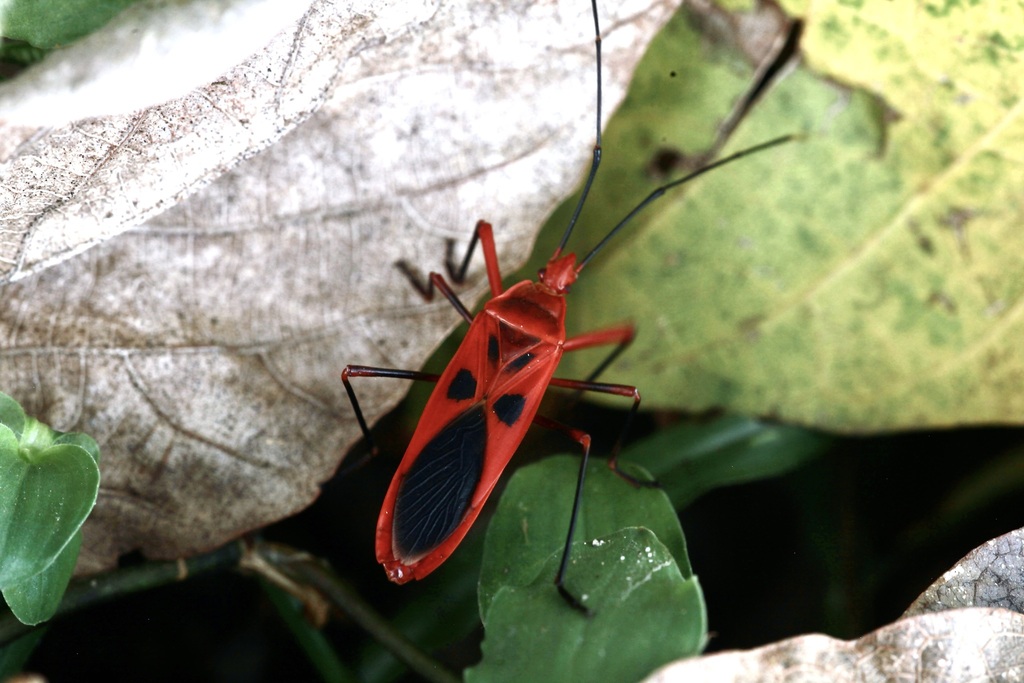
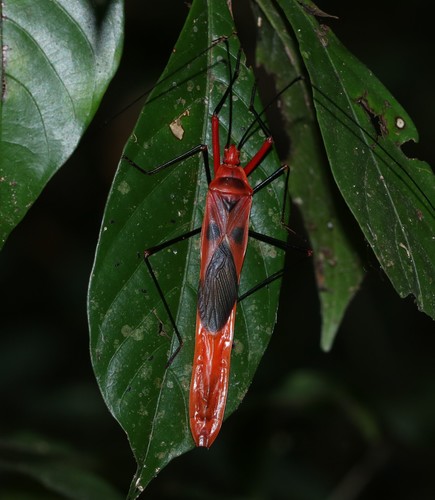
Males have a long abdomen that sticks out past the wingtip, while females have a short abdomen. It lives mainly in Southeast Asia and also occurs in parts of South Asia. Its diet includes plants from the Euphorbiaceae and Malvaceae families.
Source: Wikipedia
Where it lives
It is found mainly in Southeast Asia and extends into parts of South Asia.
Source: Wikipedia
What it eats
It feeds on a range of plants, especially those in the Euphorbiaceae and Malvaceae families.
Source: Wikipedia
Where it comes from
Its native range is primarily Southeast Asia, reaching into South Asian regions.
Source: Wikipedia
More photos
Questions people ask
What plants does Macrocheraia grandis eat?
It feeds on plants from the Euphorbiaceae and Malvaceae families.
Source: Wikipedia
Where is Macrocheraia grandis found?
It occurs mainly in Southeast Asia and also in parts of South Asia.
Source: Wikipedia
How can I tell male and female Macrocheraia grandis apart?
Males have a long abdomen that extends beyond the wingtip, while females have a short abdomen.
Source: Wikipedia
Has this bug been called by other names?
Yes, older sources sometimes referred to it as belonging to the genus Lohita, a name meaning “red” in Sanskrit.
Source: Wikipedia
Same family (Largidae)
Sources
- Wikipedia: https://en.wikipedia.org/wiki/Macrocheraia
Look it up elsewhere: GBIF · iNaturalist · BugGuide · ITIS · Wikipedia
Text written 2026-10-23 from the sources above and checked sentence by sentence against them. Data fetched 2026-10-23.