 Bug FAQ
Little Sea Pill Woodlouse
Cubaris murina · Order: Isopoda · Family: Armadillidae
Also called: Little Sea Isopod, Little Sea Pill-bug, Little Sea Pillbug
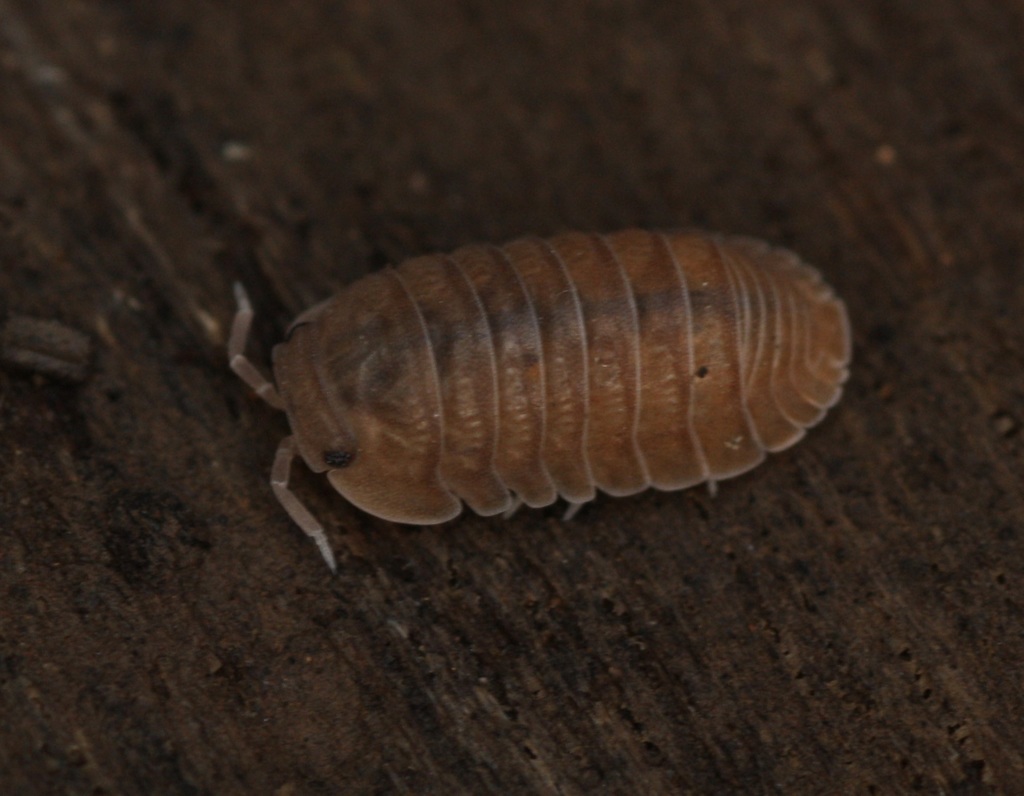
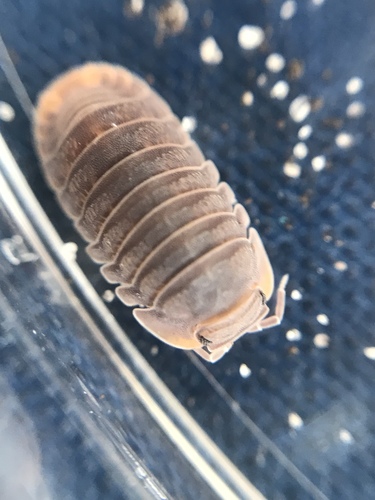
The little sea pill woodlouse can grow to about 11 mm long and 5 mm wide. When disturbed it can roll up into a ball, a behavior called conglobation. It occurs across many tropical and subtropical regions, including parts of North America, South America, Africa, Australasia, and the Pacific.
Source: Wikipedia
How to recognize it
If it feels threatened, it can curl into a tight ball, a defensive posture known as conglobation.
Source: Wikipedia
Size
Adults may reach a length of roughly 11 mm and a width of about 5 mm.
Source: Wikipedia
Where it comes from
In North America it occurs in Cuba, Puerto Rico, Jamaica, the U.S. Virgin Islands, and Oahu. Its range also includes Brazil, French Guiana, the Seychelles, and Sumatra, Indonesia.
Source: Wikipedia
Where it is found in the US
Recorded in 4 of 51 states and DC. Most records: Florida, Hawaii, Texas, Arizona.
Darker = more records. Counts are museum and citizen-science records, not population size.
Source: GBIF
Status: introduced in United States. Source: iNaturalist
Months it is reported in the US
Source: GBIF
More photos
Questions people ask
How large does the little sea pill woodlouse get?
It can grow up to about 11 mm long and 5 mm wide.
Source: Wikipedia
Can this woodlouse roll into a ball?
Yes, it can curl into a ball when disturbed, a behavior called conglobation.
Source: Wikipedia
Where is this woodlouse found?
It lives in many tropical and subtropical areas, including parts of North America, South America, Africa, Australasia, tropical Asia, and the Pacific Ocean.
Source: Wikipedia
Sources
- Wikipedia: https://en.wikipedia.org/wiki/Cubaris_murina
Look it up elsewhere: GBIF · iNaturalist · BugGuide · ITIS · Wikipedia
Text written 2026-10-26 from the sources above and checked sentence by sentence against them. Data fetched 2026-10-26.