 Bug FAQ
Lime seed bug
Oxycarenus lavaterae · Order: Hemiptera · Family: Oxycarenidae
Source: Wikipedia
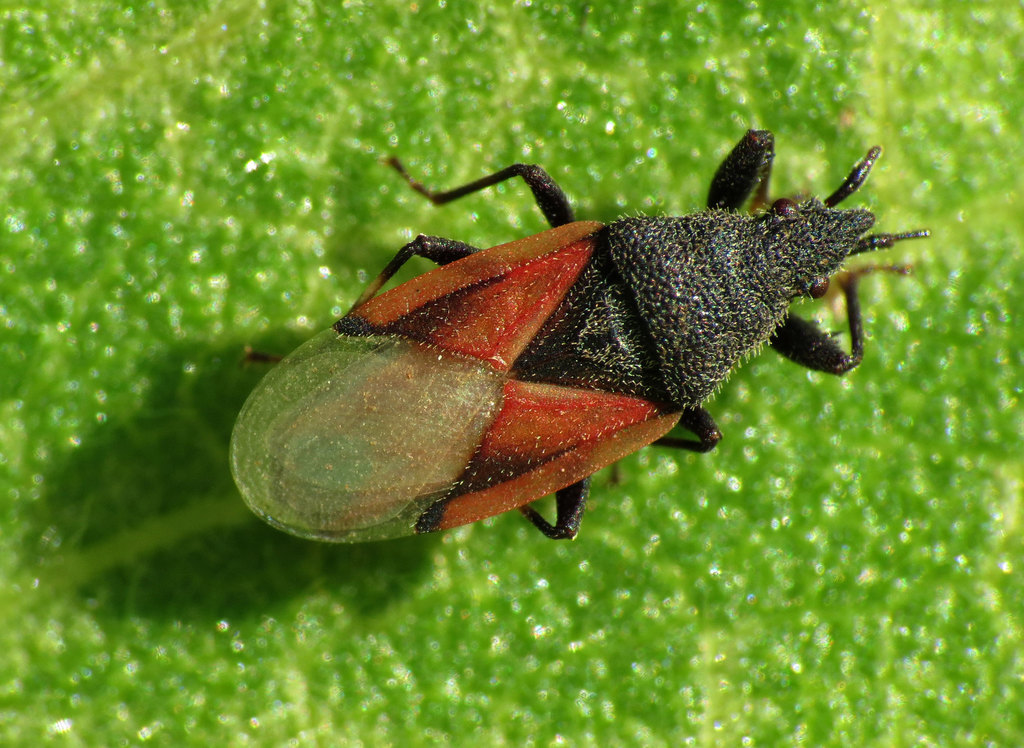
Adult lime seed bugs are about 4 to 5 mm long and are red, white and black in colour. They live on Malvaceae plants like hibiscus and can become a garden pest, especially in warmer areas. In warm regions they overwinter in large groups on lime trees and other trees.
Source: Wikipedia
How to recognize it
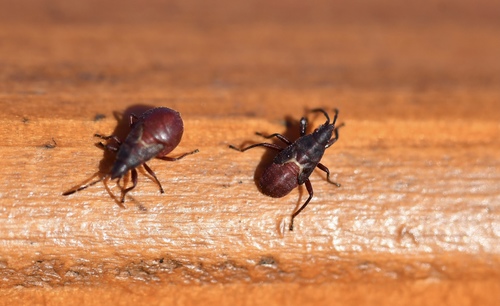
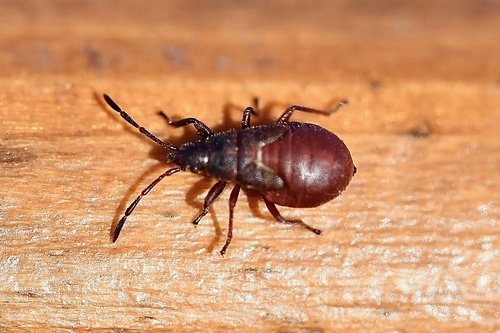
Adults are mostly red, white and black; the head, prothorax, scutellum and antennae are black, the upper abdomen is brick-red, and the wings are clear and reach the abdomen tip. Nymphs have a black head, red abdomen and completely black wing pads.
Source: Wikipedia
Size
Females are 4.5 to 5.4 mm long; males are 4.2 to 5 mm long.
Source: Wikipedia
Is it a pest in the house?
It is considered an invasive pest in some countries.
Source: Wikipedia
Where it lives
They are found on plants in the Malvaceae family such as Lavatera, Althea, Hibiscus and Malva. In warm countries they hibernate as adults, forming large groups on lime trees and occasionally on poplar, plane or horse-chestnut.
Source: Wikipedia
What it eats
They feed on Malvaceae plants like hibiscus, mallow and related species.
Source: Wikipedia
Life cycle
There are usually two generations per year. Adults hibernate in warmer regions.
Source: Wikipedia
When you see it
Adults overwinter in large groups on lime trees and other trees in warm areas.
Source: Wikipedia
Where it comes from
Originally Mediterranean and North Africa, they have spread north into Benelux, Central and Eastern Europe since the 1970s.
Source: Wikipedia
More photos
Questions people ask
What plants do they damage?
They feed on and can damage hibiscus, mallow, Lavatera and other Malvaceae garden plants.
Source: Wikipedia
Where do they spend the winter?
In warm areas they gather in large groups on lime trees and sometimes on poplar, plane or horse-chestnut.
Source: Wikipedia
Sources
- Wikipedia: https://en.wikipedia.org/wiki/Oxycarenus_lavaterae
Look it up elsewhere: GBIF · iNaturalist · BugGuide · Wikipedia
Text written 2026-10-22 from the sources above and checked sentence by sentence against them. Data fetched 2026-10-22.