 Bug FAQ
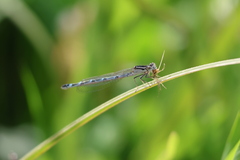
Large Red Damselfly
Pyrrhosoma nymphula · Order: Odonata · Family: Coenagrionidae
Also called: Large Red Damsel, large red dragonfly
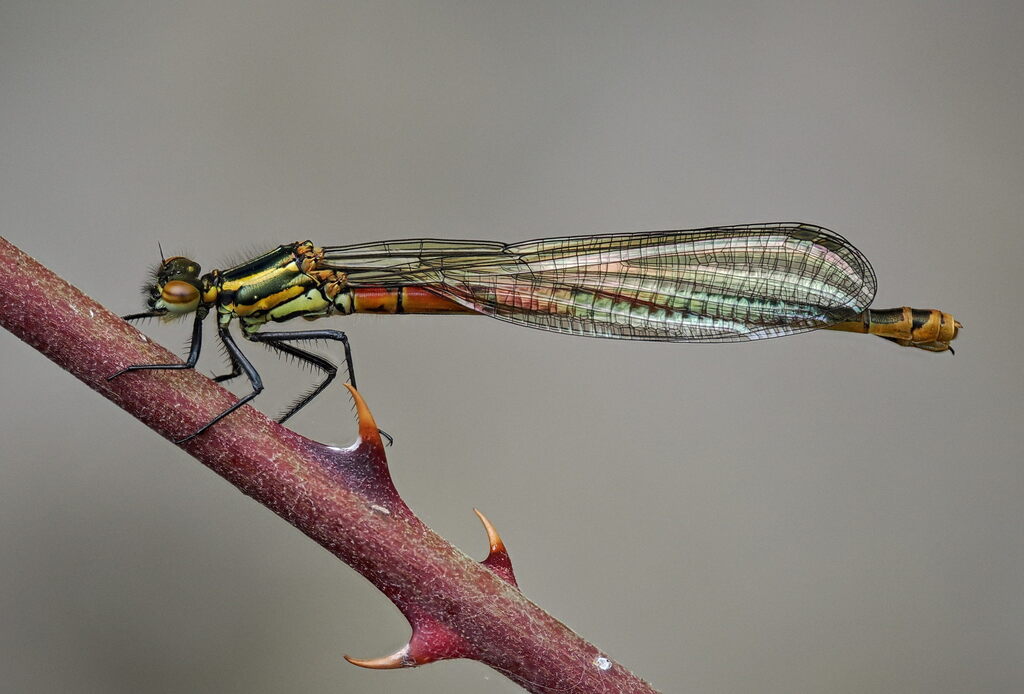
It lives around small ponds, lakes, dikes and slow rivers, is native to Europe, North Africa and Western Asia, and emerges from April to May, staying until September.
Source: Wikipedia
How to recognize it
Both sexes have black legs and wing spots. Mature males show red eyes, a black thorax and red shoulder stripes; immature males have yellow stripes.
Source: Wikipedia
Size
Adults measure 33 to 36 mm (about 1.3 to 1.4 in) in body length.
Source: Wikipedia
Where it lives
They are found near small ponds, lakes, dikes and sometimes slow-moving rivers.
Source: Wikipedia
What it eats
Larvae eat aquatic insect larvae, protozoa, rotifers and small crustaceans.
Source: Wikipedia
Life cycle
Larval development takes about two years, and immature adults mature in roughly two weeks.
Source: Wikipedia
When you see it
Adults usually appear in April or May and can be seen through September, depending on location.
Source: Wikipedia
Questions people ask
How can I tell a large red damselfly apart from similar species?
Look for black legs and wing spots; small red damselflies have orange legs.
Source: Wikipedia
Same family (Coenagrionidae)


Sources
- Wikipedia: https://en.wikipedia.org/wiki/Large_red_damselfly
Look it up elsewhere: GBIF · iNaturalist · BugGuide · Wikipedia
Text written 2026-10-22 from the sources above and checked sentence by sentence against them. Data fetched 2026-10-22.