 Bug FAQ
Juniper Seed Moth
Argyresthia alternatella · Order: Lepidoptera · Family: Argyresthiidae
Also called: Honey-comb micro
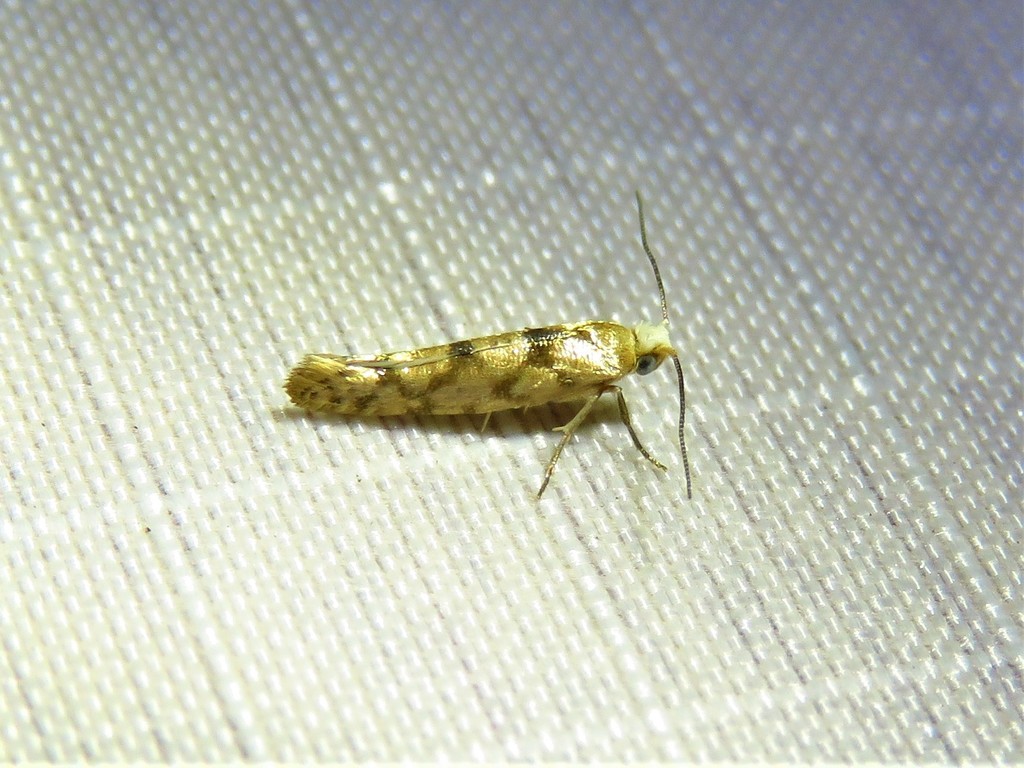
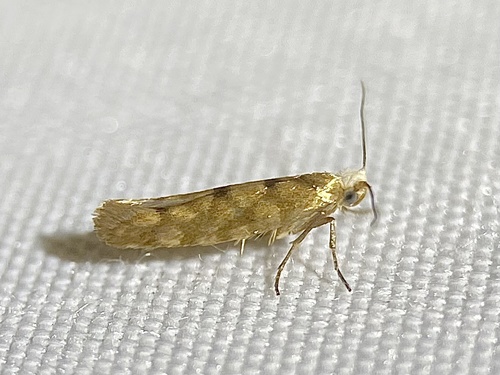
The Juniper Seed Moth has a wingspan of about 10 to 12 mm. Its forewings are golden-ochreous with five brown spots along the leading edge and three along the trailing edge. It lives in North America, recorded from several U.S. states and Canadian provinces, and its larvae feed on Juniperus species.
Source: Wikipedia
How to recognize it
The forewings are a golden-ochre colour.
Source: Wikipedia
Size
The adult’s wingspan ranges from 10 to 12 mm.
Source: Wikipedia
What it eats
The larvae feed on species of Juniperus.
Source: Wikipedia
Where it comes from
Its native range covers North America, with records from the same states and provinces listed for its habitat.
Source: Wikipedia
Where it is found in the US
Recorded in 28 of 51 states and DC. Most records: Texas, Oklahoma, Mississippi, California, New Jersey, Connecticut, Massachusetts, North Carolina.
Darker = more records. Counts are museum and citizen-science records, not population size.
Source: GBIF
Status: native in North America; native in Canada. Source: iNaturalist
Months it is reported in the US
Source: GBIF
More photos
Same family (Argyresthiidae)


Sources
- Wikipedia: https://en.wikipedia.org/wiki/Argyresthia_alternatella
Look it up elsewhere: GBIF · iNaturalist · BugGuide · Wikipedia
Text written 2026-10-26 from the sources above and checked sentence by sentence against them. Data fetched 2026-10-26.