 Bug FAQ
Insidious flower bug
Orius insidiosus · Order: Hemiptera · Family: Anthocoridae
Also called: insidious pirate bug
Source: Wikipedia
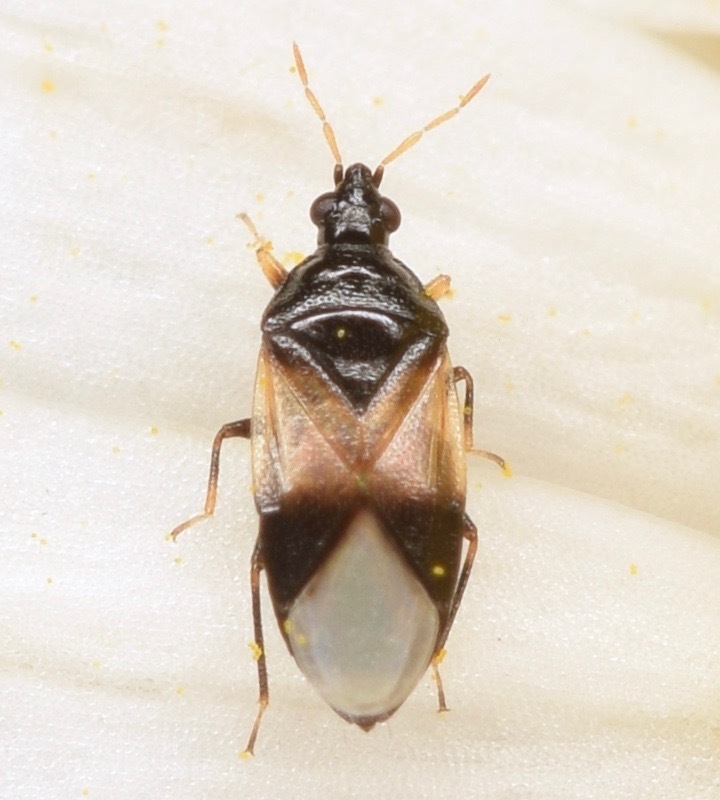
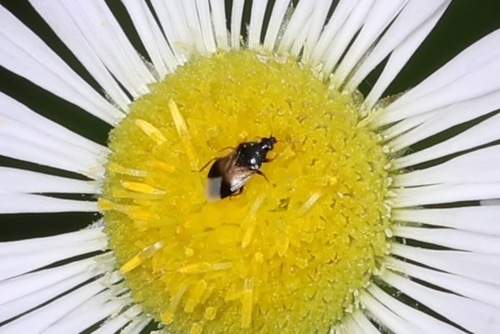
Adult insidious flower bugs are about 3 mm long, black with white wing patches, while nymphs are wingless, teardrop-shaped and range from yellow-orange to brown. They live on many crops such as fruits, grapes, alfalfa, cotton, corn and soybeans across the United States, Canada, Mexico, Central and South America, the Caribbean islands, and parts of the West Indies.
Source: Wikipedia
How to recognize it
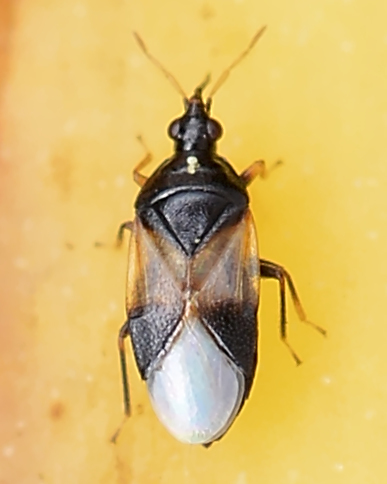
Adults are oval, black with white patches on the wings. Nymphs are wingless, teardrop-shaped and colored from yellow-orange to brown.
Source: Wikipedia
Size
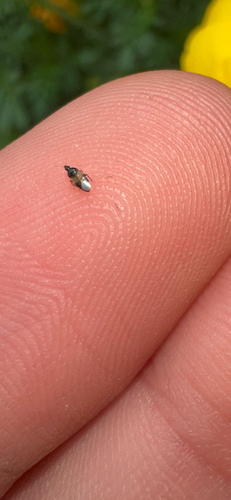
Adults measure roughly 3 mm in length.
Source: Wikipedia
Does it bite or sting?
Occasionally bites humans; the bite feels disproportionately painful for its size but is not harmful.
Source: Wikipedia
Life cycle
Females lay eggs inside plant tissue; eggs hatch into nymphs. Development from egg to adult takes at least 20 days, with several generations possible in one growing season.
Source: Wikipedia
Where it comes from
Common across the United States, and also found in Canada, Mexico, Central and South America and the West Indies.
Source: Wikipedia
Where it is found in the US
Recorded in 43 of 51 states and DC. Most records: Illinois, Mississippi, Minnesota, Ohio, Indiana, Pennsylvania, Kentucky, Michigan.
Darker = more records. Counts are museum and citizen-science records, not population size.
Source: GBIF
Status: native in North America; native in Canada. Source: iNaturalist
Months it is reported in the US
Source: GBIF
More photos
Questions people ask
Can the insidious flower bug bite me?
Yes, it can bite, causing a sharp but harmless pain.
Source: Wikipedia
What do adult insidious flower bugs look like?
Adults are about 3 mm long, black with white patches on their wings.
Source: Wikipedia
Where might I find these bugs?
They are common on many crops such as fruits, grapes, alfalfa, cotton, corn and soybeans across much of North, Central and South America and the Caribbean.
Source: Wikipedia
What do they eat?
They prey on plant-eating mites, their eggs, various insect eggs, thrips, spider mites and small caterpillars.
Source: Wikipedia
Same family (Anthocoridae)
Sources
- Wikipedia: https://en.wikipedia.org/wiki/Orius_insidiosus
Look it up elsewhere: GBIF · iNaturalist · BugGuide · ITIS · Wikipedia
Text written 2026-10-22 from the sources above and checked sentence by sentence against them. Data fetched 2026-10-22.