 Bug FAQ
Indian Walking Stick
Carausius morosus · Order: Phasmida · Family: Lonchodidae
Also called: Indian Stick Insect, Laboratory Stick Insect
Source: Wikipedia
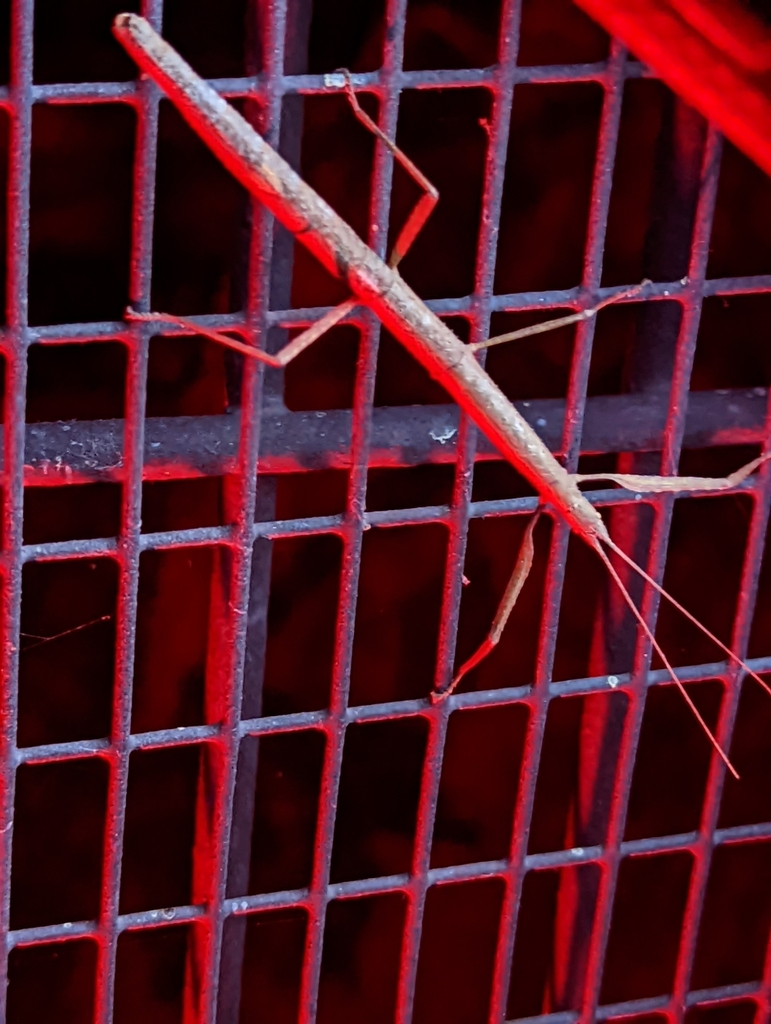
They reproduce without males; the cultured population consists of parthenogenetic females, with males extremely rare. Accidental introductions have led to infestations on ornamental plants in many countries.
Source: Wikipedia
Size
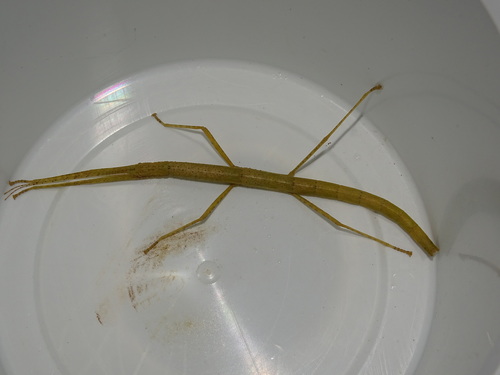
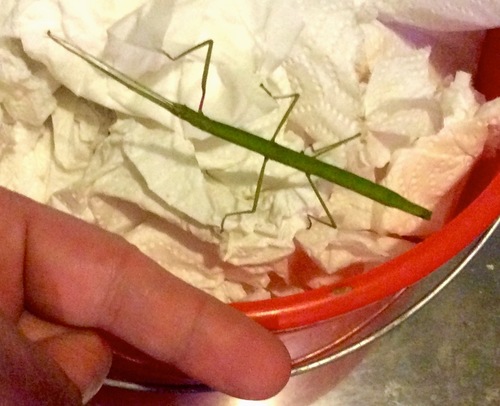
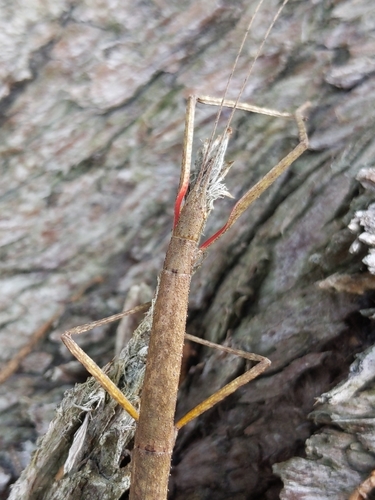
Females are elongated and measure about 80 to 100 mm (3 to 4 in) long. Eggs are ovoid, brown, and about 2 mm (0.08 in) in length.
Source: Wikipedia
Is it a pest in the house?
Accidental introductions have been recorded worldwide, and they sometimes become pests. Studies at the San Diego Zoo found them on many ornamental plants.
Source: Wikipedia
Where it lives
They are active at night like most stick insects.
Source: Wikipedia
Life cycle
All cultured individuals are females that can reproduce without mating. Males are extremely rare (about 1 in 1000), and occasional gynandromorphs appear in captivity.
Source: Wikipedia
Where it comes from
Cultured stocks originally came from Tamil Nadu, India.
Source: Wikipedia
Where it is found in the US
Recorded in 3 of 51 states and DC. Most records: California, South Carolina, Nevada.
Darker = more records. Counts are museum and citizen-science records, not population size.
Source: GBIF
Status: introduced in United States. Source: iNaturalist
Months it is reported in the US
Source: GBIF
More photos
Questions people ask
How large do Indian walking sticks get?
Females grow to about 80 to 100 mm (3 to 4 in) long.
Source: Wikipedia
Can they reproduce without males?
Yes, the cultured population consists of parthenogenetic females that lay eggs without mating.
Source: Wikipedia
Are they a problem for my garden?
They have been found on many ornamental plants and can become garden pests.
Source: Wikipedia
Sources
- Wikipedia: https://en.wikipedia.org/wiki/Carausius_morosus
Look it up elsewhere: GBIF · iNaturalist · BugGuide · Wikipedia
Text written 2026-10-23 from the sources above and checked sentence by sentence against them. Data fetched 2026-10-22.