 Bug FAQ
Human Louse
Pediculus humanus · Order: Psocodea · Family: Pediculidae
Also called: Body Louse, head louse, louse
Source: Purdue Extension
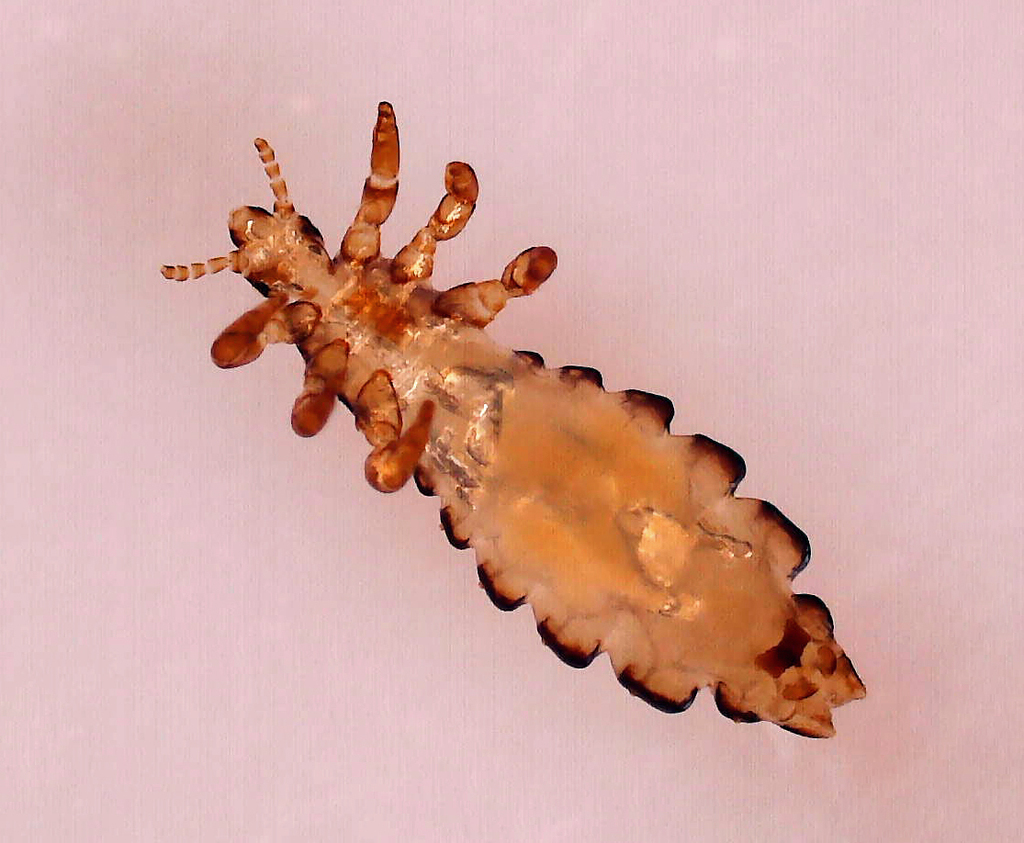
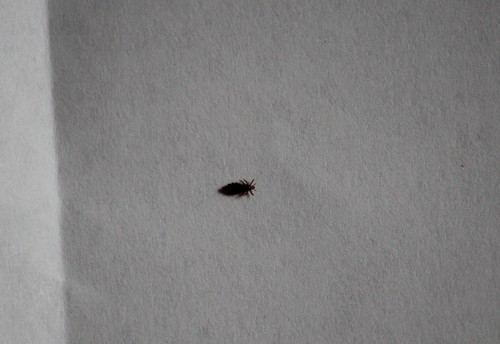
Head lice are small, wing-less insects about the size of a sesame seed that live on the scalp and feed on blood, causing itching but no disease. Body lice also feed on human blood and can spread three serious diseases outside the U.S., though none are currently present here.
Source: UC IPM, University of Minnesota Extension, Purdue Extension, Purdue Extension
Is it a pest in the house?
Head lice do not live on pets, do not infest furniture or carpets, and do not transmit disease, though they cause discomfort and embarrassment. Body lice survive only briefly off a human and spread by direct contact or sharing infested clothing.
Source: UC IPM, University of Minnesota Extension, Purdue Extension
Does it bite or sting?
Head lice bite the scalp, taking tiny blood meals and injecting saliva that can cause itching; the bites themselves are painless. Body lice also feed on blood and can act as vectors for disease in other regions.
Source: UC IPM, University of Minnesota Extension, Purdue Extension
How to get rid of it
Treat head lice with an effective insecticide and use a fine metal comb to remove nits; combing is essential regardless of chemicals. Shampoos containing insecticide are available over-the-counter or by prescription. Control body lice by applying insecticide, mechanically removing lice and eggs, and washing clothing and bedding at ≥130 °F then drying on high heat for 20 min.
Source: UC IPM, University of Minnesota Extension, Purdue Extension
Lookalikes
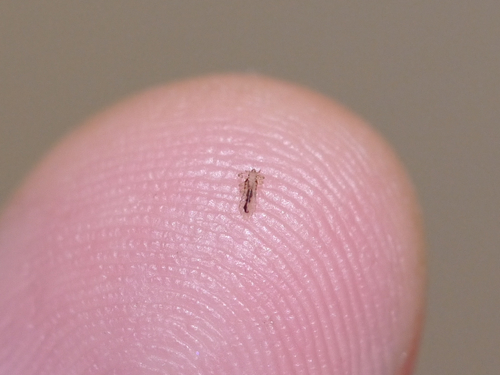
Nits are tiny oval eggs about 0.8 mm long that blend with hair color, and can be mistaken for dandruff or skin debris. Head lice are wingless insects 1/12 to 1/8 inch long, so they can be confused with debris if not examined closely.
Source: UC IPM, University of Minnesota Extension
Where it is found in the US
Recorded in 41 of 51 states and DC. Most records: Kansas, Texas, California, Florida, Iowa, Alaska, Pennsylvania, Illinois.
Darker = more records. Counts are museum and citizen-science records, not population size.
Source: GBIF
Status: introduced in North America; introduced in United States. Source: iNaturalist
Months it is reported in the US
Source: GBIF
More photos
Questions people ask
Do head lice bite?
Yes, they take tiny blood meals from the scalp and their saliva can cause itching.
Source: UC IPM, University of Minnesota Extension
Can lice spread disease?
Head lice do not spread disease, but body lice can transmit three diseases in other parts of the world, though none are present in the U.S.
Source: UC IPM, Purdue Extension
How do I get rid of lice?
Use an approved insecticide shampoo and comb out all nits with a metal lice comb; repeat treatment as directed.
Source: UC IPM, University of Minnesota Extension
Are pets a source of head lice?
No, head lice cannot live on dogs, cats, or other animals.
Source: UC IPM, University of Minnesota Extension
Sources
- Purdue Extension: https://extension.entm.purdue.edu/publications/E-245/E-245.html
- UC IPM: https://ipm.ucanr.edu/home-and-landscape/head-lice/
- University of Minnesota Extension: https://extension.umn.edu/biting-insects/head-lice
- Purdue Extension: https://extension.entm.purdue.edu/publichealth/diseases/louse.html
Look it up elsewhere: GBIF · iNaturalist · BugGuide · ITIS · Wikipedia
Text written 2026-10-22 from the sources above and checked sentence by sentence against them. Data fetched 2026-10-22.